Greece Never Gets Old
There is a simple truth among sailors: you can never really have enough Greece.
With more than 6,000 islands and islets, Greece is one of those places where every sailing season can feel like a completely different adventure. Around 20% of the country's territory belongs to islands, creating a coastline of more than 15,000 kilometres. More than 220 islands are inhabited, and almost every one of them has its own personality, landscape and rhythm of life.
Some islands are famous for nightlife and luxury tourism. Others remain quiet, shaped by fishing boats, old stone houses and the wind that has been blowing across the Aegean for thousands of years.
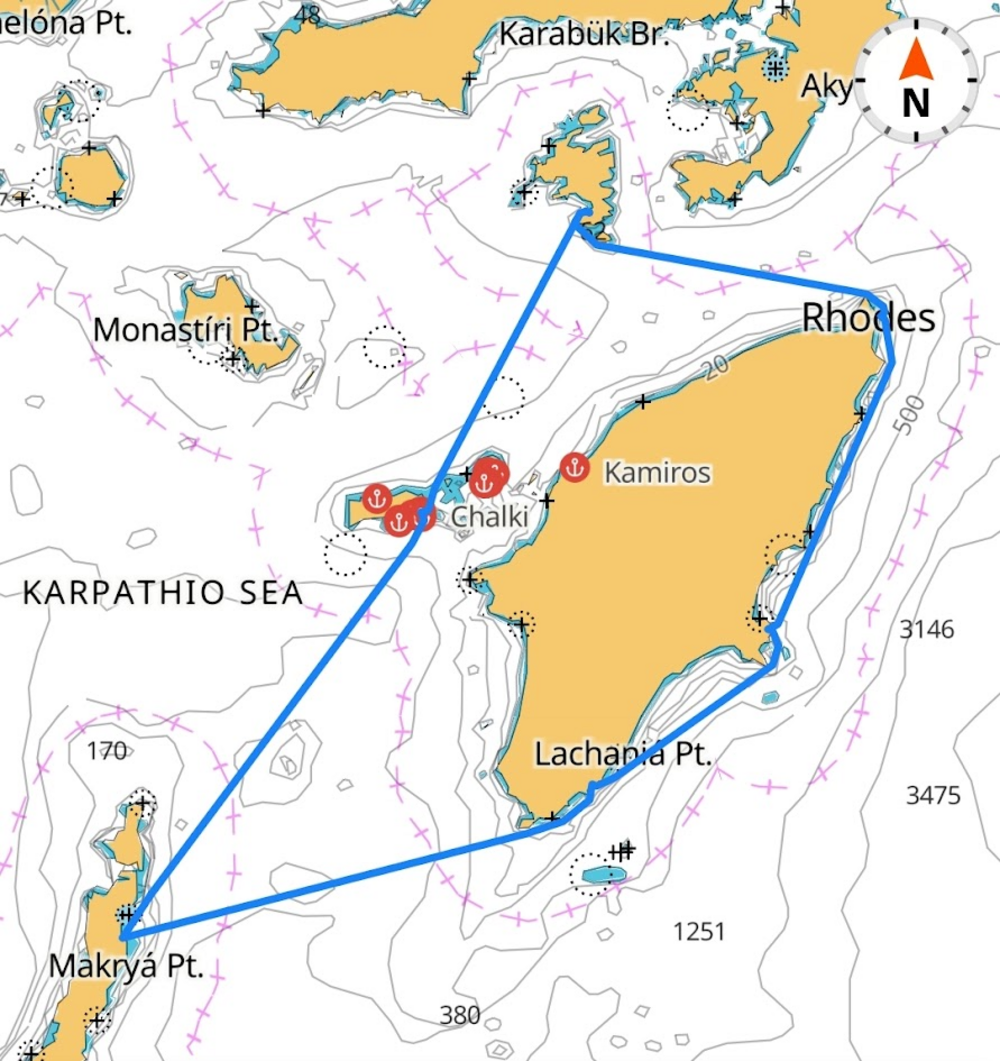
For this trip, we returned once again to the Dodecanese — a group of islands in the southeastern Aegean, closer to Turkey than mainland Greece. This was already our third sailing adventure in this area. Previously, we had explored Rhodes, Kos, Nisyros, Tilos, Astypalaia and Symi.
Every time we come back, we discover something new.
The Dodecanese are perfect for sailing: reliable winds, dramatic landscapes, ancient villages, excellent anchorages and relatively short distances between islands. But they also demand respect. The Meltemi wind can quickly turn a relaxed sail into a serious passage, and the weather in early spring can still bring surprises.
April 2026 gave us exactly that mix — beautiful sunny days, strong winds, unexpected problems and unforgettable moments.
A New Boat for the Adventure
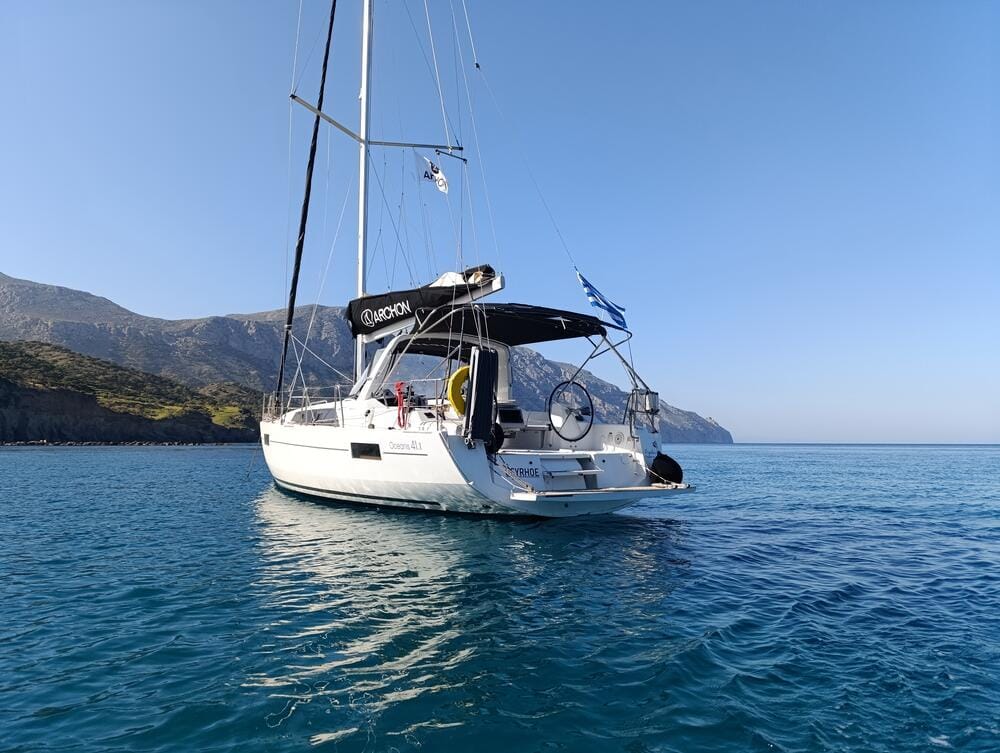
Originally, our charter was supposed to be a Jeanneau Sun Odyssey 36i from 2009.
However, shortly before departure, we received good news: the boat was upgraded to a Beneteau Oceanis 41.1 from 2017.
The Oceanis 41.1 is a completely different category of boat. With more space, better sailing performance and a modern layout, it was a very comfortable platform for a week exploring the islands.
Of course, a larger boat also means more systems to understand and more things that can potentially go wrong.
Day 1 — Rhodes New Marina
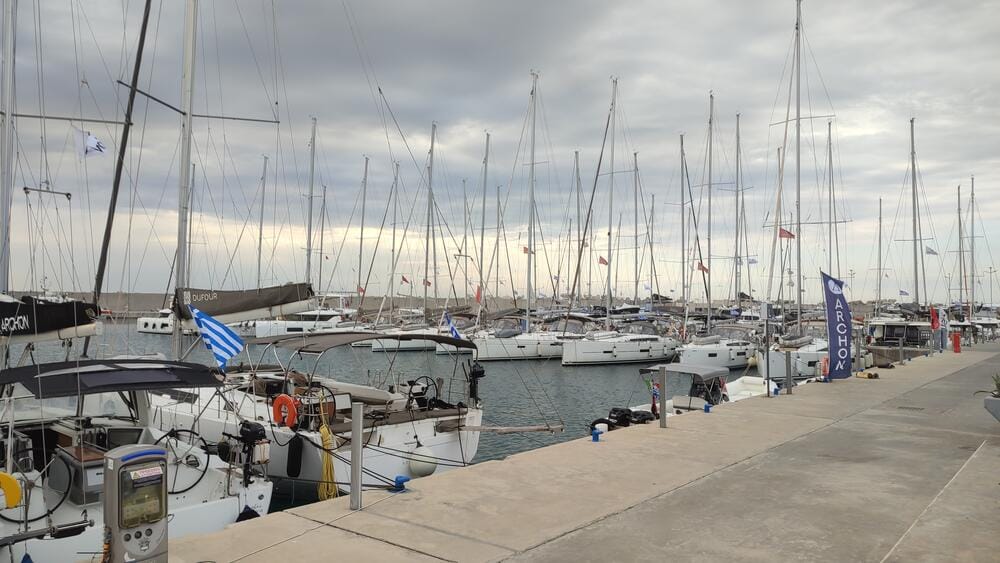
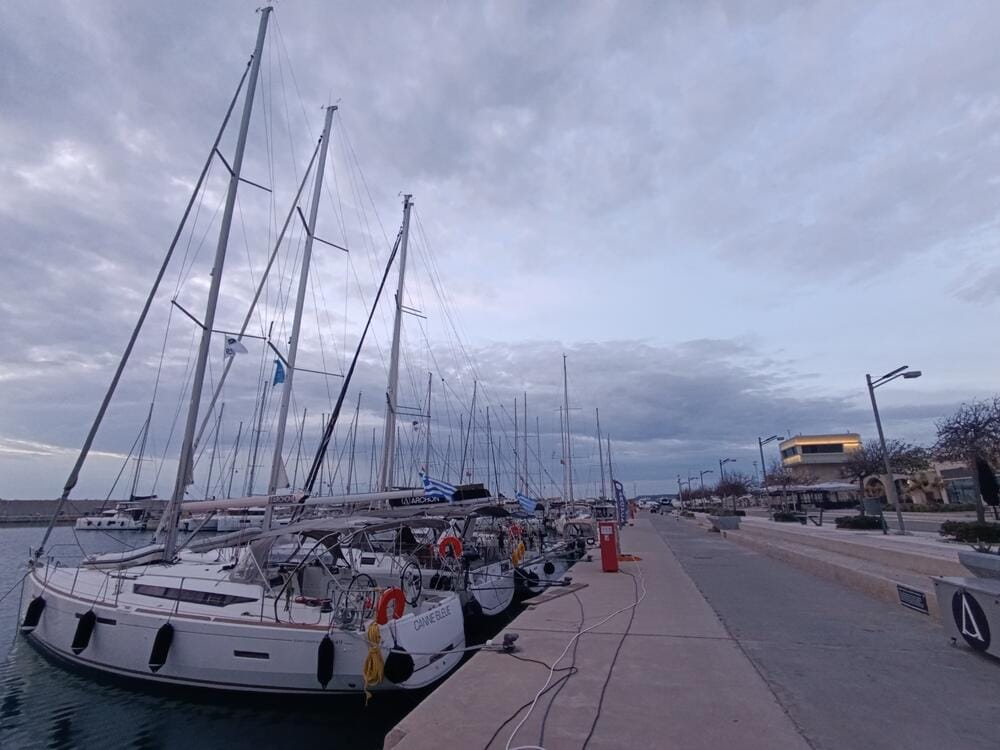
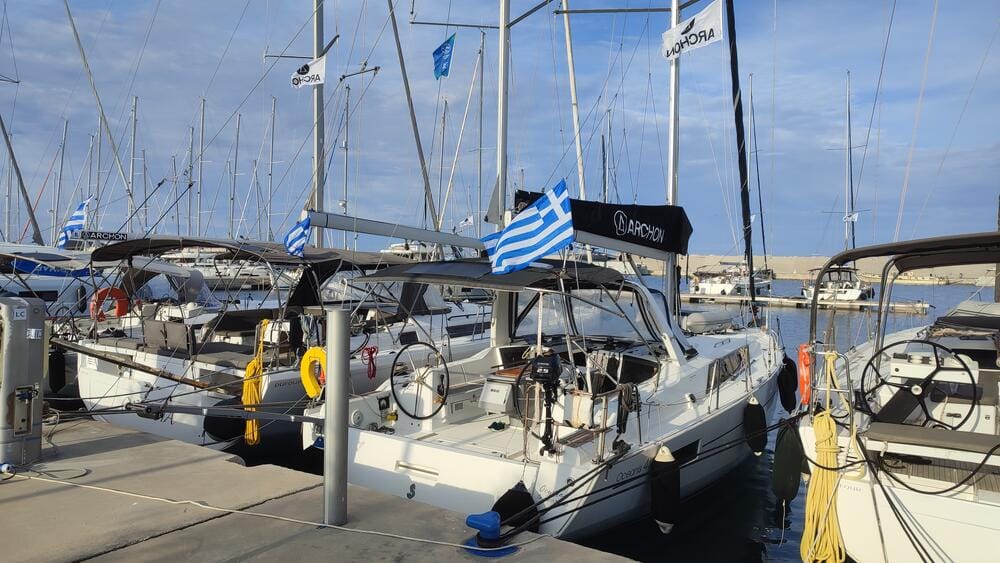
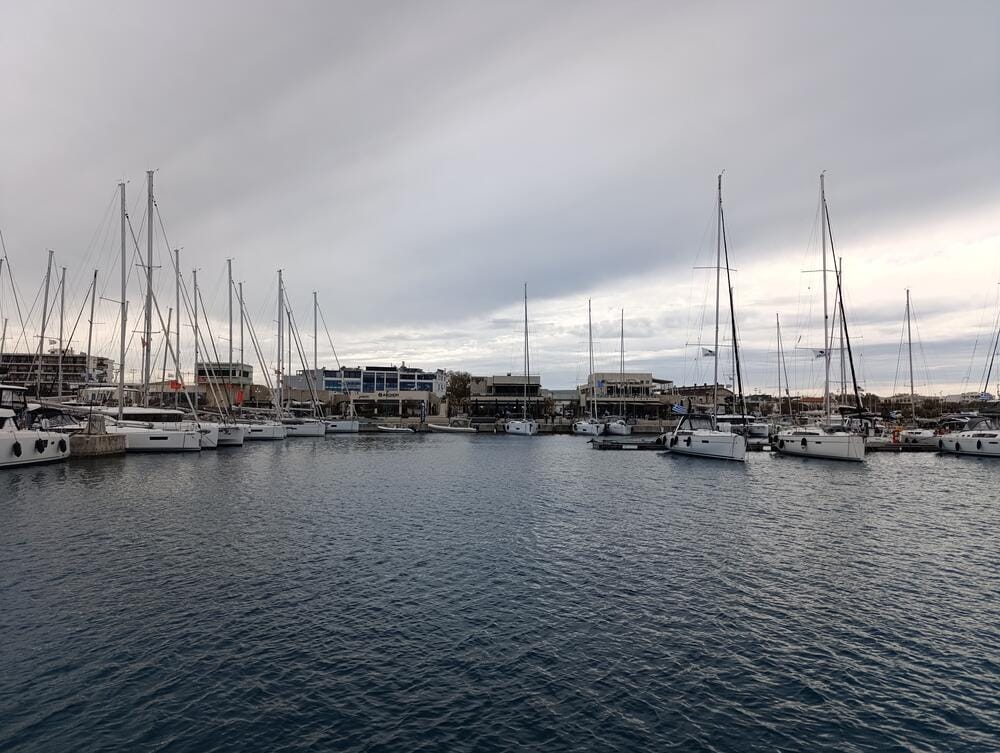
Our journey started at Rhodes New Marina.
The marina itself is modern and well equipped. It has electricity, water, toilets and showers, although the number of shower facilities is rather limited considering the size of the marina.
One of the advantages of this marina is the space between the pontoons. Unlike some older Mediterranean marinas where boats are packed tightly together, here there is enough room to manoeuvre, making docking much easier, especially with a larger yacht.
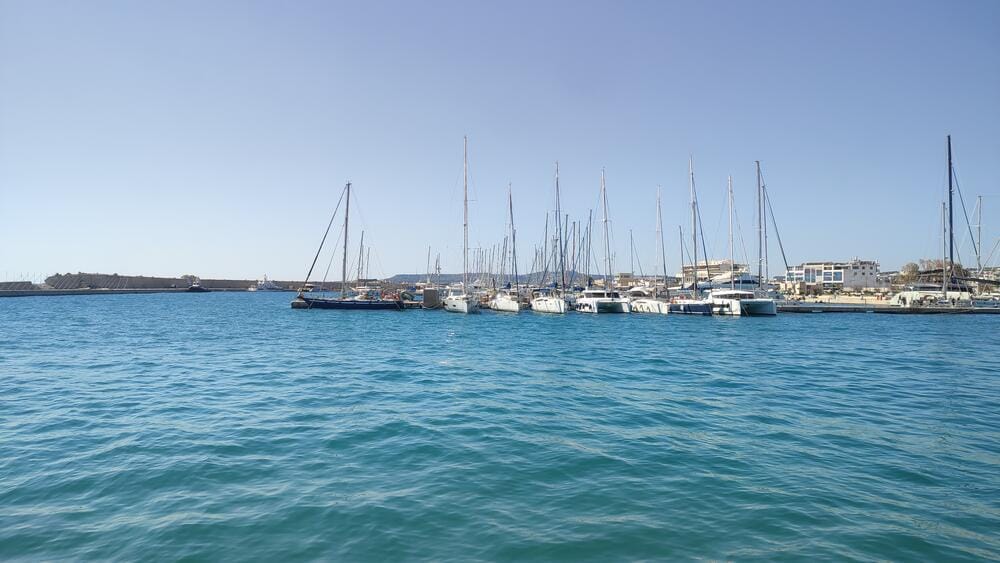
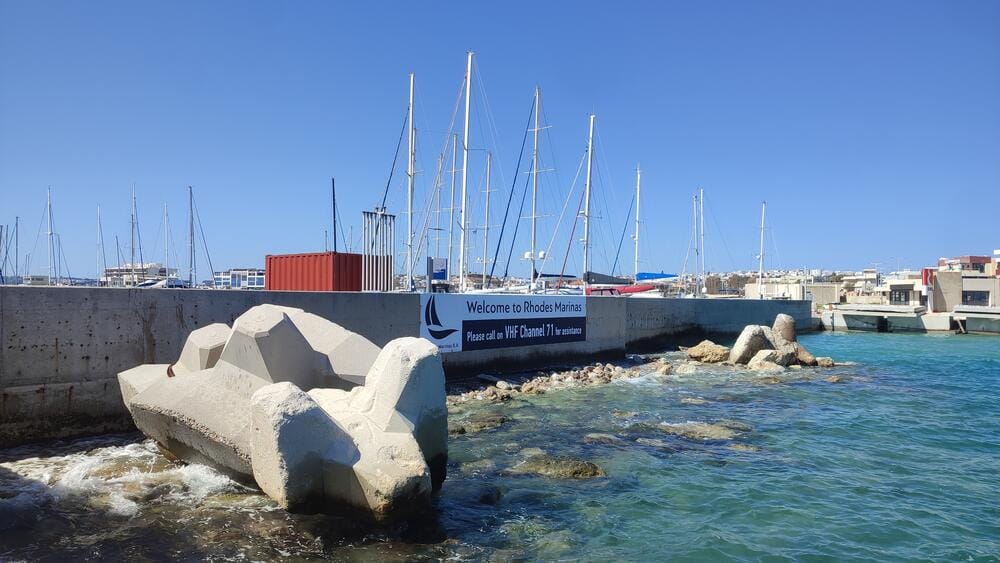
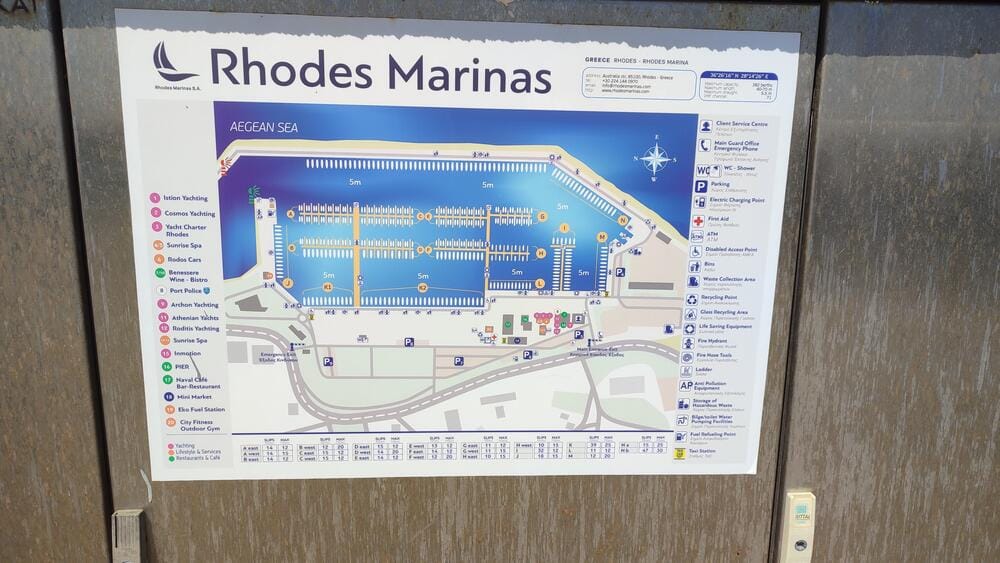
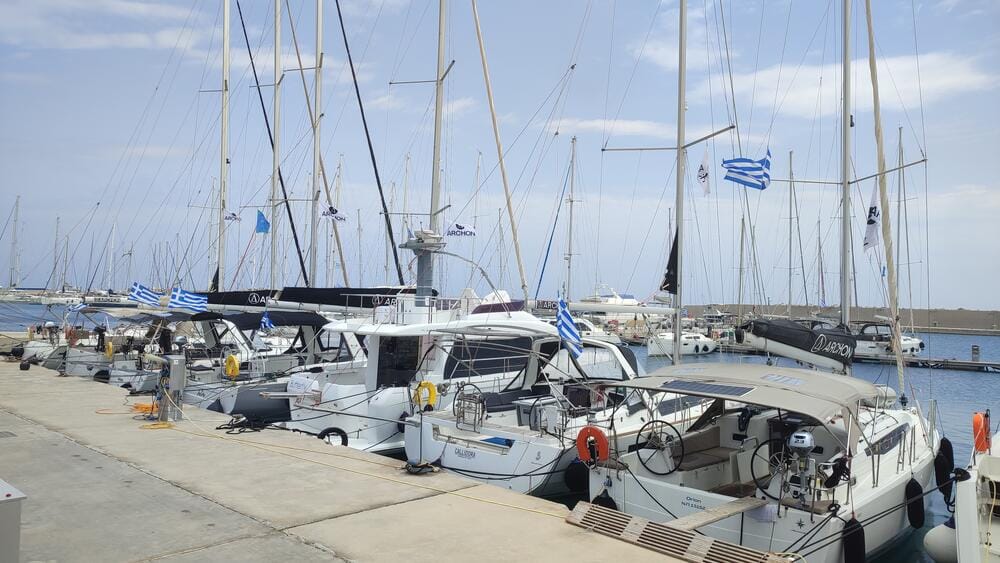
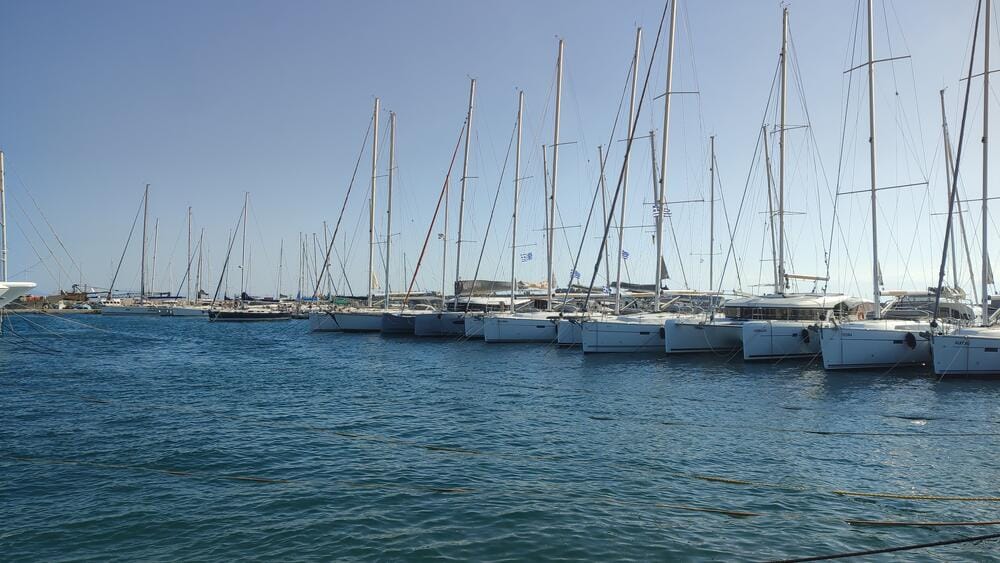
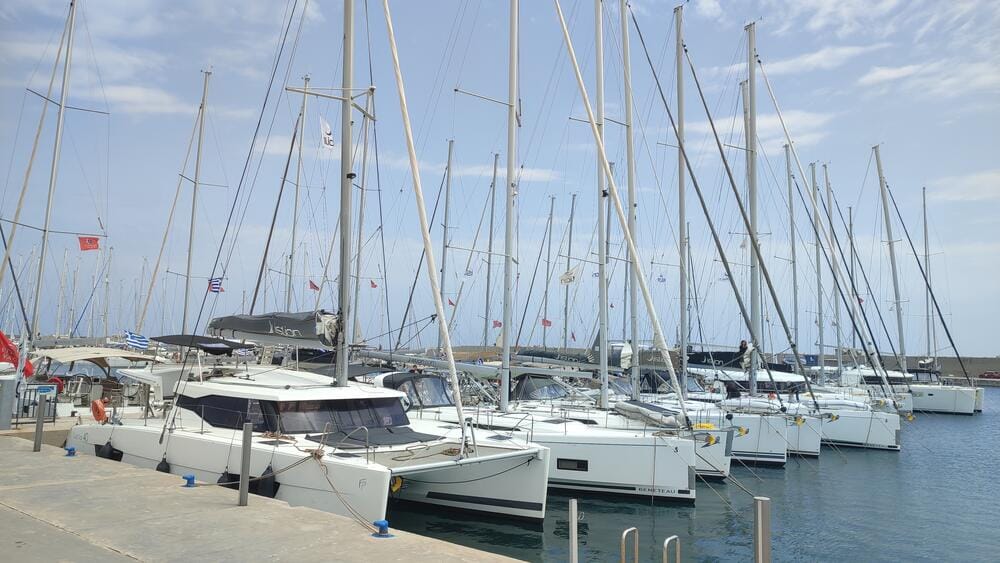
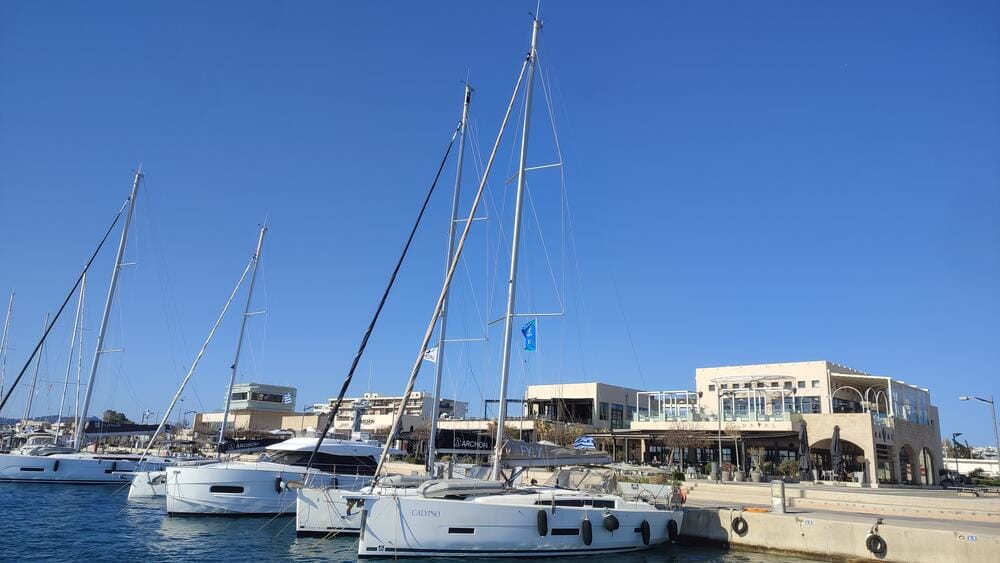
Rhodes New Marina
The boats are normally secured on mooring lines, which is typical for modern marinas.
Fuel is conveniently located right at the entrance of the marina on the right side. Several boats can come alongside at the same time, making refuelling quick and efficient. The boat comes alongside the fuel dock, and the crew handles the lines while the marina staff fills the tanks.
During our stay, diesel was around €2 per litre.
One thing worth mentioning: Rhodes New Marina is not the quietest place.
The marina is located about a 30-minute walk from the historic centre of Rhodes town, which is great during the day. But during weekends — and possibly on other nights as well — the bars along the waterfront can become very loud.
Different music from different places mixes together, creating a strange Mediterranean version of a concert where nobody is playing the same song.
If you are a light sleeper, earplugs might be useful.
Before leaving, we prepared our provisioning.
This time we used ChatGPT to help create the shopping list. We provided our preferences, the number of people and the length of the trip, and it generated a surprisingly practical plan.
The most important lesson regarding provisions: always think carefully about water.
A good minimum is around 3 litres of drinking water per person per day.
On a yacht, water management is different from everyday life on land. Bottles are stored in lockers, under seats and in every available corner. Large bottles are not always convenient.
We found that 1.5-litre bottles work best because they are easier to move around and fit better into the limited storage spaces available on most charter yachts.
After final preparations, the boat was ready.
The next morning, we would start sailing south.
Day 2 — Rhodes to Lindos
Distance: approximately 25 nautical miles
Conditions: strong side wind leaving Rhodes, later good sailing conditions
Leaving Rhodes New Marina, we immediately noticed signs of recent bad weather.
The breakwater outside the marina was partially destroyed. It looked like the result of a powerful storm — most likely the aftermath of Cyclone Garry, which affected the region in January 2026.
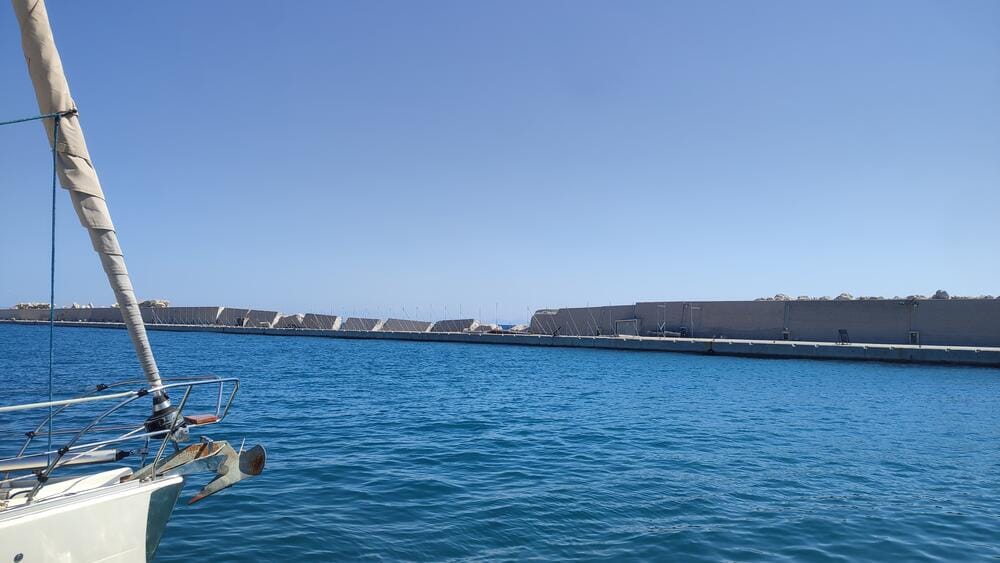
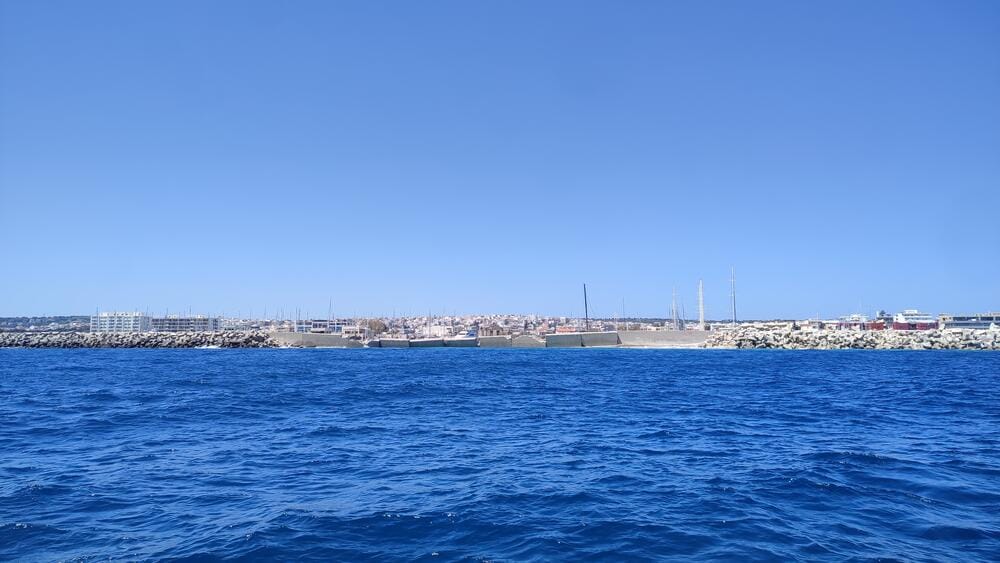
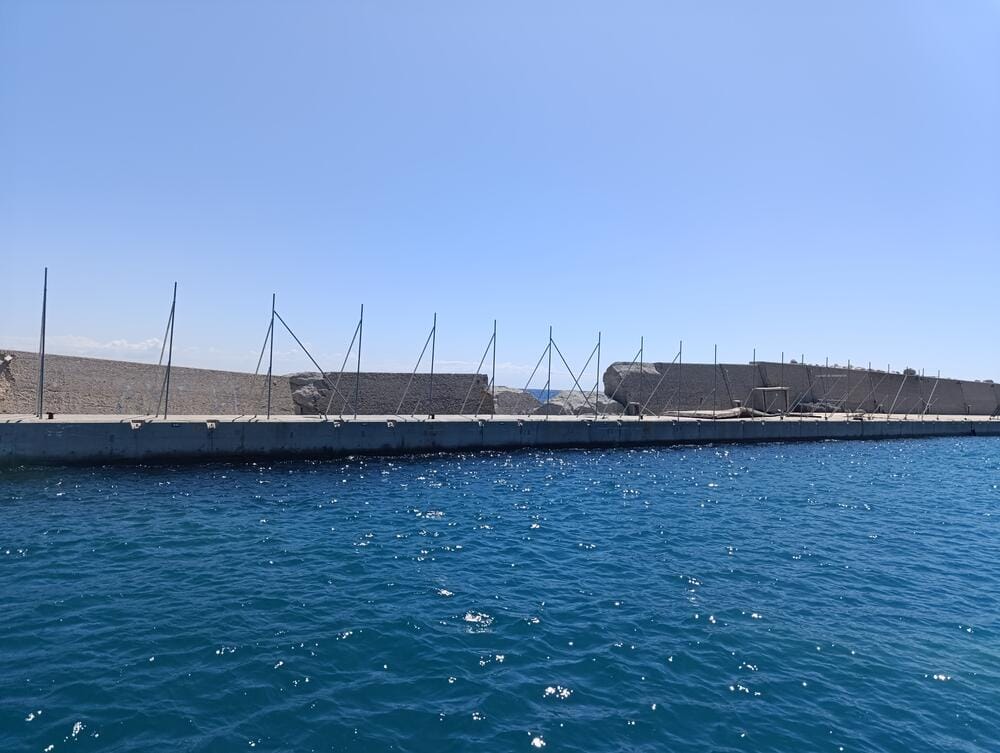
Partially destroyed breakwater, Rhodes New Marina
The Mediterranean can look peaceful, but winter storms remind you that this is still a serious sea.
Our destination was Lindos, one of the most beautiful places on Rhodes.
The plan was simple: sail south along the coast, stop at Anthony Quinn Bay, then continue to Lindos.
The weather was still unstable after a rough night. We left the marina with a strong side wind, but once outside we could finally enjoy what we came for — sailing.
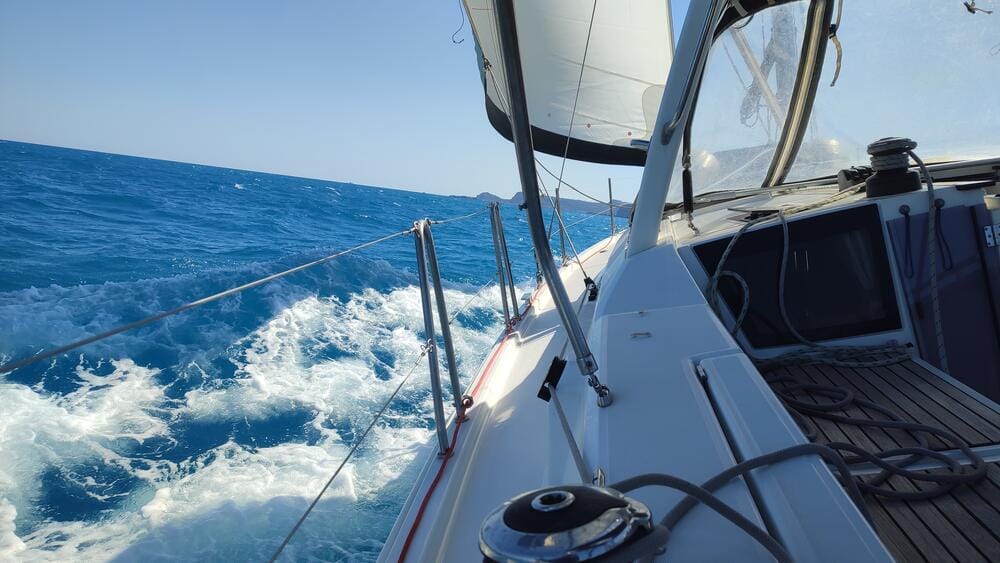
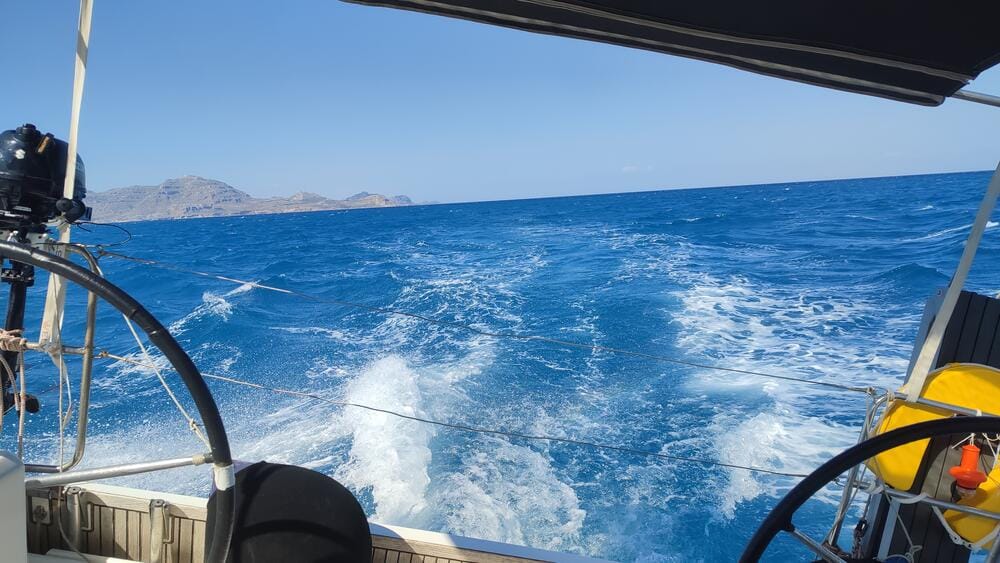
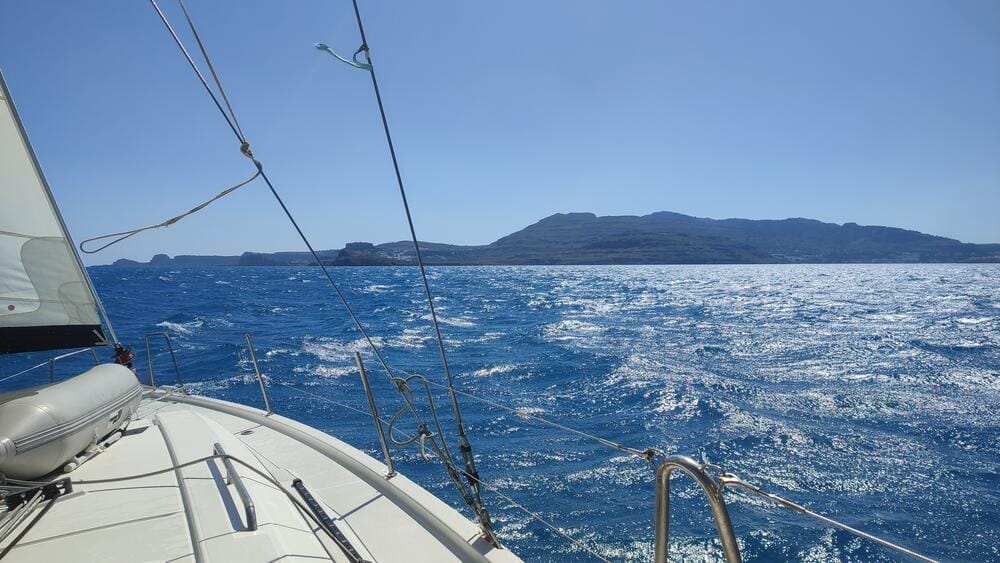
Sailing
Anthony Quinn Bay — A Hollywood Stop in the Aegean
Anthony Quinn Bay is one of the most famous anchorages on Rhodes.
The small bay is named after the legendary actor Anthony Quinn, who discovered the place while filming The Guns of Navarone in 1961.
The movie, based on the novel by Alistair MacLean, tells the story of Allied commandos during World War II who attempt to destroy powerful German guns on a fictional Greek island.
Although the film was not actually set on Rhodes, the production used several locations around the island, and Anthony Quinn became fascinated by the area. The bay later received his name, becoming one of the most photographed places on Rhodes.
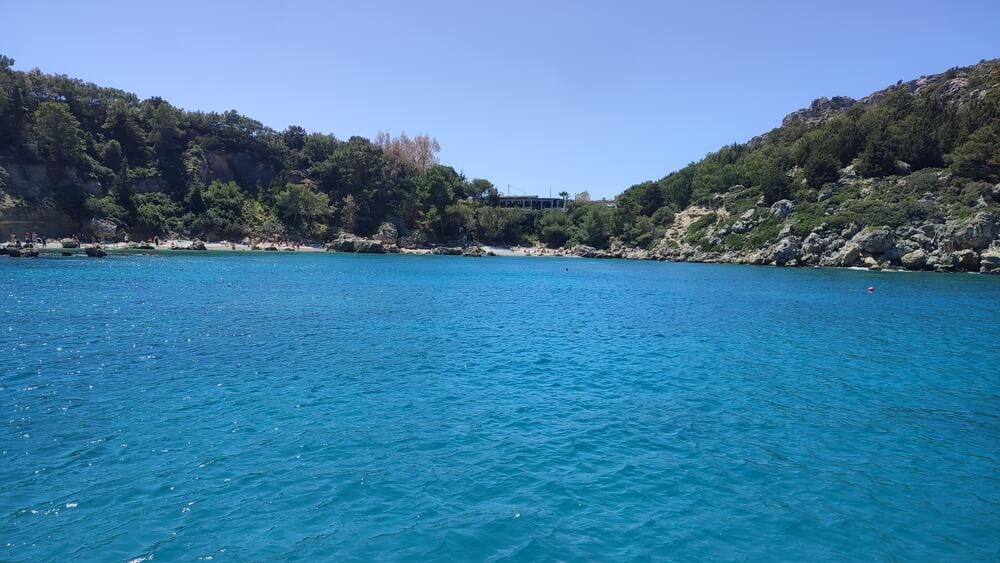
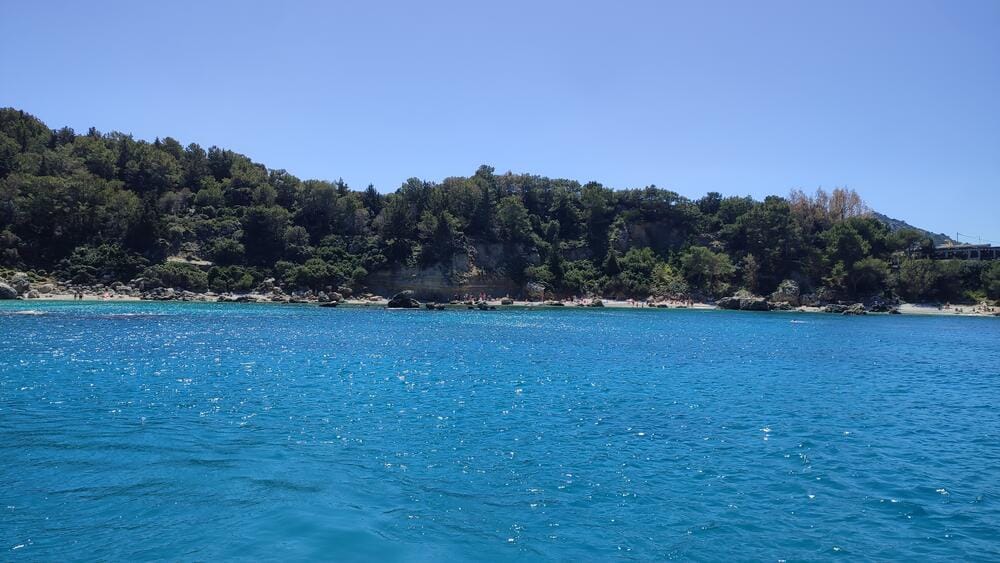
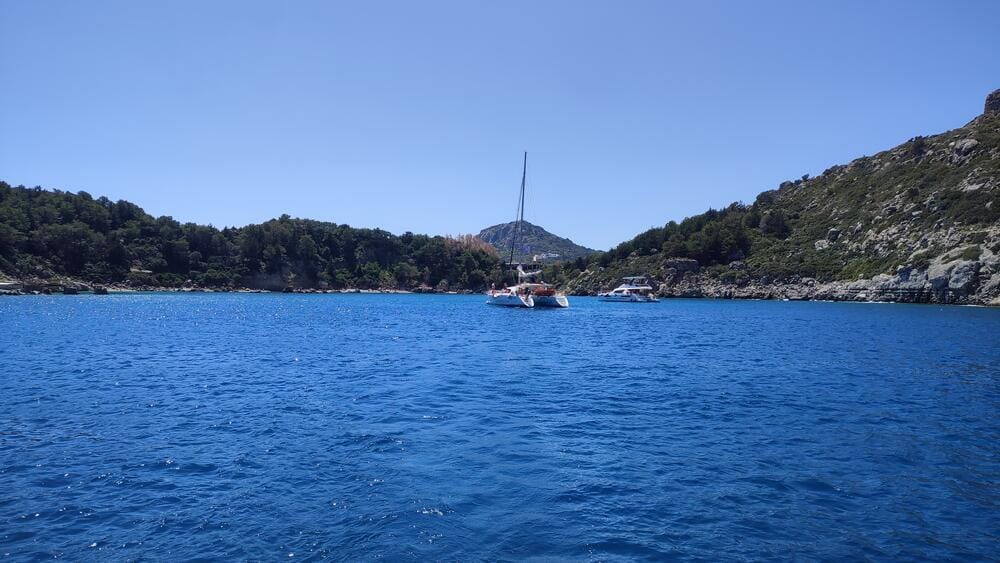
Anthony Quinn Bay
From the water, it is easy to understand why.
The bay is surrounded by rocky cliffs covered with Mediterranean vegetation. The water changes colour from deep blue to turquoise, and the underwater landscape makes it a popular stop for swimming and snorkelling.
However, because of its popularity, it can become crowded during the summer season. In April, we had the advantage of visiting before the main tourist rush.
After a swim and a short break, we continued towards Lindos.
And the sailing was exactly what we hoped for.
The wind was steady, the yacht moved comfortably, and for a few hours the only sounds were the sails, the waves and the wind.
Lindos — Ancient History Above the Sea
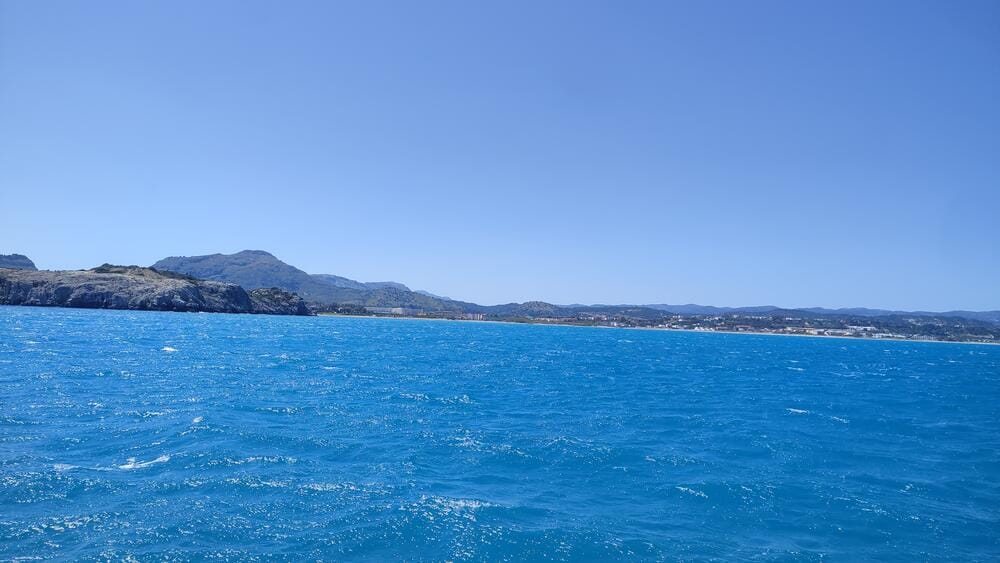
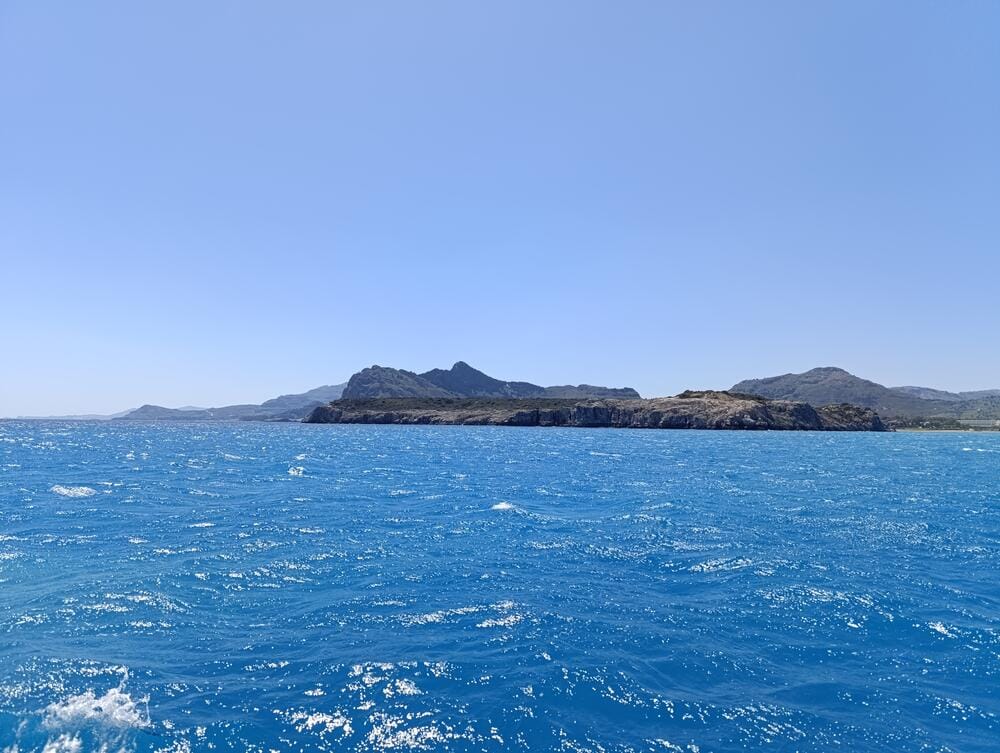
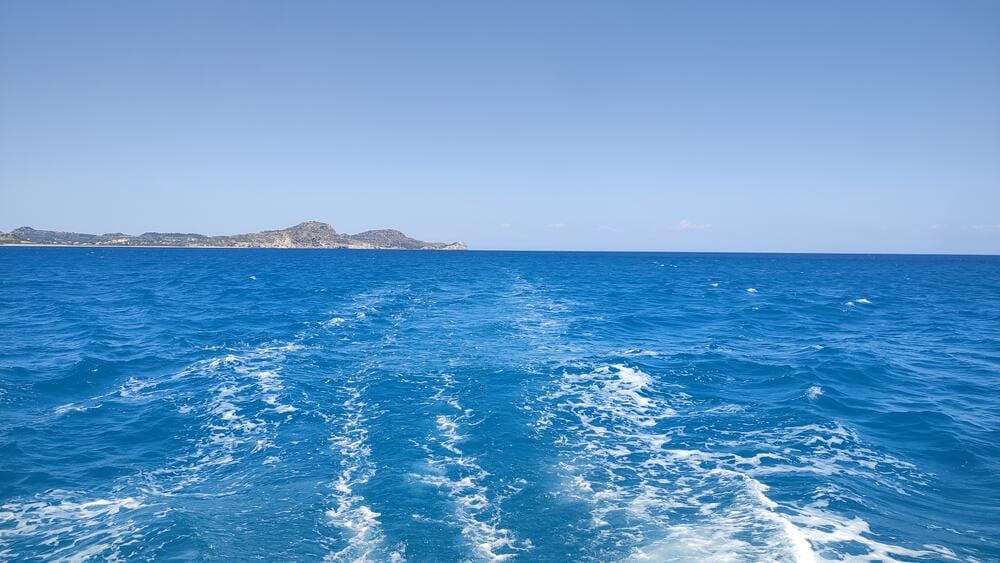
Sailing to Lindos
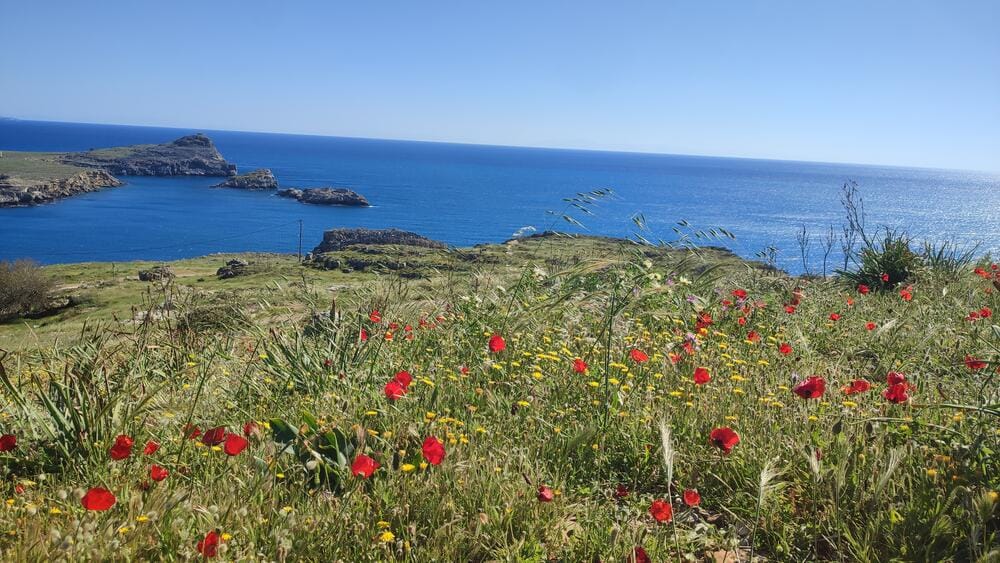
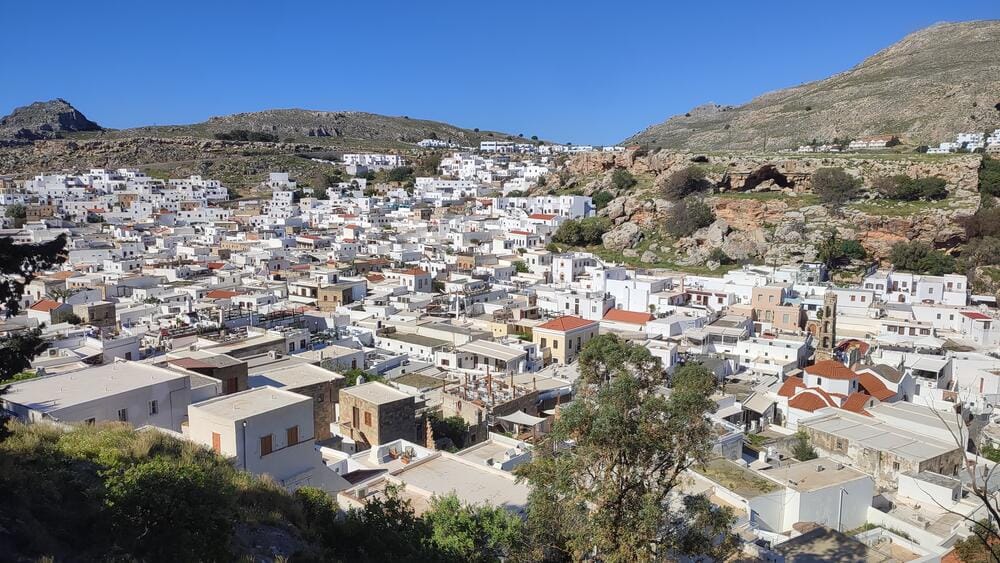
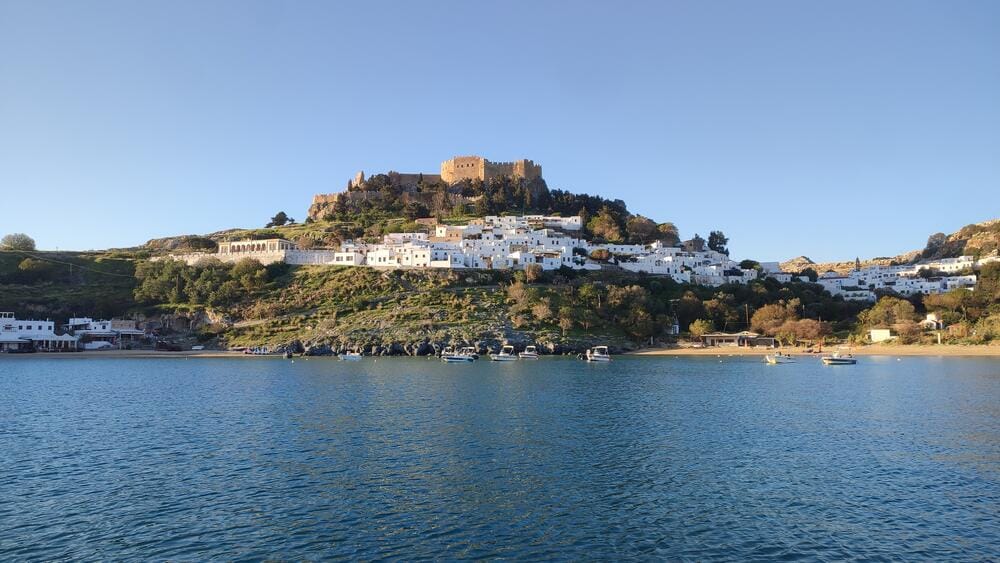
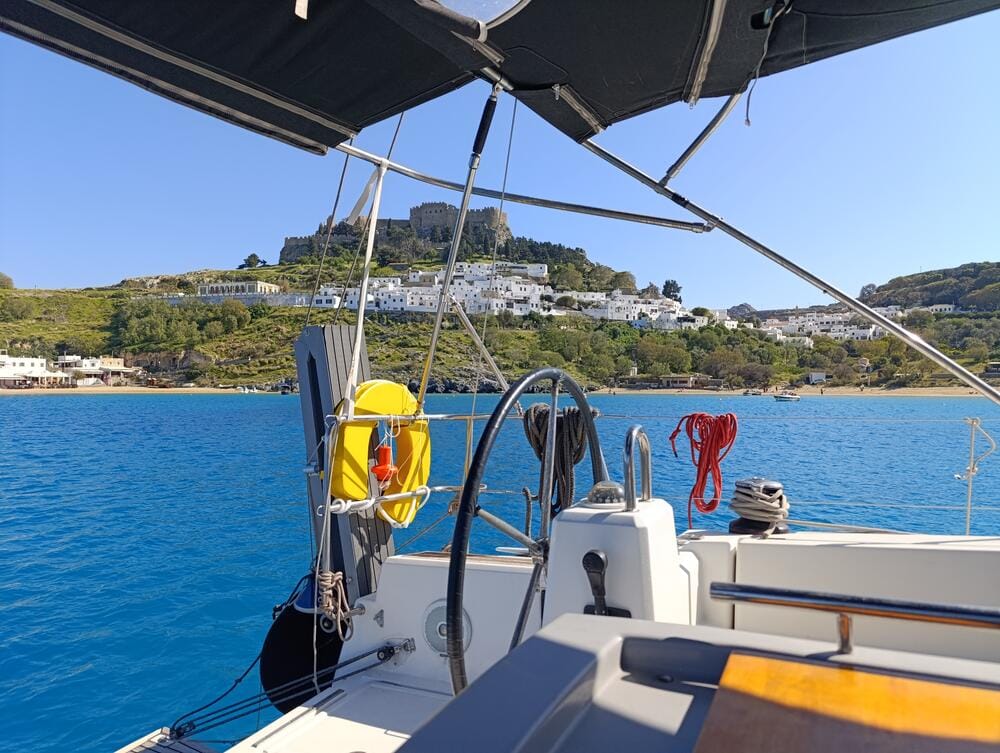
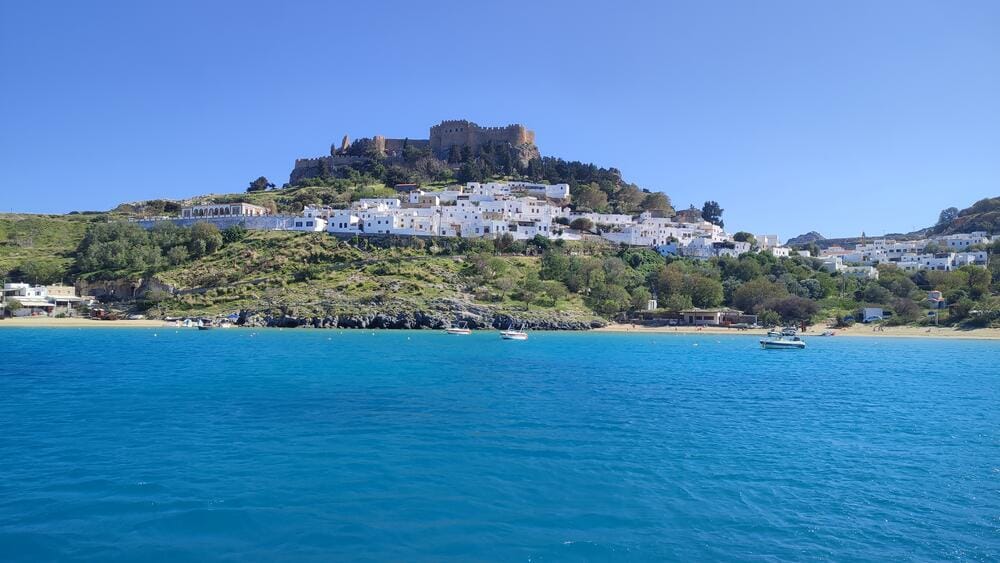
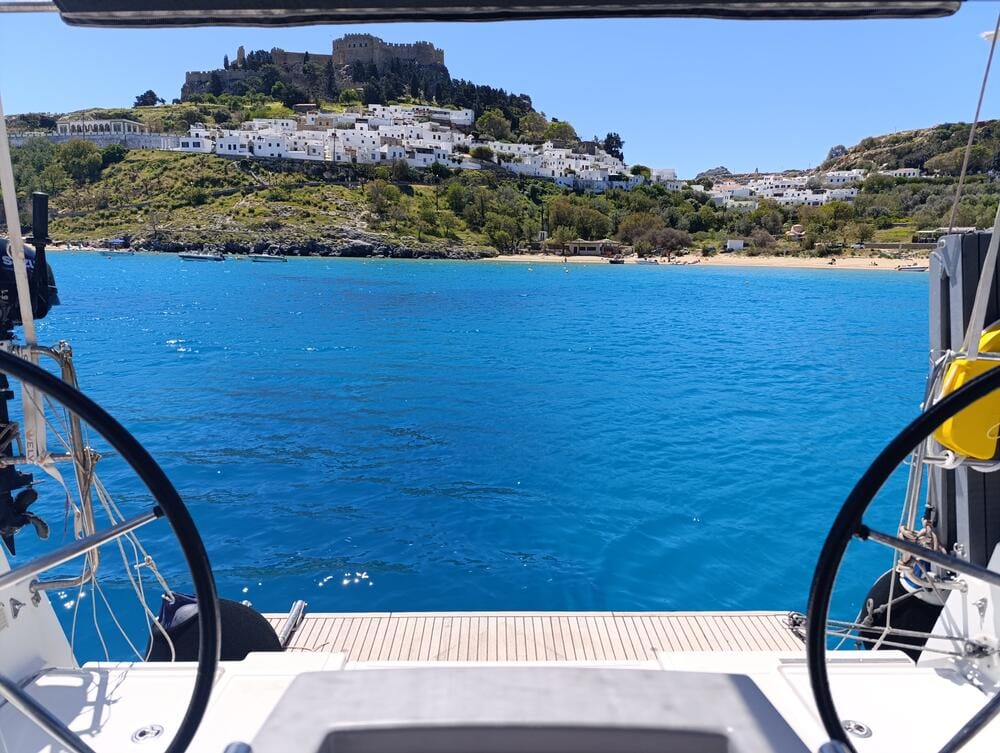
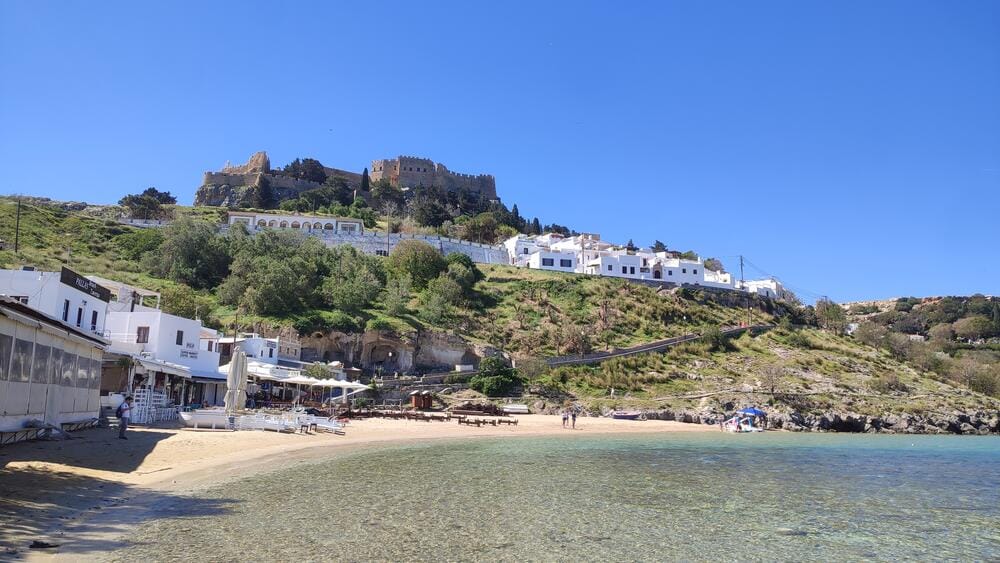
Arriving at Lindos feels like entering a postcard.
The village is famous for its whitewashed houses, narrow streets and the ancient Acropolis standing dramatically above the town.
Lindos has been inhabited for thousands of years. The ancient city was one of the most important settlements on Rhodes, becoming a powerful maritime and trading centre.
The highlight is the Acropolis of Lindos, located on a 116-metre-high rock overlooking the sea.
The site contains remains from different periods, including the Temple of Athena Lindia, which was one of the most important religious centres of ancient Rhodes.
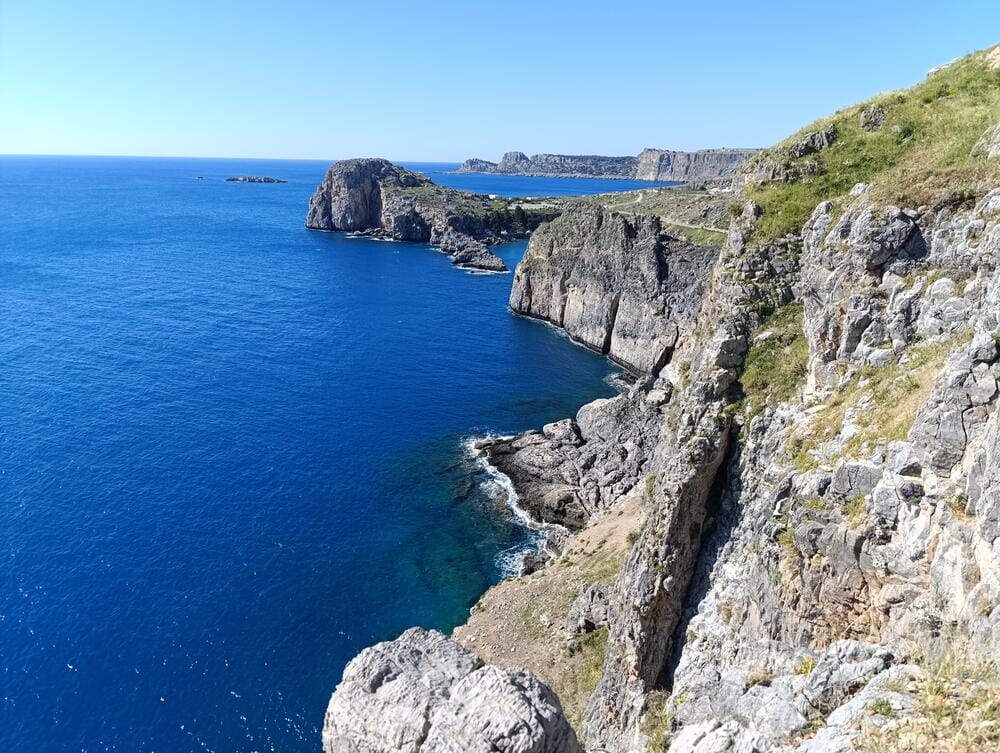
The combination of ancient ruins, white houses and the endless blue Aegean creates one of the most spectacular views in Greece.
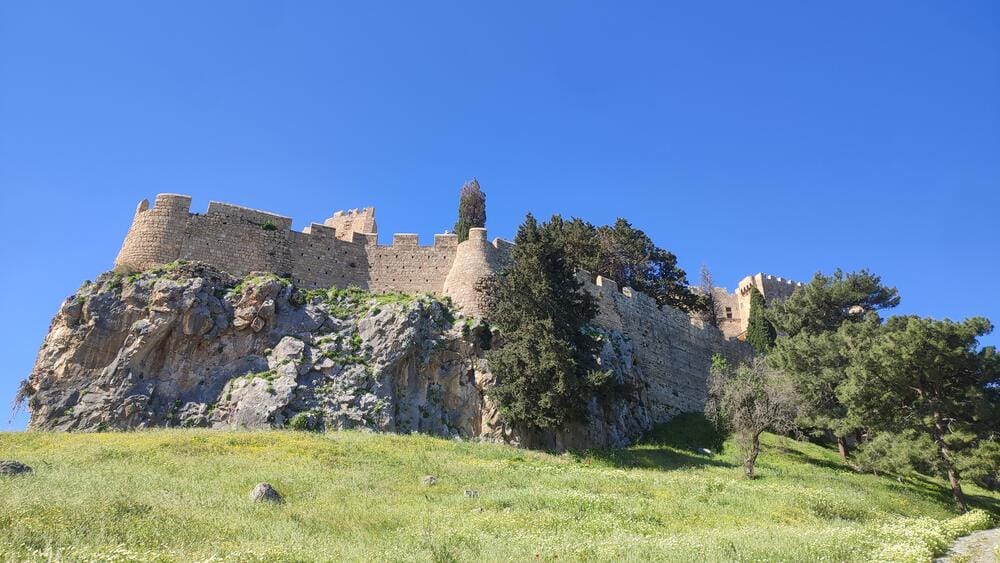
Lindos
We visited Lindos twice — once in the evening and again in the morning.
The atmosphere changes completely.
In the evening, when the day tourists leave, the narrow streets become quiet. Small restaurants glow with warm lights, cats walk between old stone walls, and the village feels much closer to its original character.
That evening I finally went swimming for the first time during the trip.
The water was still cold in April, but after a day of sailing, jumping into the Aegean felt like the perfect reward.
The next morning, we walked through the village again before continuing our journey.
The forecast promised stronger winds.
The next destination was Plimmiri.
And that day would bring the biggest surprise of the whole trip.
Day 3 — Lindos to Plimmiri
Distance: approximately 20 nautical miles
Wind: Northwest, around 25 knots
Conditions: excellent sailing, unexpected problem onboard
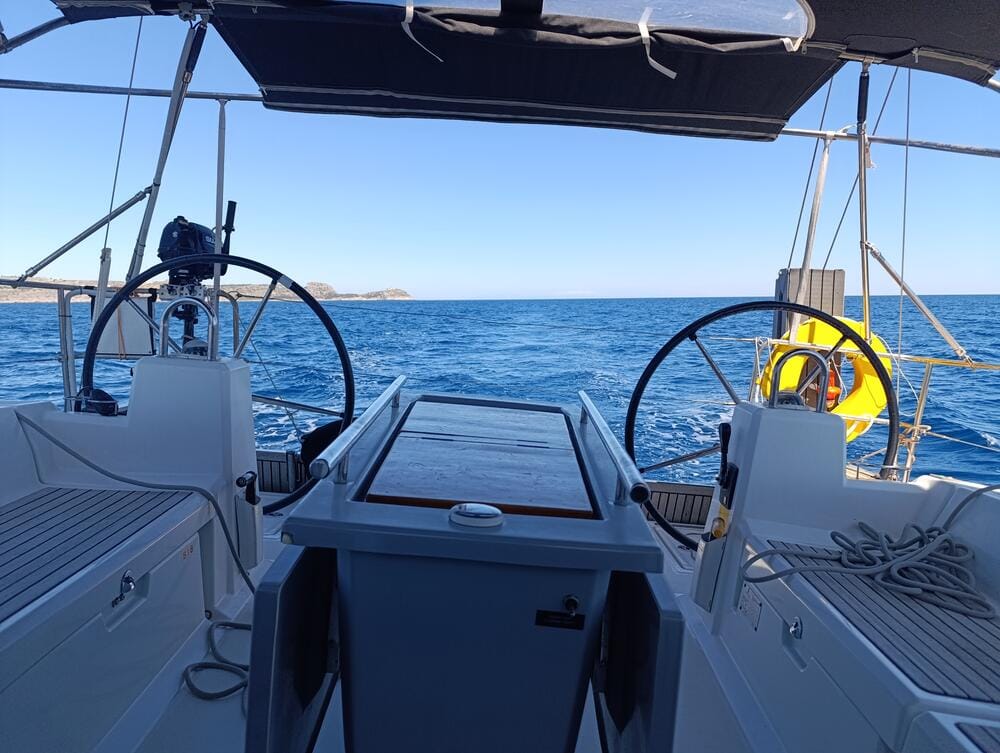
The next morning started beautifully.
The sea around Lindos was calm, the sky was clear, and the forecast promised strong but manageable northwest winds. For sailors, these are often the best conditions: enough wind to enjoy proper sailing, but not too much to make the passage uncomfortable.
We left Lindos heading south towards Plimmiri, a small bay on the southeastern coast of Rhodes.
The wind quickly built up to around 25 knots from the northwest. We had excellent sailing conditions, and the Oceanis 41.1 showed why this boat is such a popular charter choice.
With the wind on our beam, the yacht moved fast and comfortably. The Dodecanese coastline slowly passed by — rocky cliffs, empty beaches and small bays that looked completely untouched.
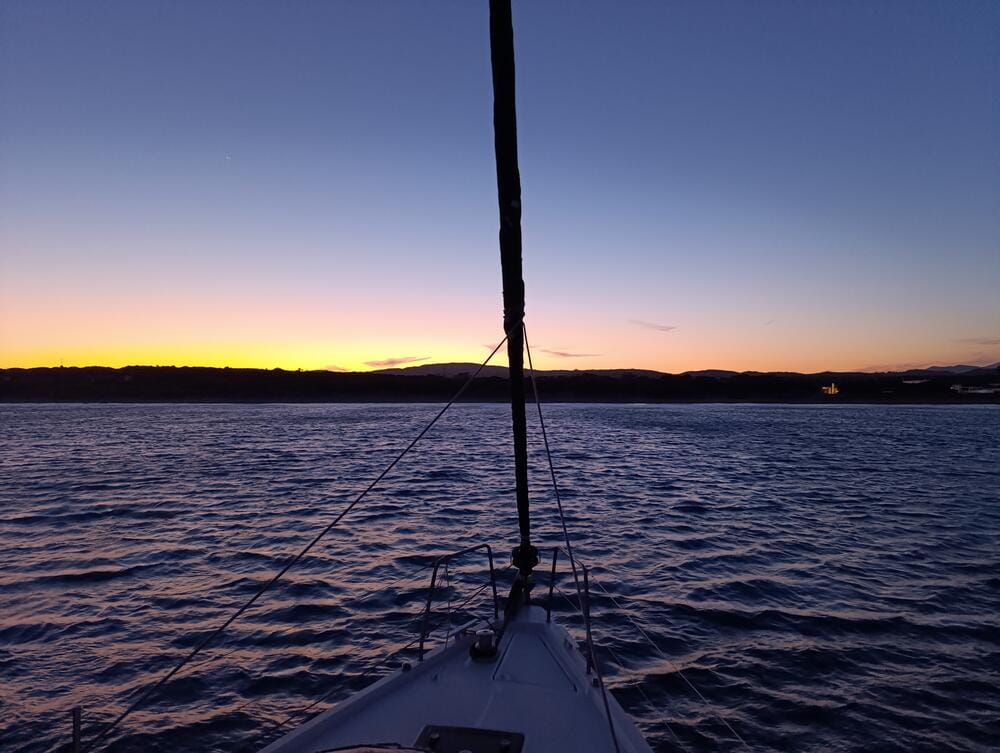
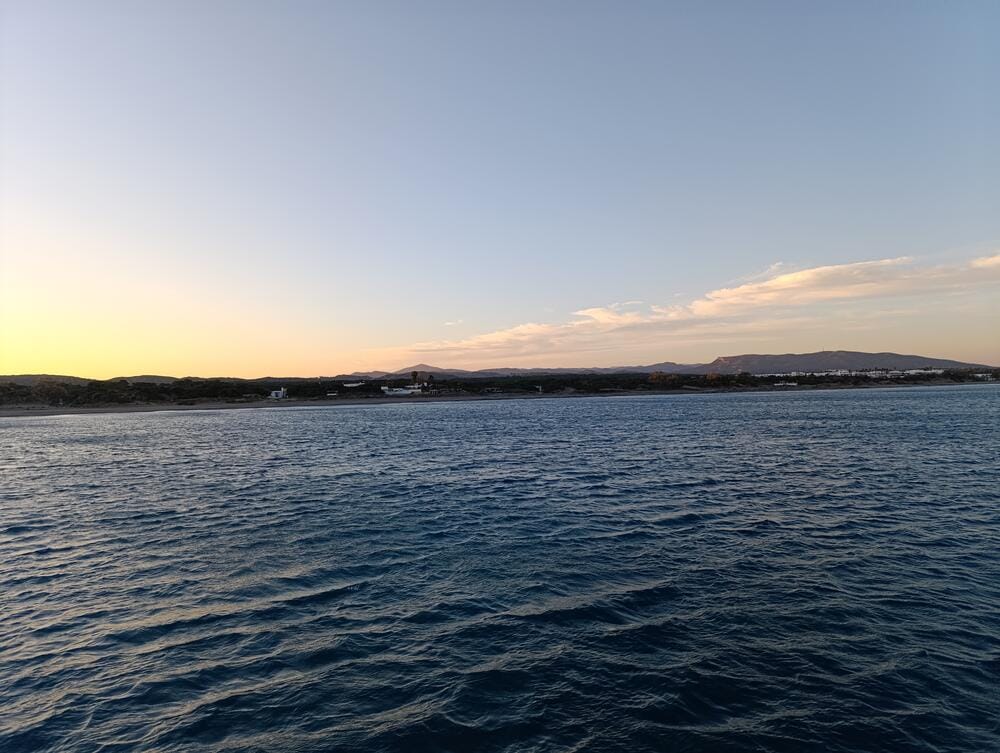
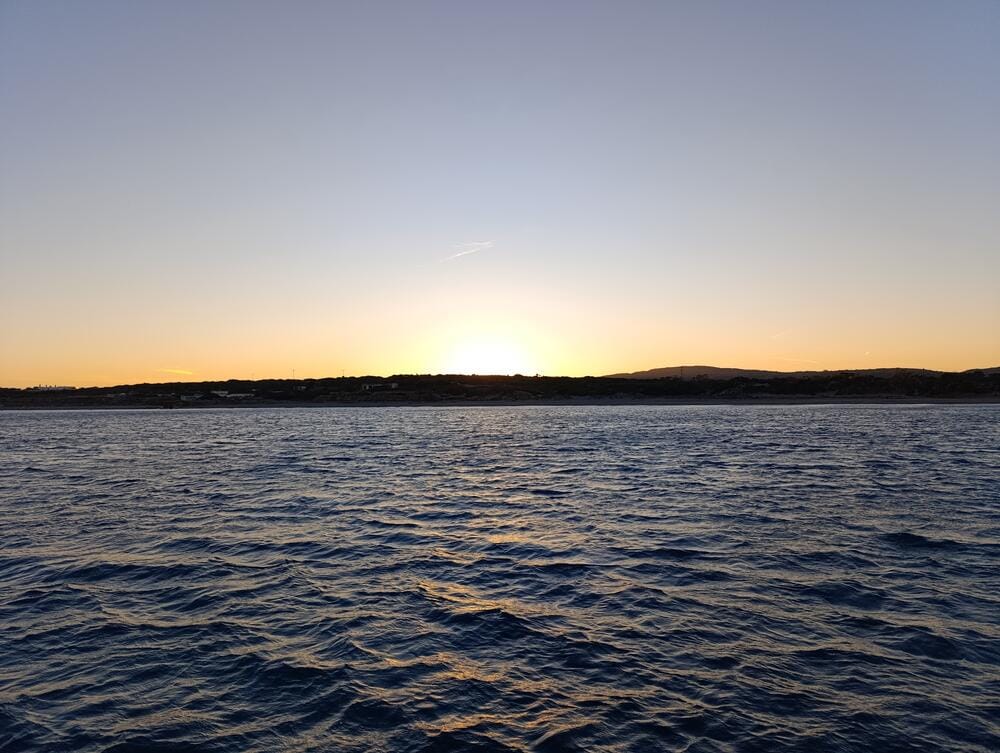
Plimmiri bay anchorage
One of the best things about sailing in April is the feeling of having the sea almost to yourself.
During the summer months, the same places can be crowded with charter yachts, day trips and tourist boats. In spring, you can still experience the islands in a much quieter way.
But every sailing trip has moments when the sea reminds you that a yacht is a complex machine, and small problems can quickly become serious.
This was one of those moments.
The Mystery of the Water Under the Floor
The boat was sailing on a strong starboard tack with a significant heel.
At some point, I went downstairs to the saloon to make a frappe.
Almost casually, I looked towards my cabin — the port aft cabin.
Something was wrong.
There was water on the floor.
At first, it looked like a small amount. But after opening the floorboards, we realised the situation was much worse.
Water had already spread from the aft cabins and was moving towards the centre of the boat.
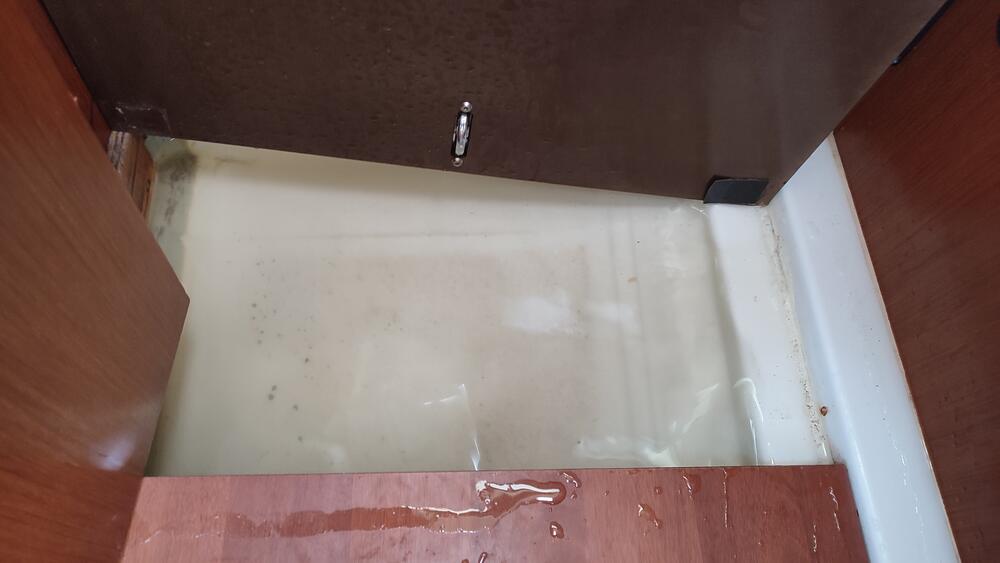
The most worrying part was that it was getting close to the batteries.
On a yacht, water inside the boat is never something to ignore. Even clean water can damage electrical systems, and salt water can create even bigger problems.
We immediately started investigating.
The first suspicion was the water tanks.
The forward tank was empty, although we had filled it before departure and had barely used it. The water was also fresh, not salty.
The explanation became more complicated.
Before this discovery, we had already noticed that the bilge pump was activating regularly during our overnight stay in Lindos.
At the time, we assumed it was just a small leak.
Now we understood that something was wrong.
We started removing water manually.
Twenty buckets.
That is how much water we eventually removed from the boat.
Twenty buckets of fresh water that had somehow appeared inside a modern charter yacht.
It was one of those moments when everyone becomes extremely focused. The relaxing sailing holiday suddenly turns into a small engineering investigation.
Fortunately, we managed to dry everything and continue.
But the lesson was clear:
Never ignore a bilge pump that activates unexpectedly.
A yacht is full of systems hidden behind walls and under floors. A small warning sign can become a major problem later.
Day 4 — Plimmiri to Diafani, Karpathos
Distance: approximately 40 nautical miles
Wind: lightening during the passage
Destination: Diafani, Karpathos
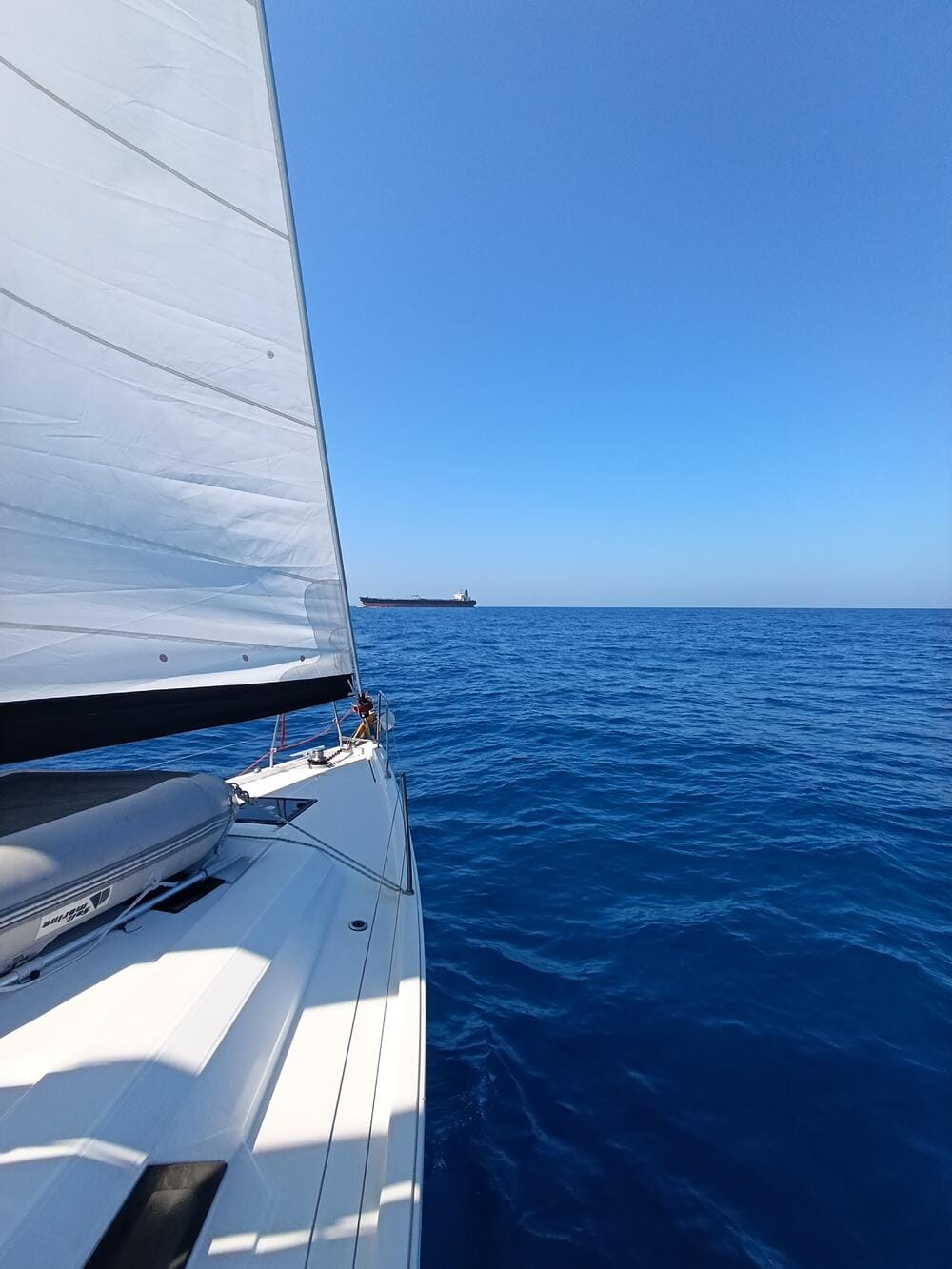
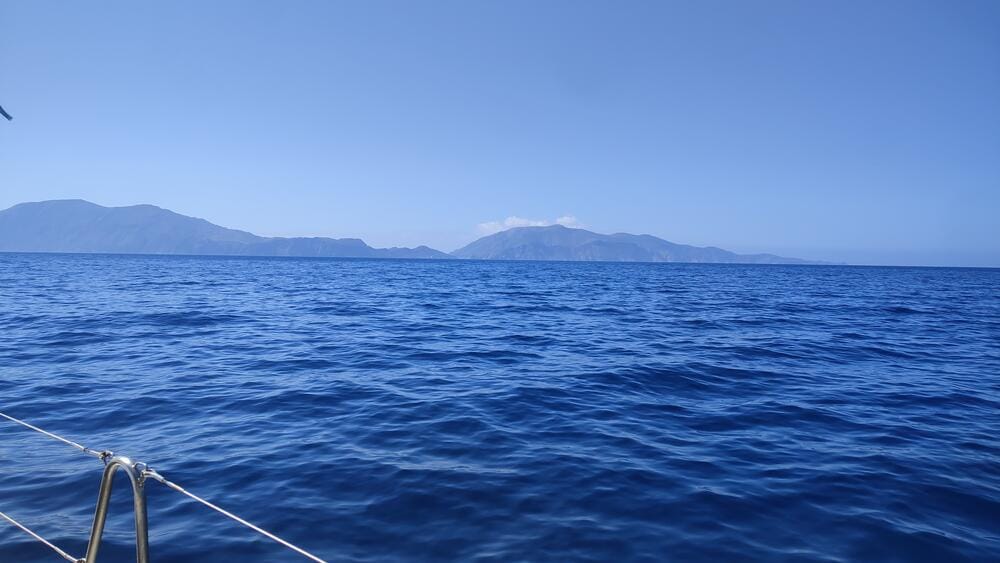
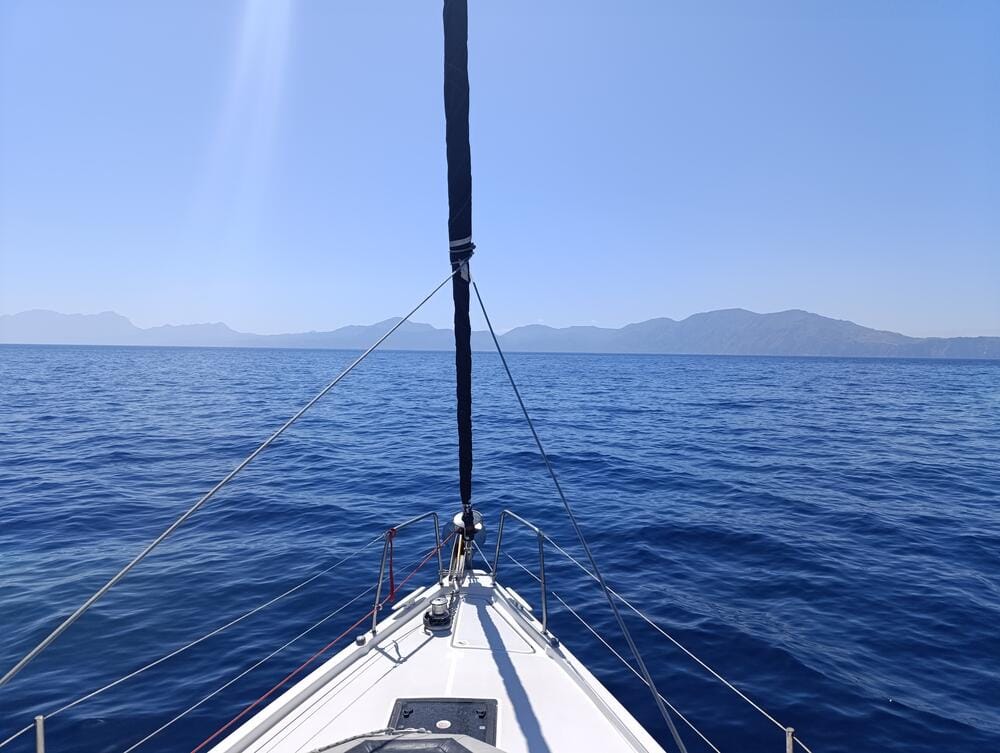
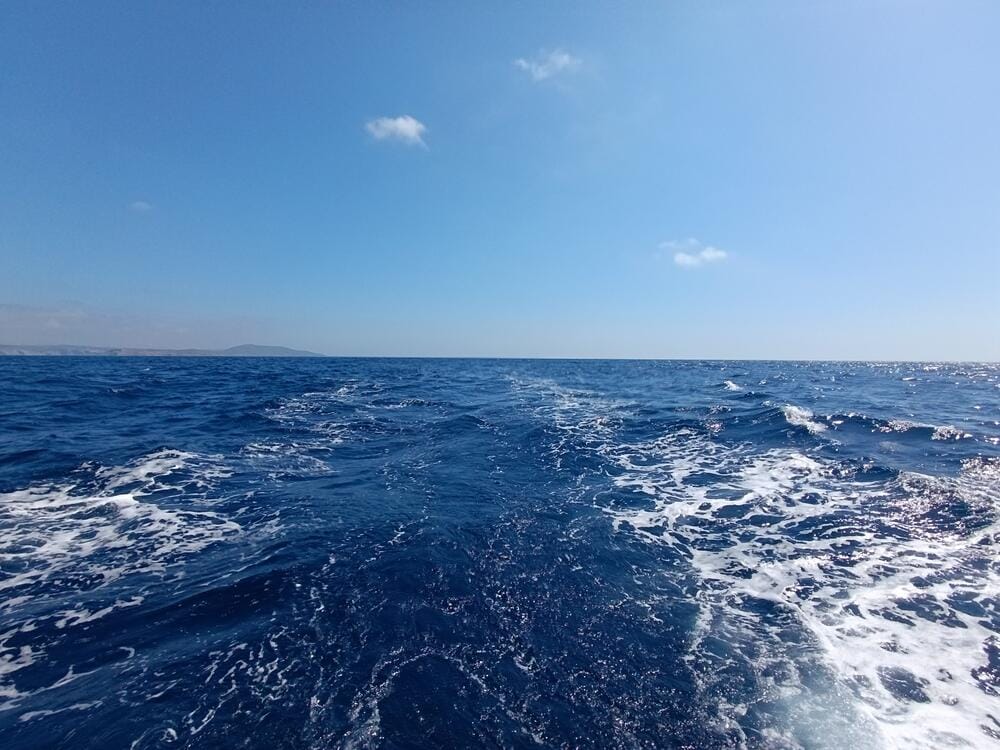
Long sailing passage towards Karpathos
The next day was our longest passage.
Our destination was Diafani, a small fishing village on the northern coast of Karpathos.
Initially, we sailed.
The morning wind was enough to keep the sails full, and once again we enjoyed the simple pleasure of moving through the Aegean without engine noise.
But halfway to Karpathos, the wind disappeared.
The sails started to lose shape, the boat slowed down, and eventually we had no choice but to start the engine.
The last three hours of the passage were under motor.
This is normal Mediterranean sailing. Forecasts are useful, but the sea always has the final word.
Anchoring in Diafani
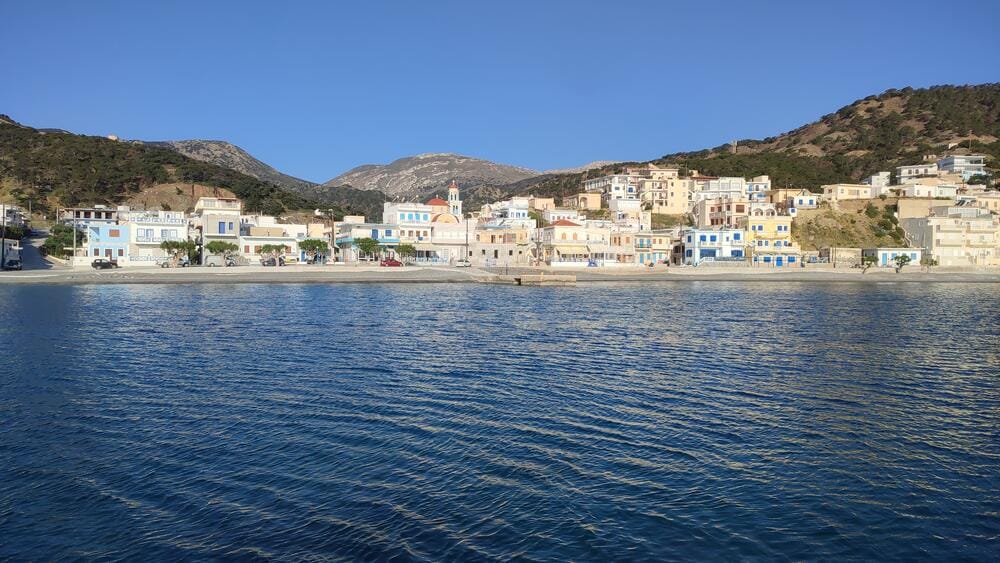
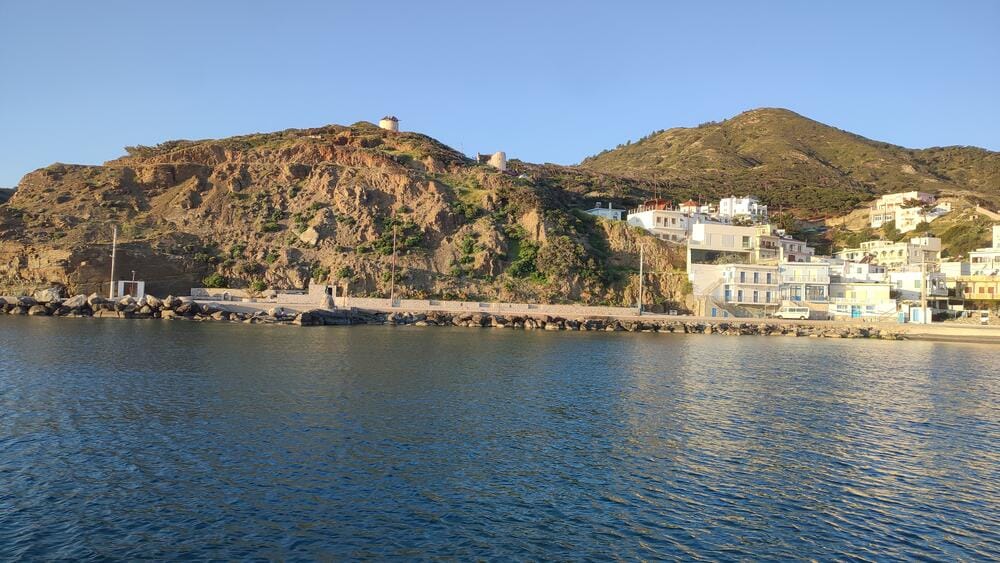
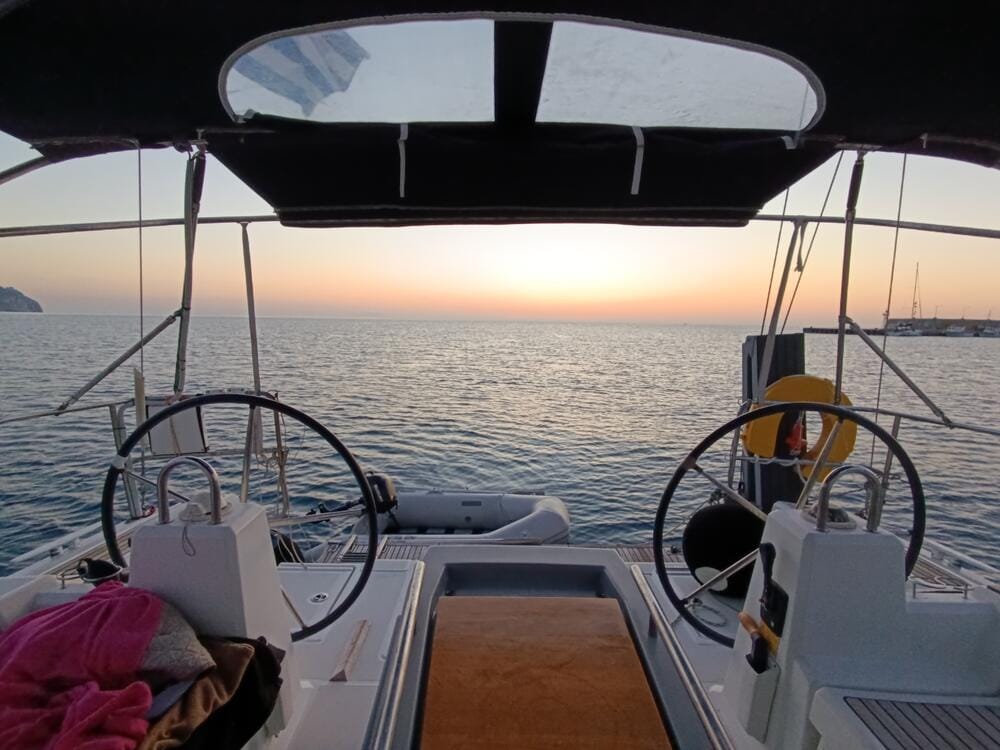
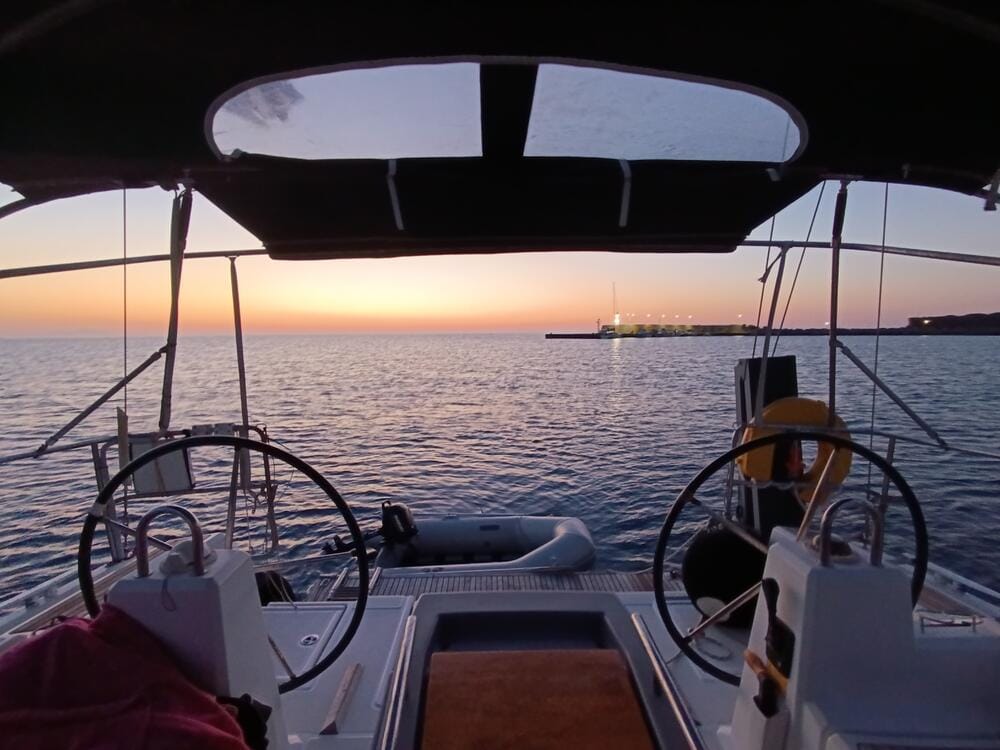
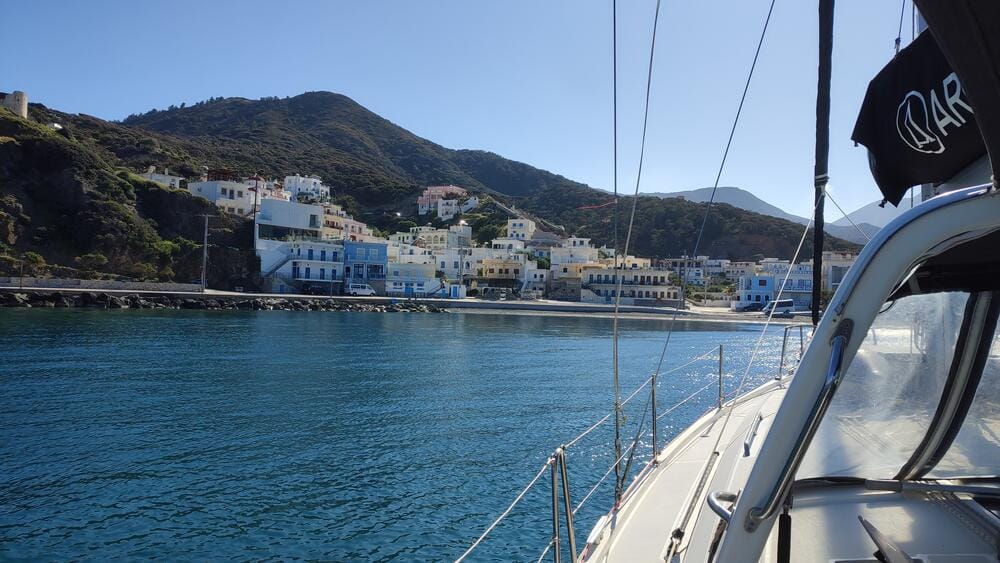
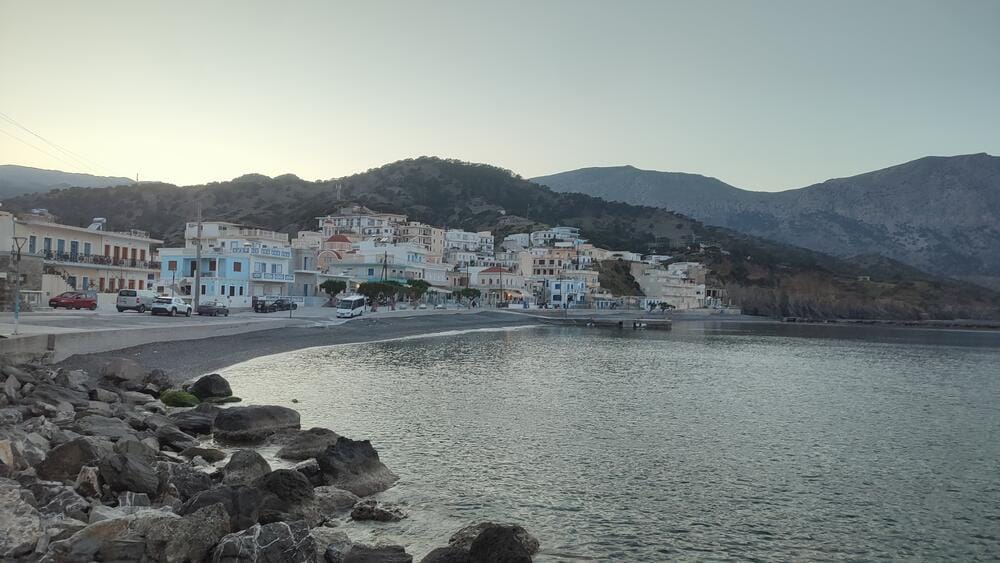
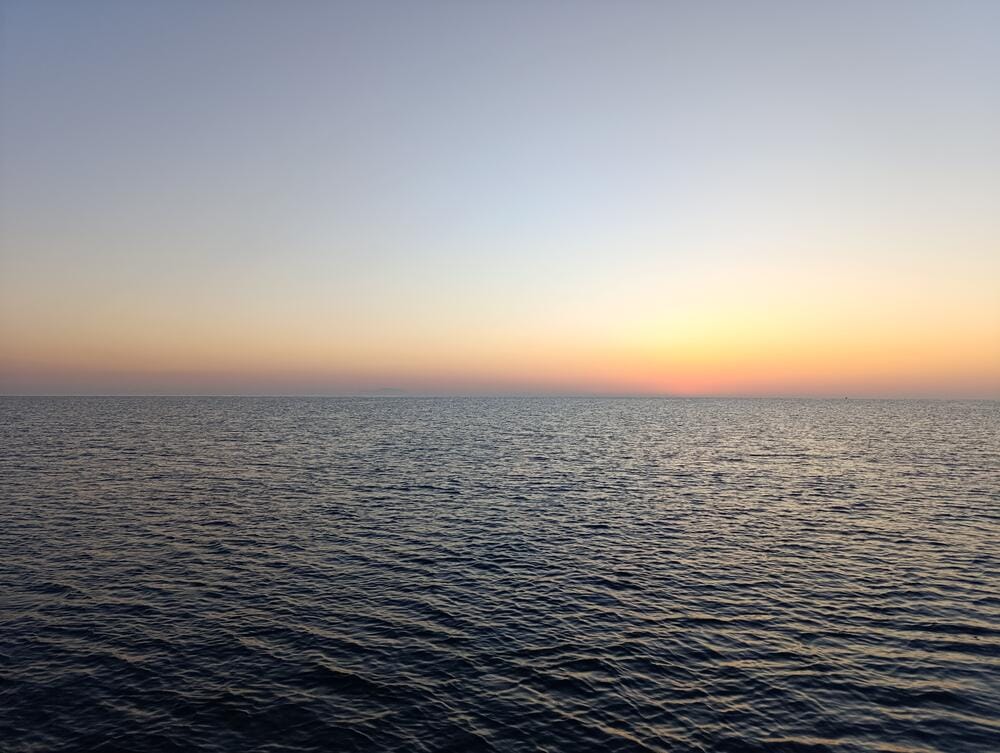
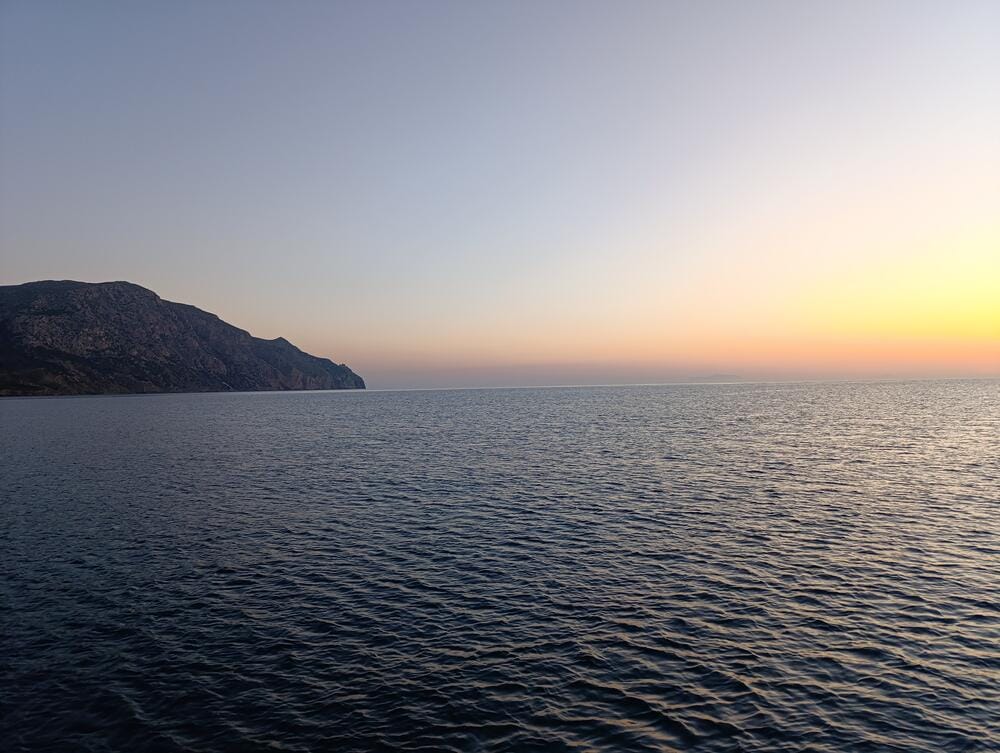
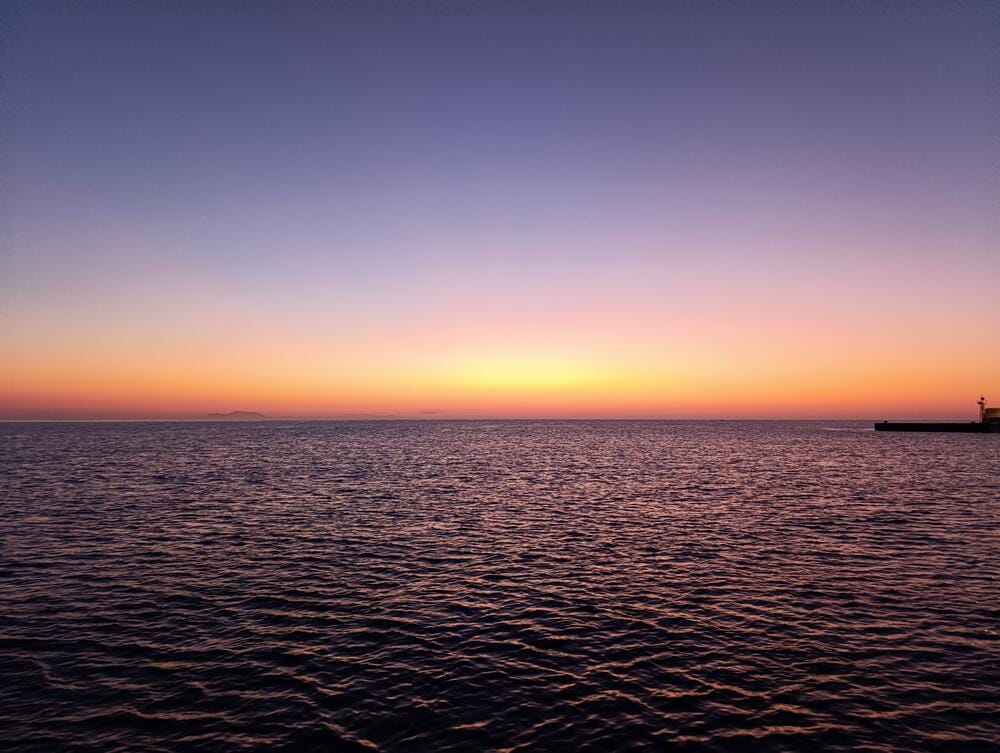
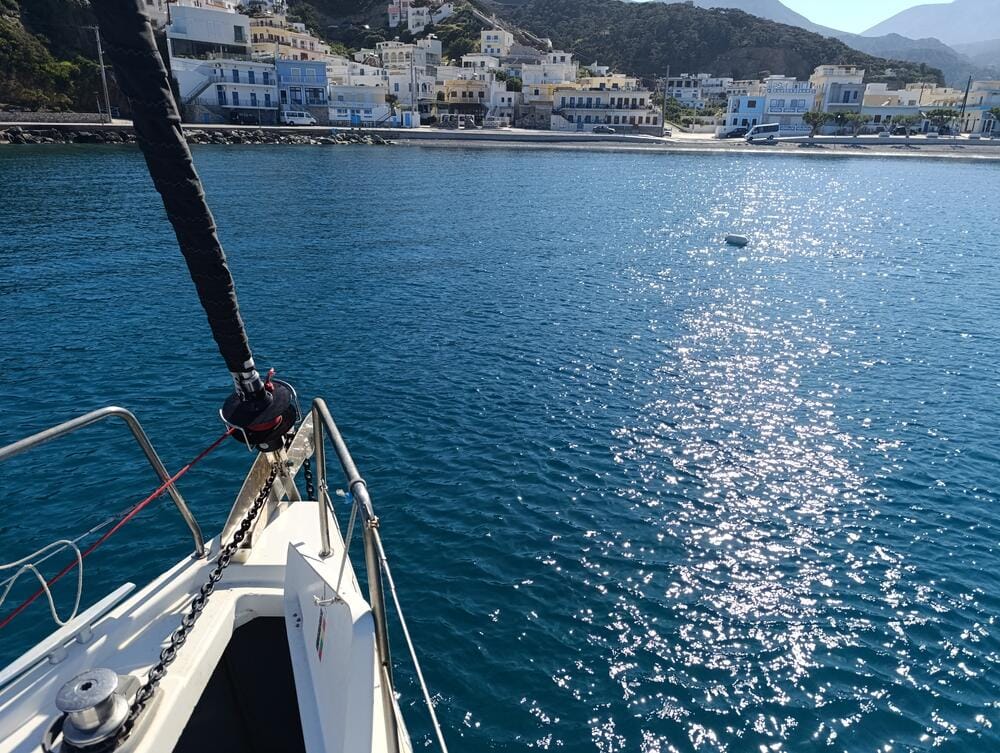
Diafani
Approaching Diafani, we noticed that the water became relatively shallow, but the seabed was not always ideal.
The bottom consists of sand mixed with rocky areas, so choosing the right anchoring spot was important.
We found a sandy patch and dropped the anchor.
Because of the uncertain bottom conditions, we decided to use a trip line.
A trip line is a simple but very useful piece of equipment.
It is a rope attached to the crown of the anchor and connected to a floating buoy. If the anchor becomes stuck under a rock, pulling the trip line can help release it backwards instead of trying to break it free by pulling the chain.
For our setup, we used a fender with approximately six metres of rope.
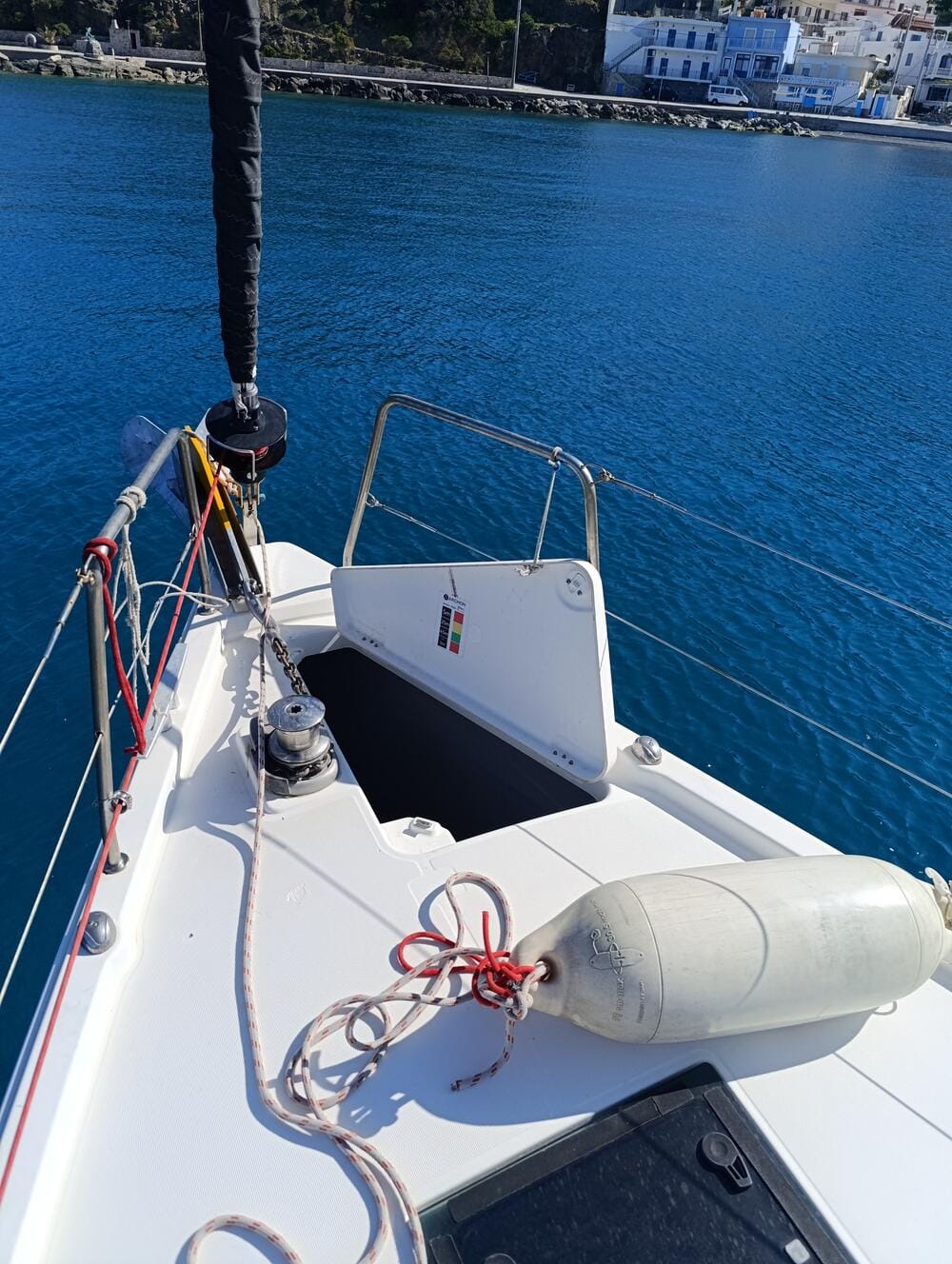
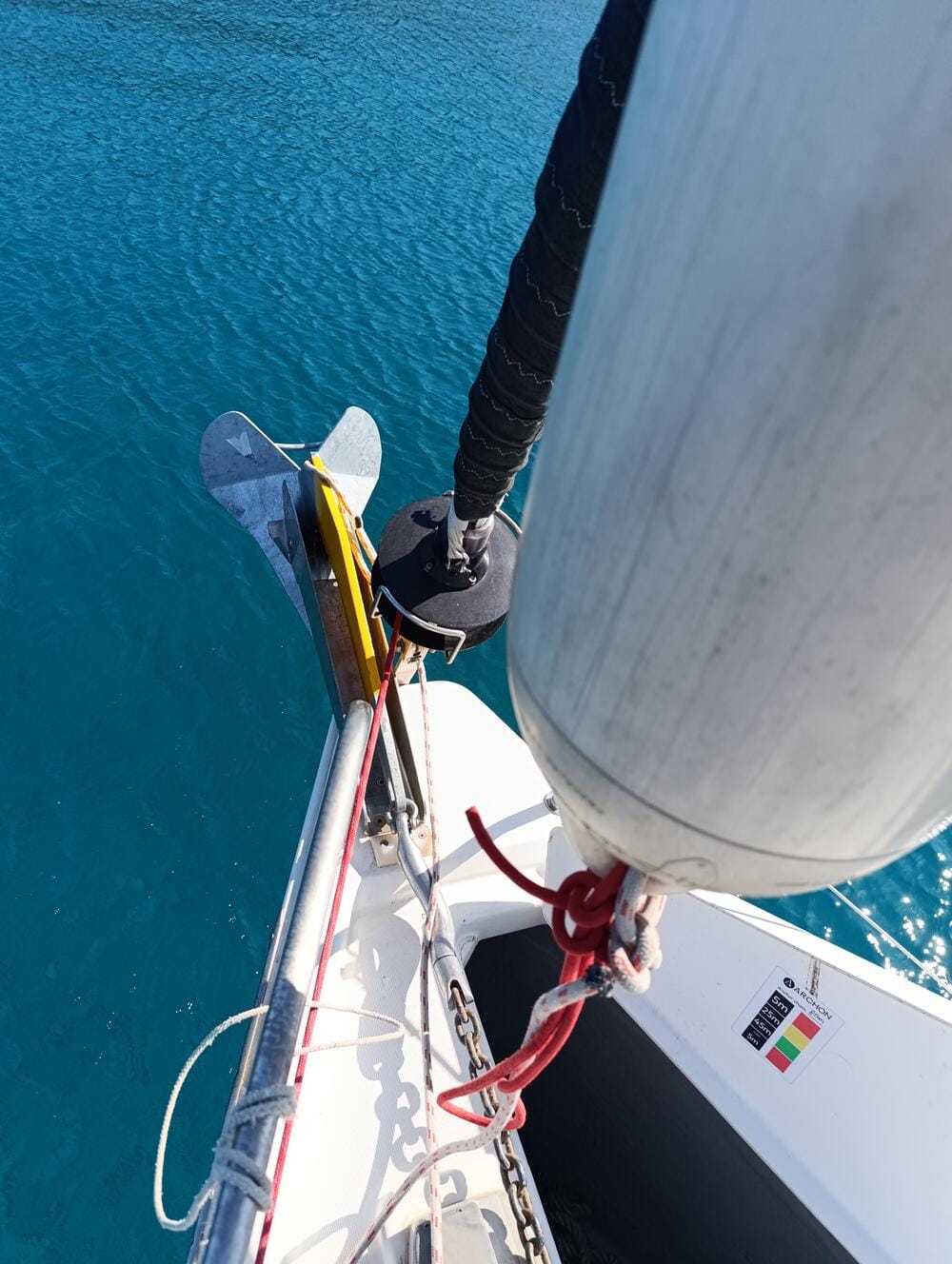
trip line
Fortunately, we never needed it.
But when anchoring in unfamiliar places, especially where the bottom is rocky, a trip line can save a lot of frustration.
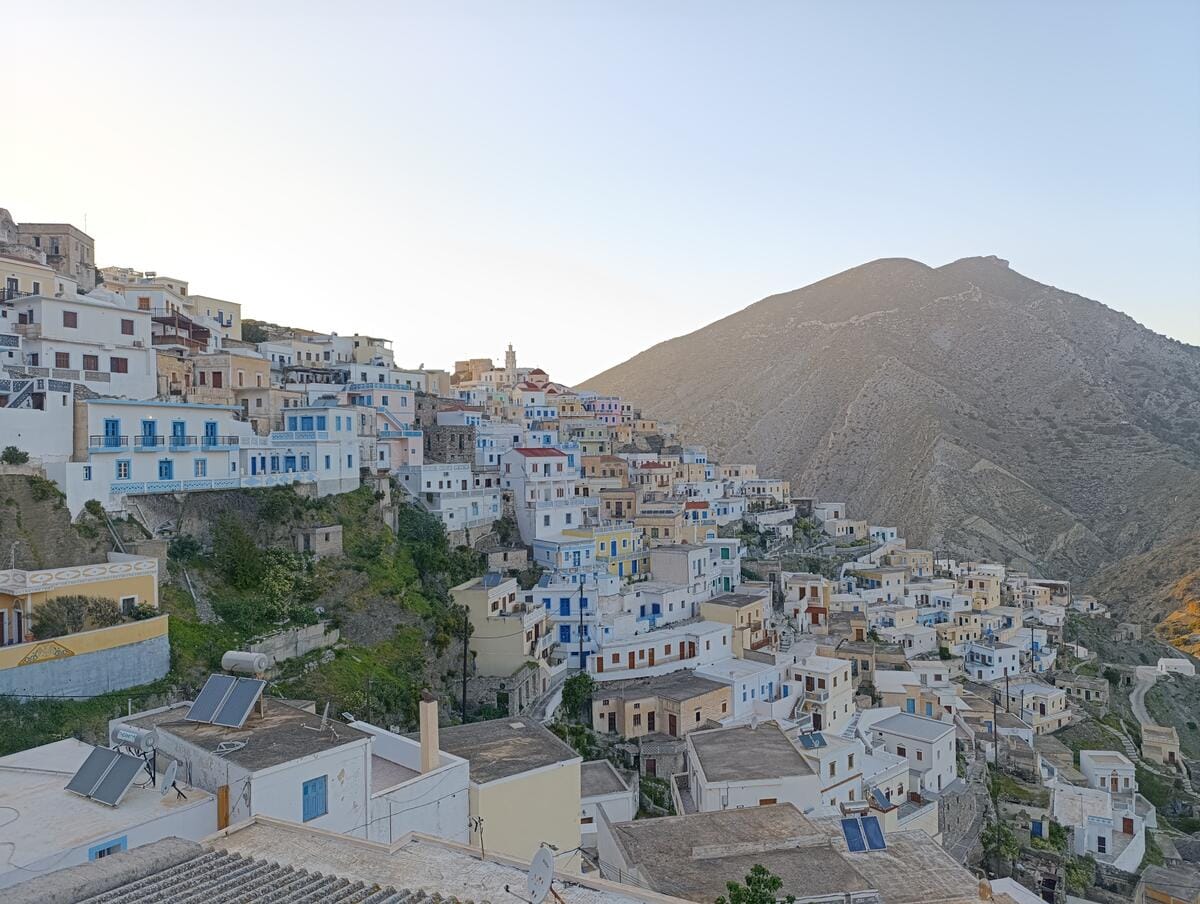
Olympos — A Mountain Village Frozen in Time
One of the main reasons we wanted to visit Karpathos was Olympos.
The village of Olympos is one of the most unique places in Greece.
Located high in the mountains between two hills, it was historically built in this location partly for protection from pirates. From the sea, the village is almost invisible, hidden among the landscape.
For centuries, this isolation helped preserve local traditions, architecture and even elements of the local dialect.
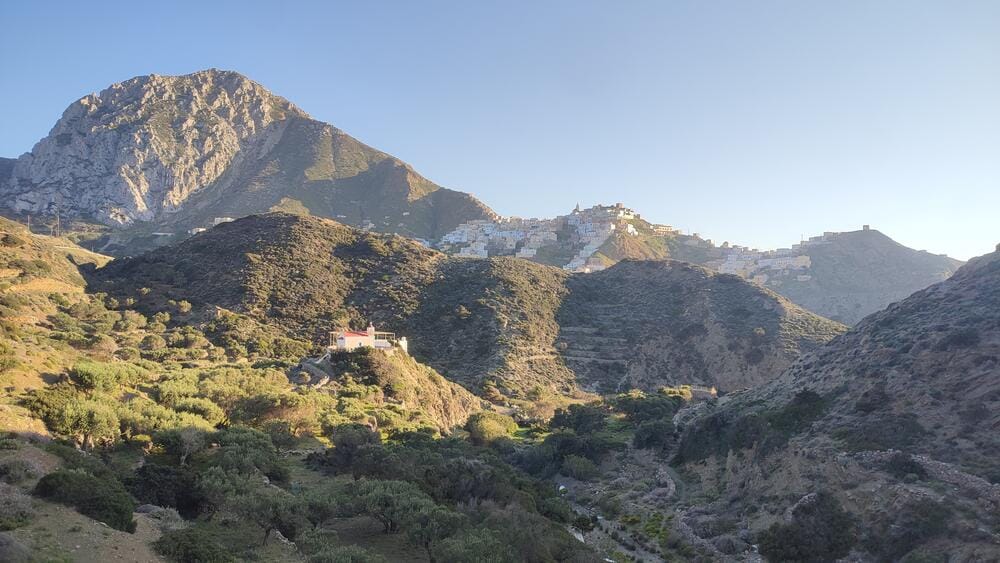
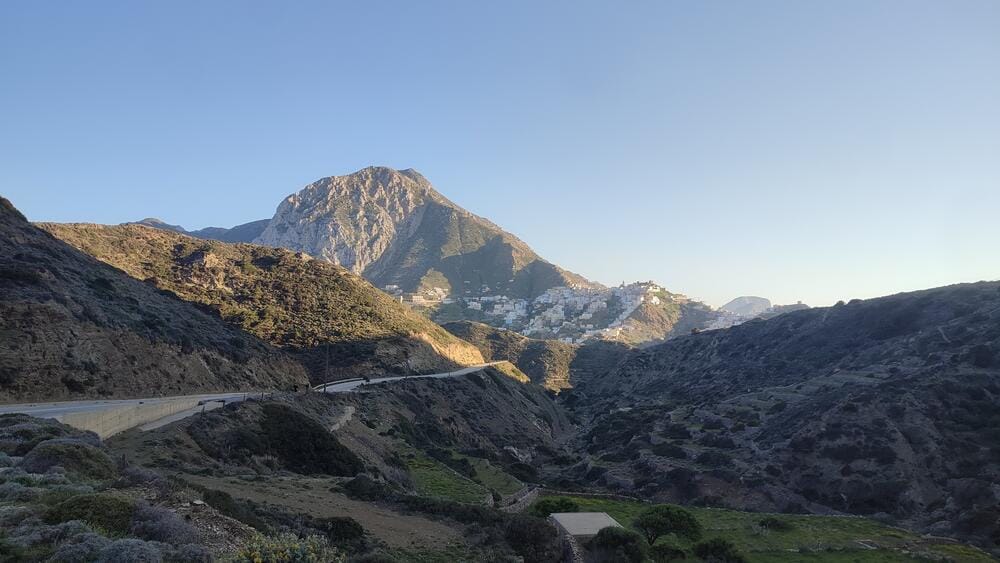
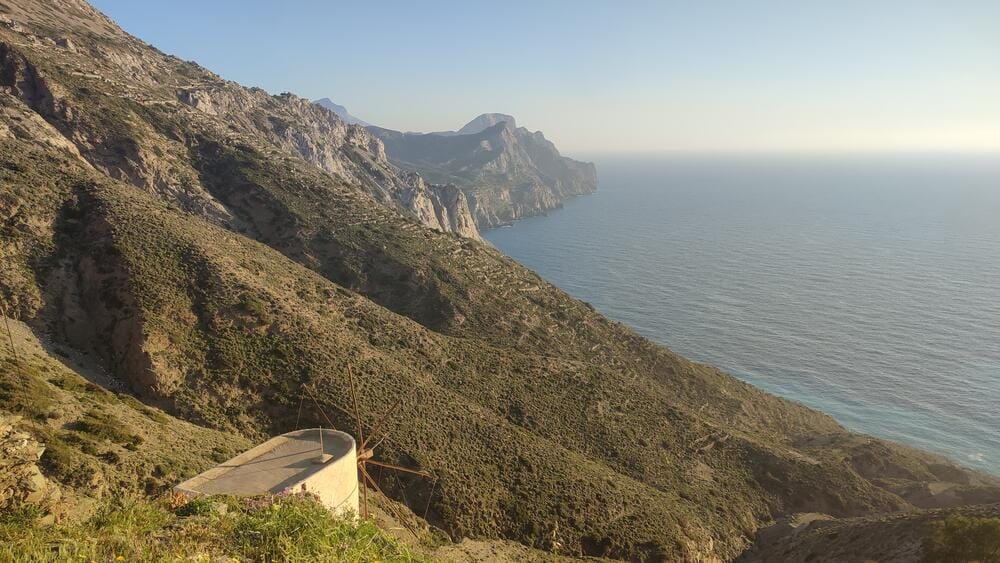
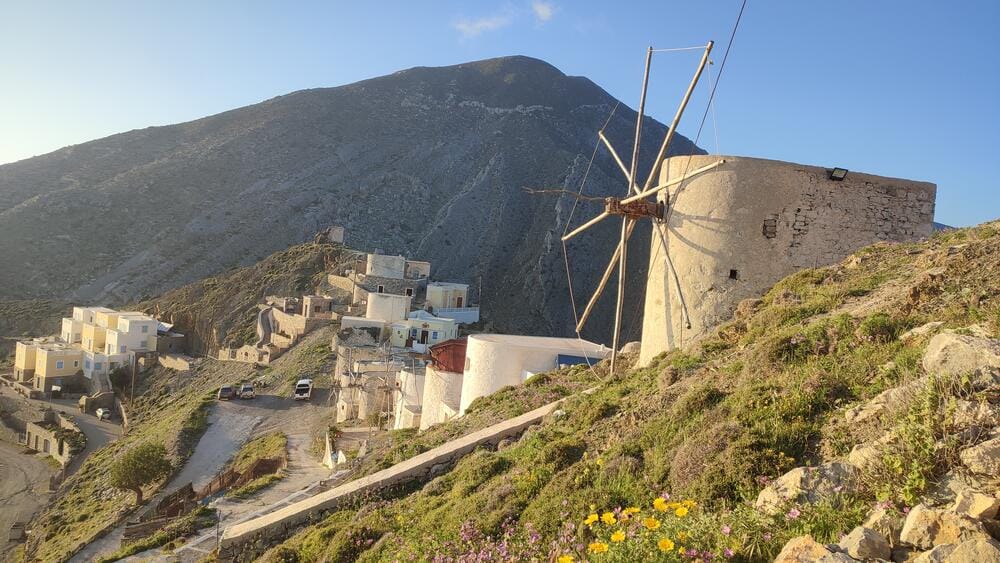
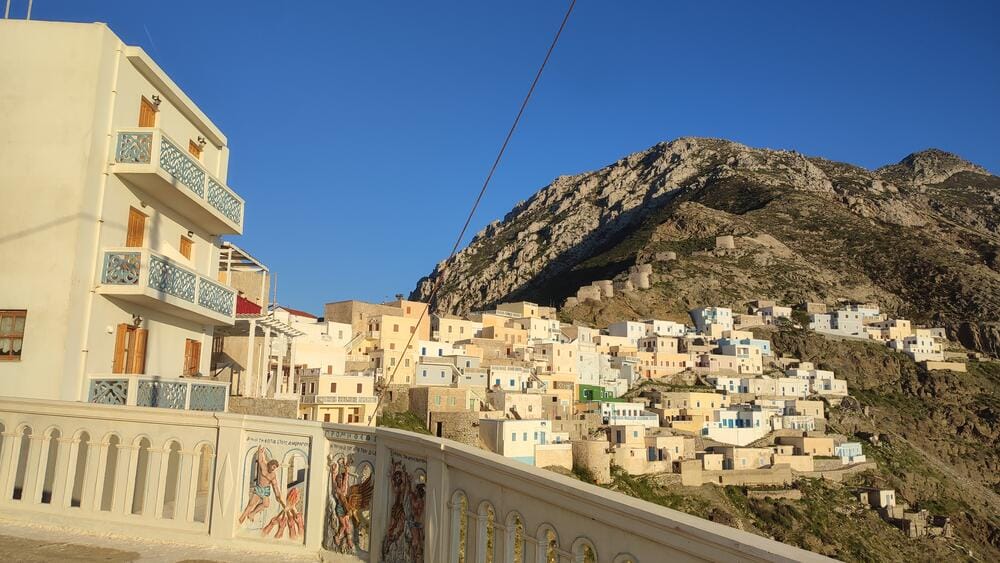
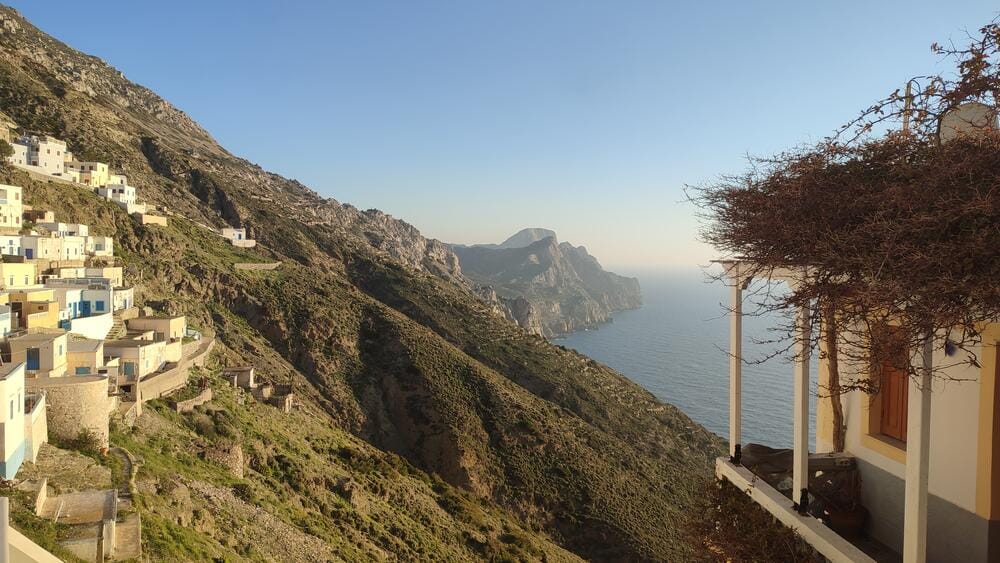
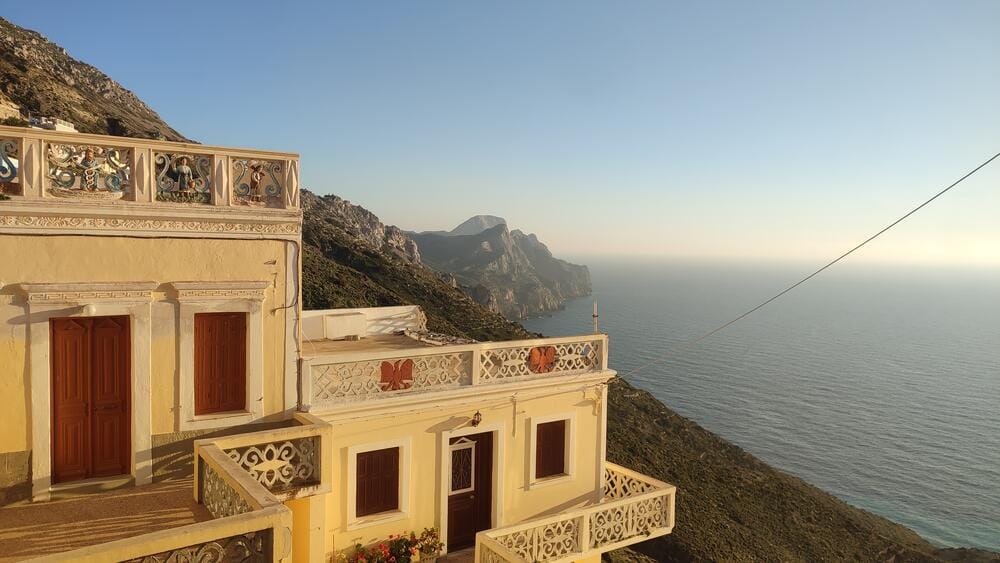
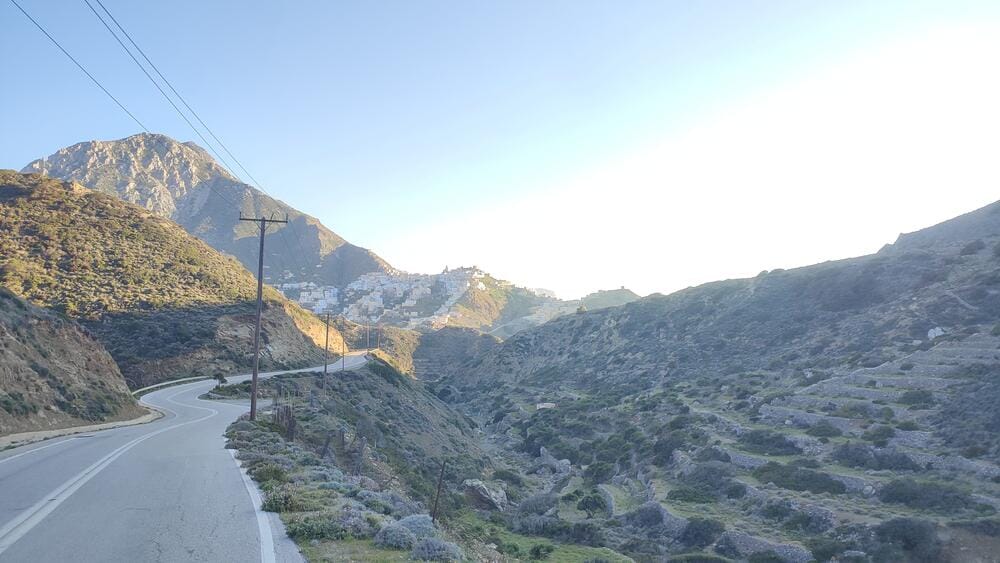
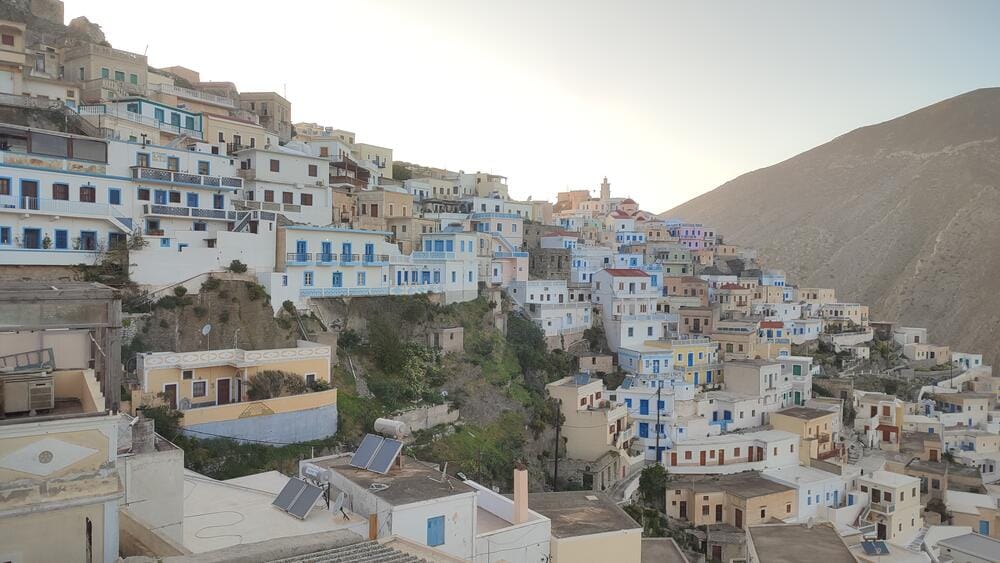
Olympos village on the mountain slope
After arriving in Diafani, we immediately started the hike towards Olympos.
The route itself was one of the highlights.
The path climbs through dramatic mountain scenery, with views over the coastline, valleys and the endless Aegean.
The landscape of Karpathos feels different from many other Greek islands. It is wilder, less developed and more rugged.
When we finally reached Olympos, it felt like stepping into another era.
Traditional houses climb the slopes, narrow streets twist between stone buildings, and windmills stand above the village.
During the summer season, Olympos can be busy with visitors, but in April it was almost empty.
Many shops were still closed.
After exploring the village, we needed to return to Diafani. Luckily, a local couple offered us a ride back, saving us a long walk.
Sometimes the best travel experiences come from simple interactions with local people.
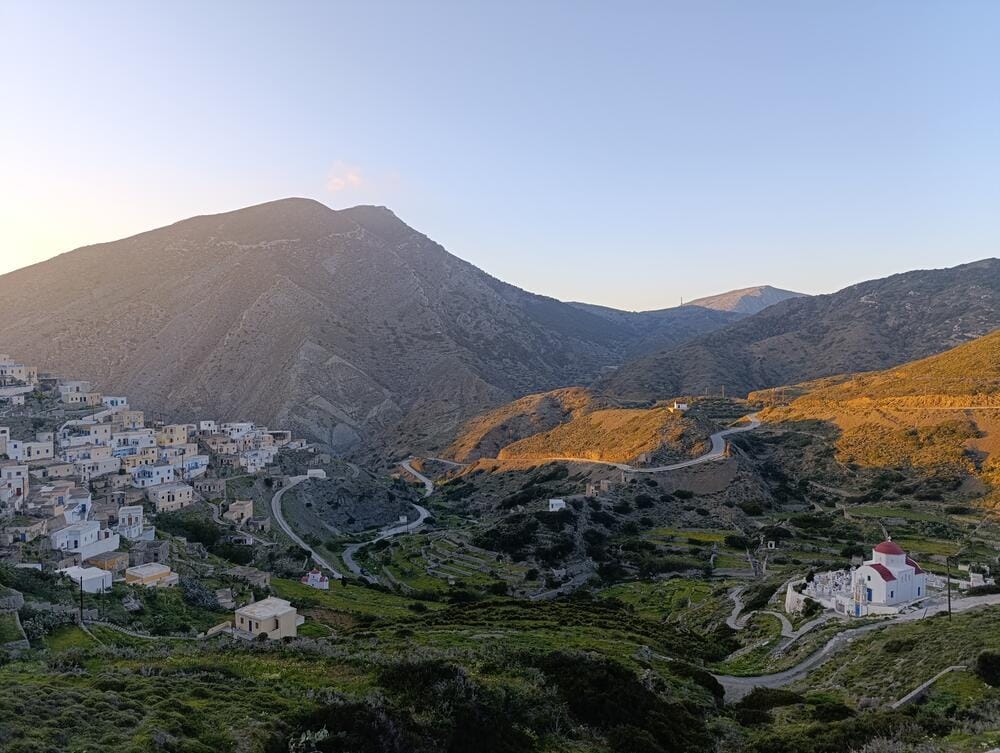
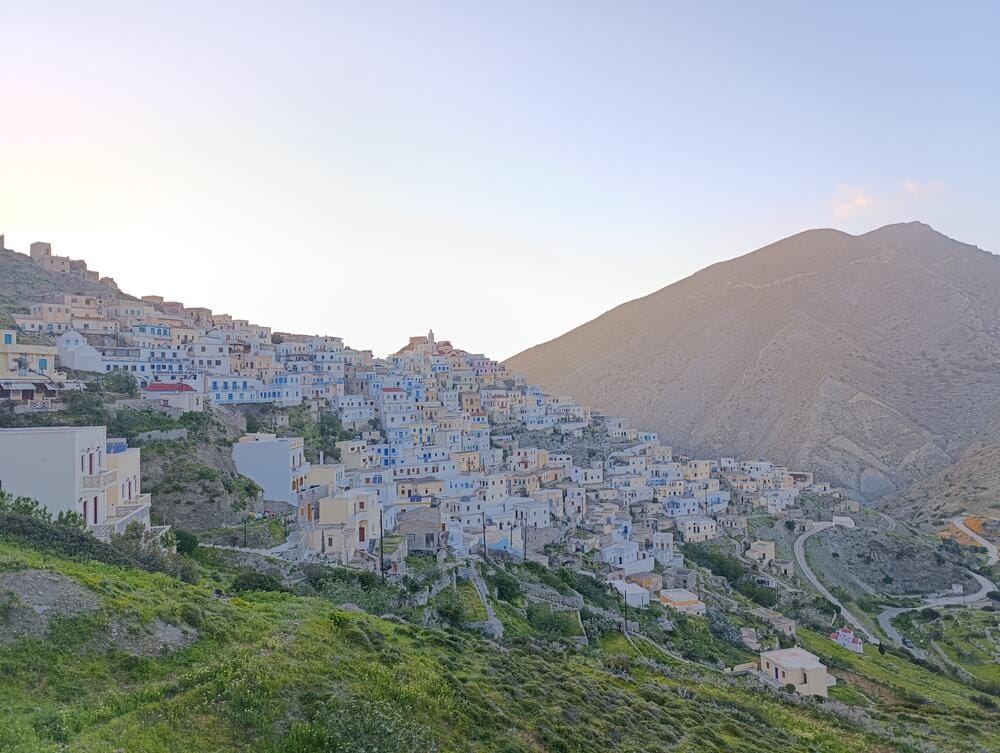
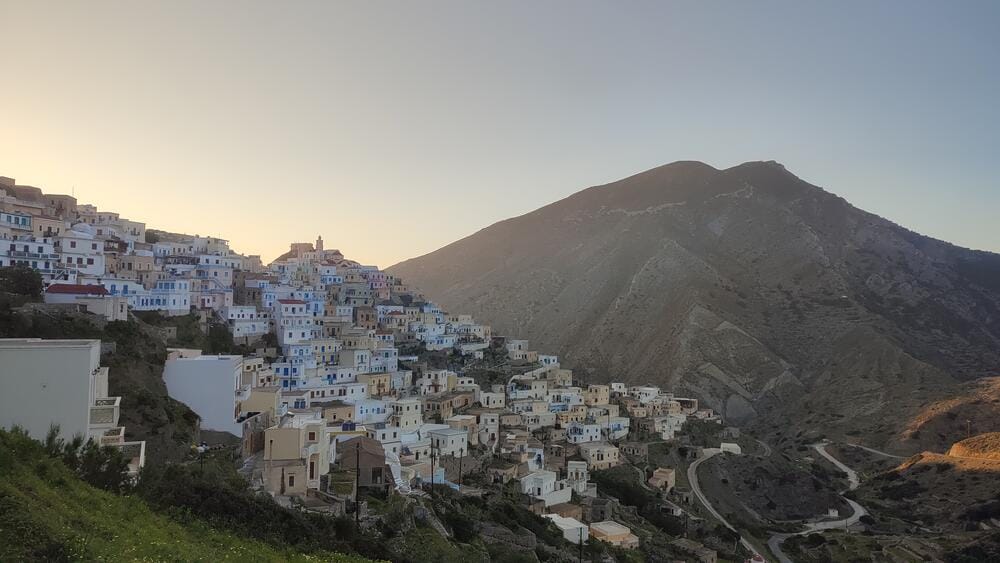
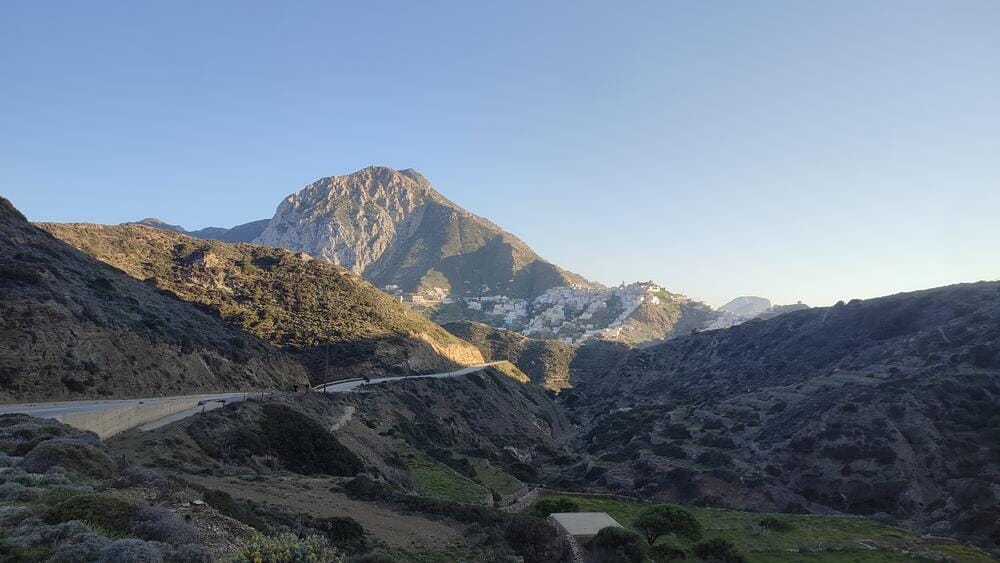
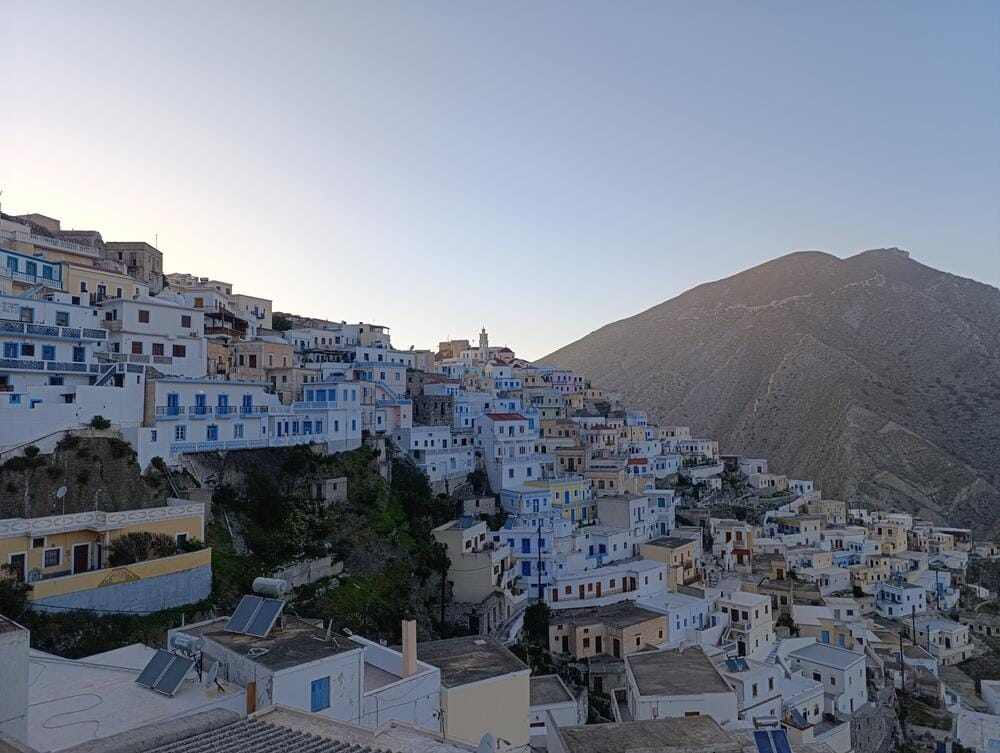
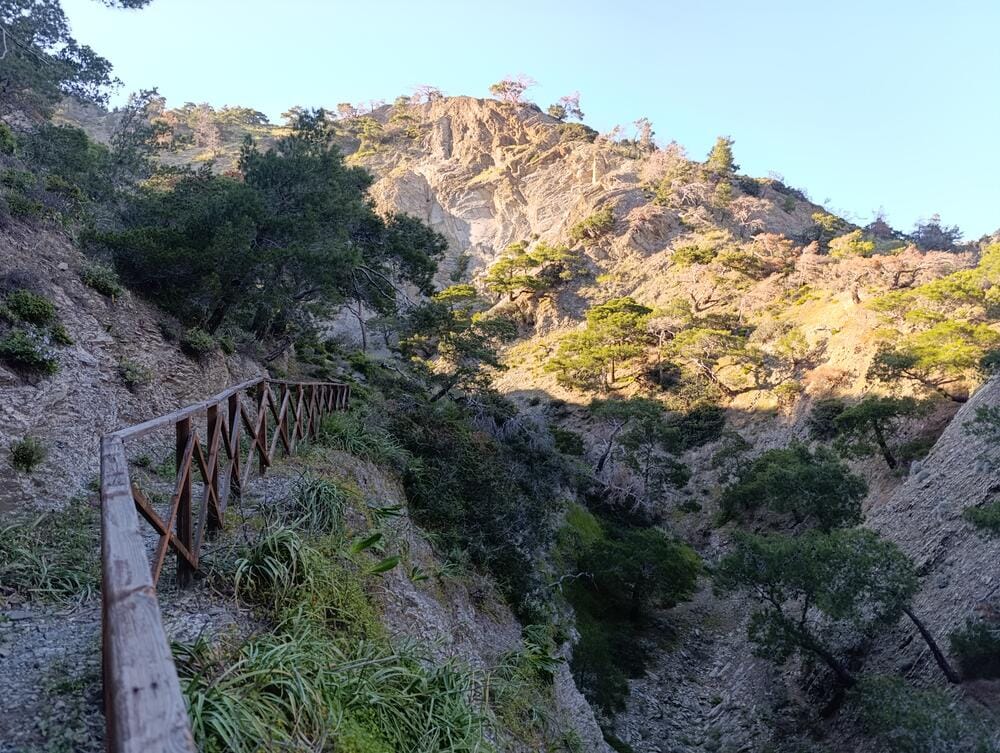
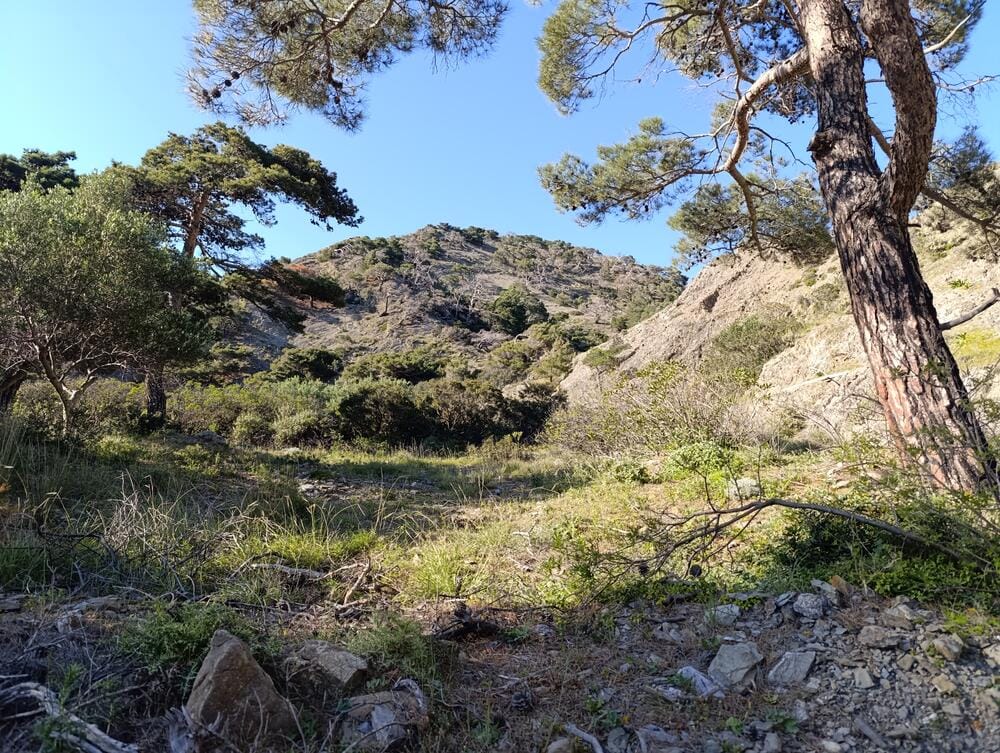
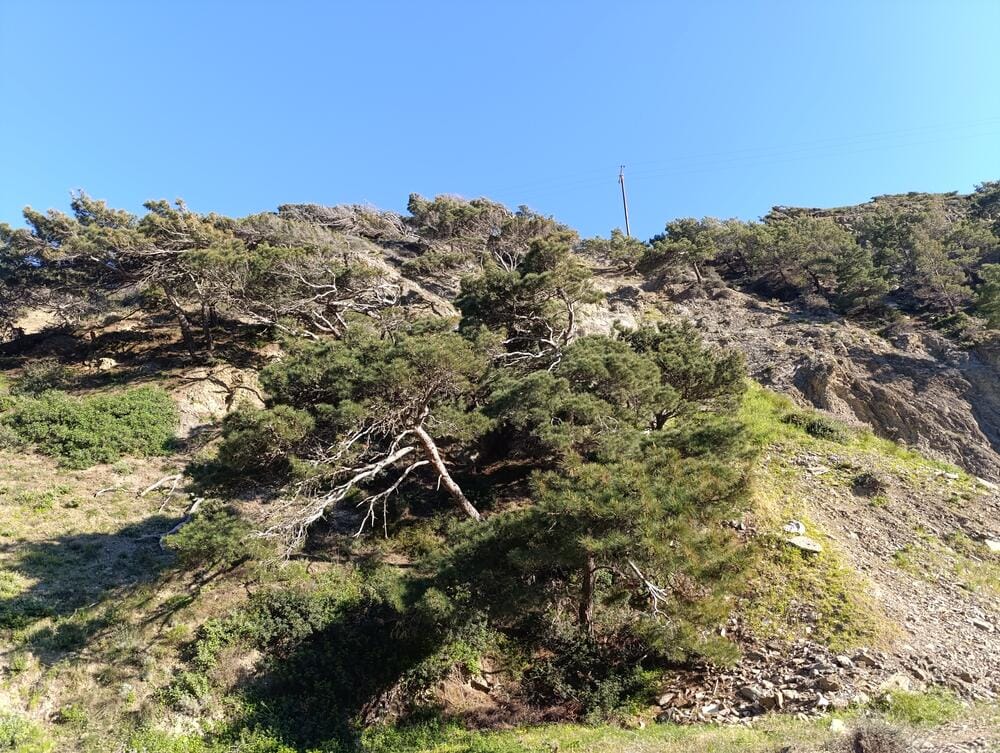
Olympos village, Karpathos
A Morning Adventure with Water
The next morning we went for another hike before swimming.
The views from the hills around Diafani were incredible. The combination of mountains, blue sea and complete silence is exactly what makes places like Karpathos special.
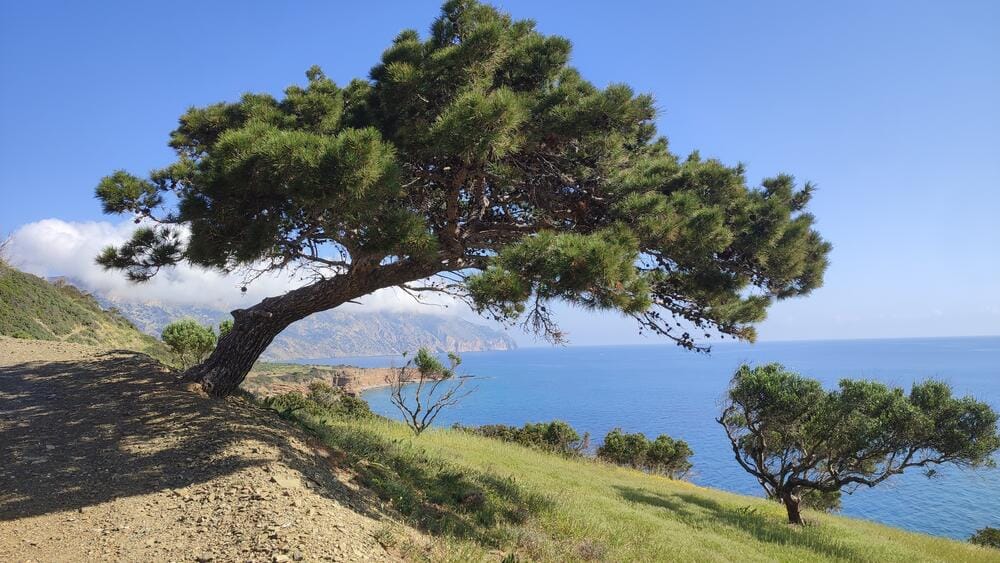
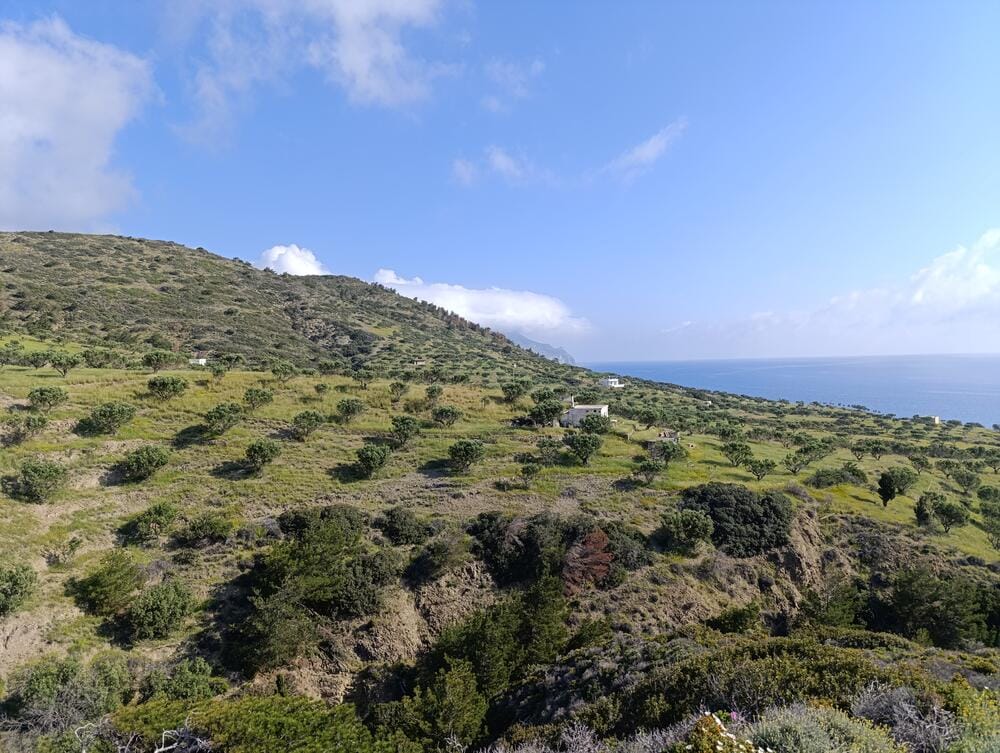
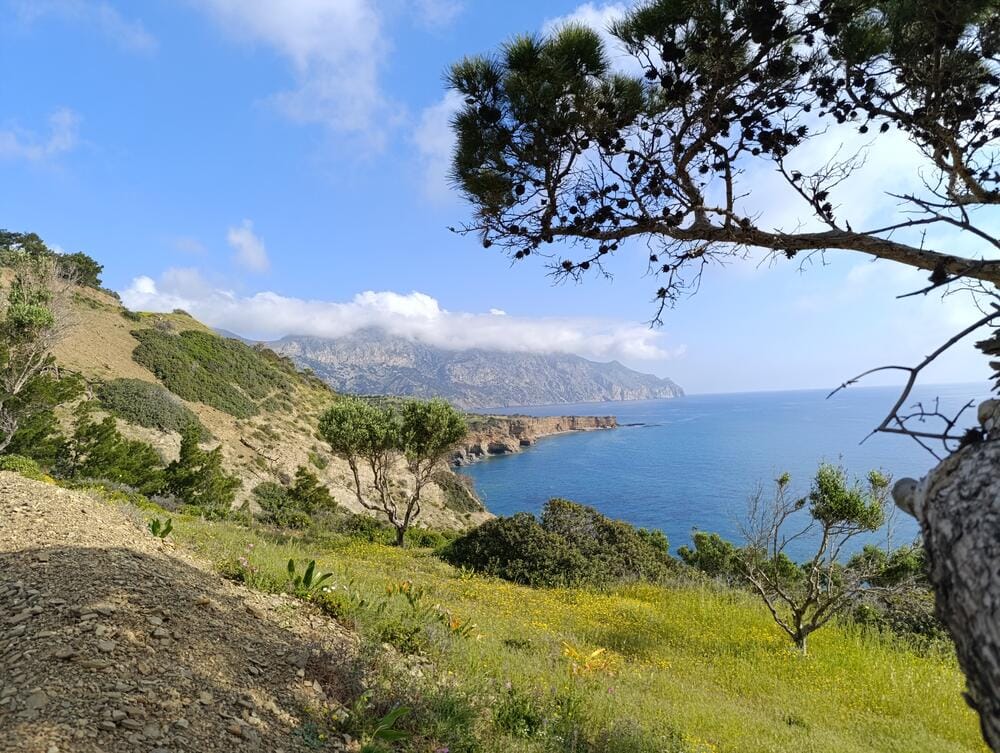
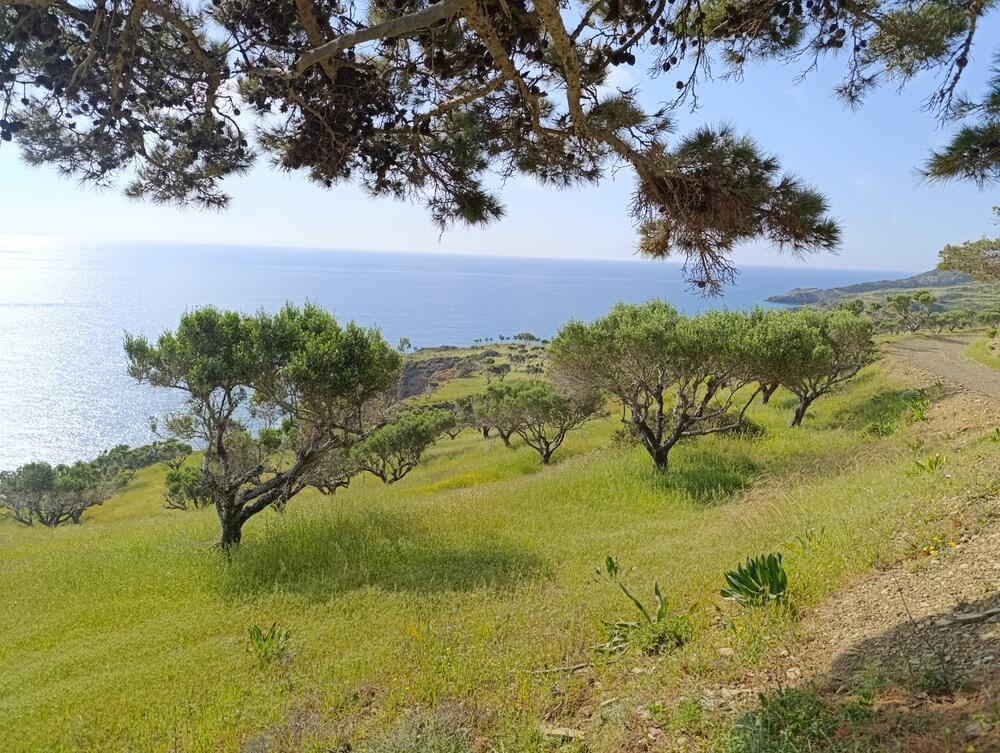
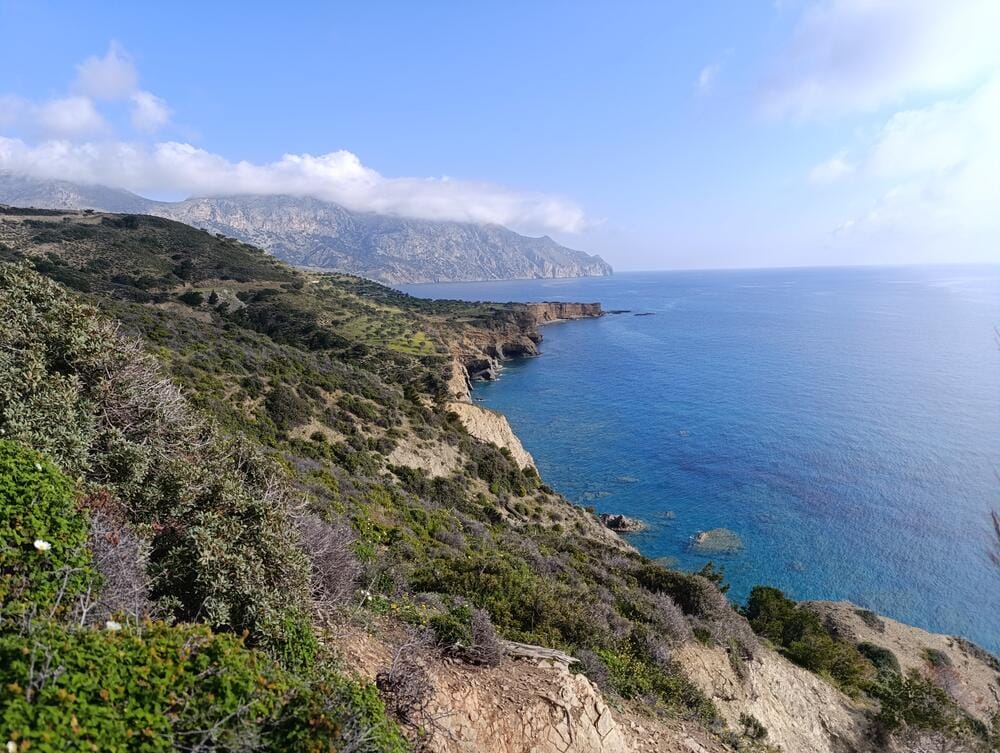
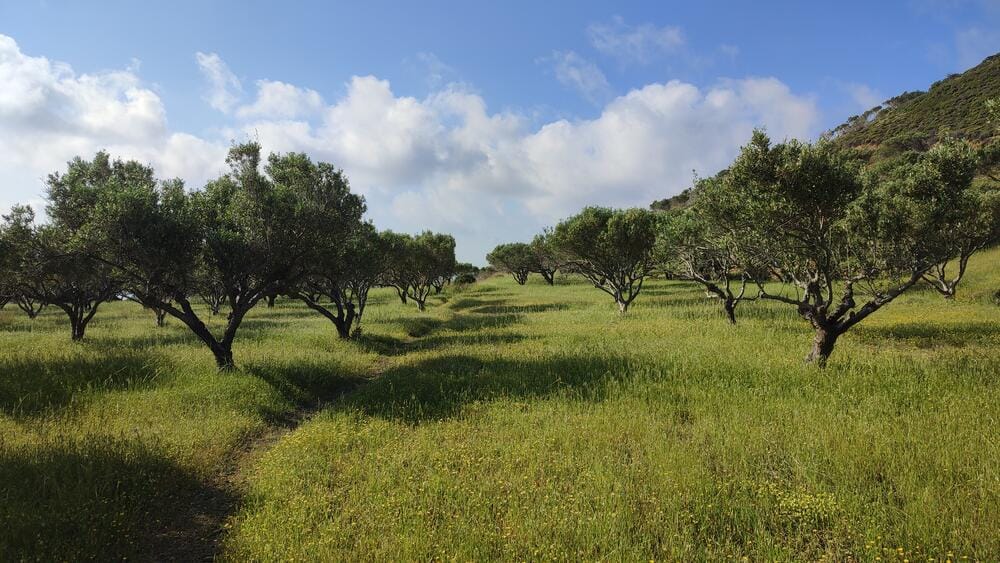
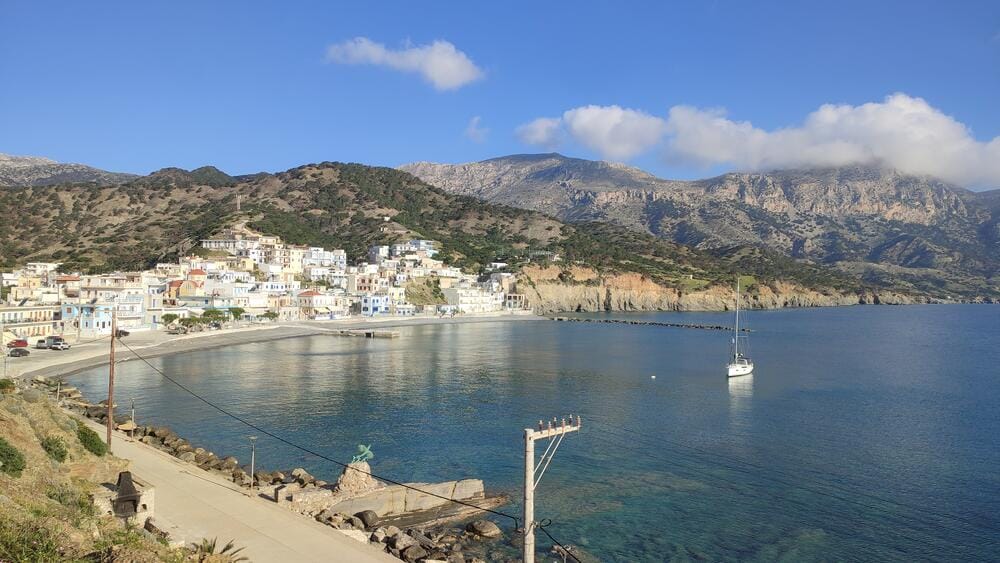
Karpathos hiking
Then came another small adventure.
We thought we had a problem with the water system.
The assumption was that the forward tank, which holds around 330 litres, was leaking and empty. The rear tank, around 200 litres, should have been the one we were using.
Eventually, our water supply ran out.
We decided to refill from the dock.
The problem was that the water connection was quite far away, and there was no easy way to position the boat. Because of the distance, we moved closer to the outer part of the pier where ferries normally dock.
A French sailing crew nearby helped us. They disconnected their hose and gave us a male-to-male adapter so we could connect ours.
We started filling the rear tank.
But then we discovered something unexpected.
The rear tank was already full.
The empty one was actually the forward tank.
So we filled the forward tank with 330 litres of water.
Another lesson learned:
Always know exactly which tank you are using.
On a modern yacht with multiple tanks and systems, assumptions can create unnecessary confusion.
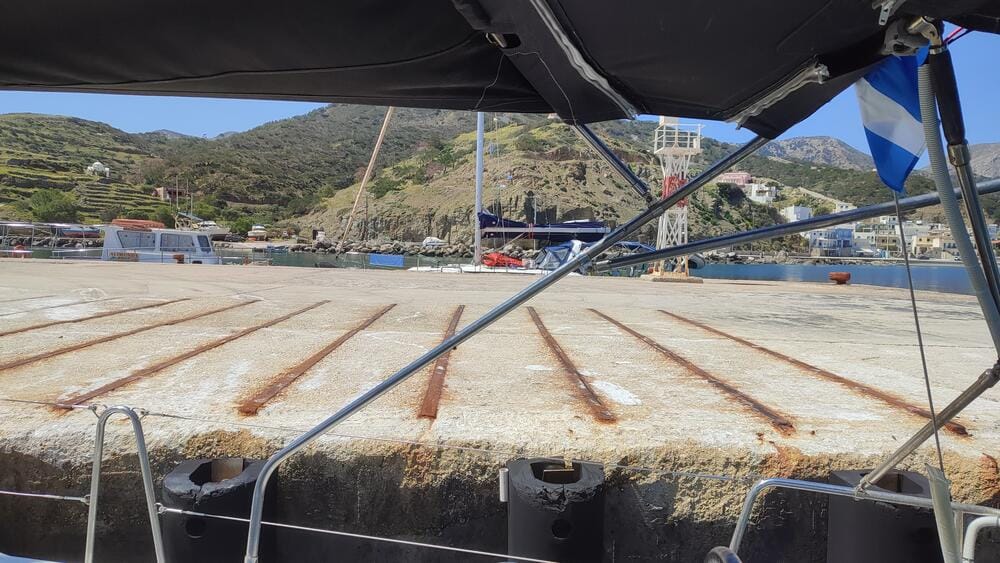
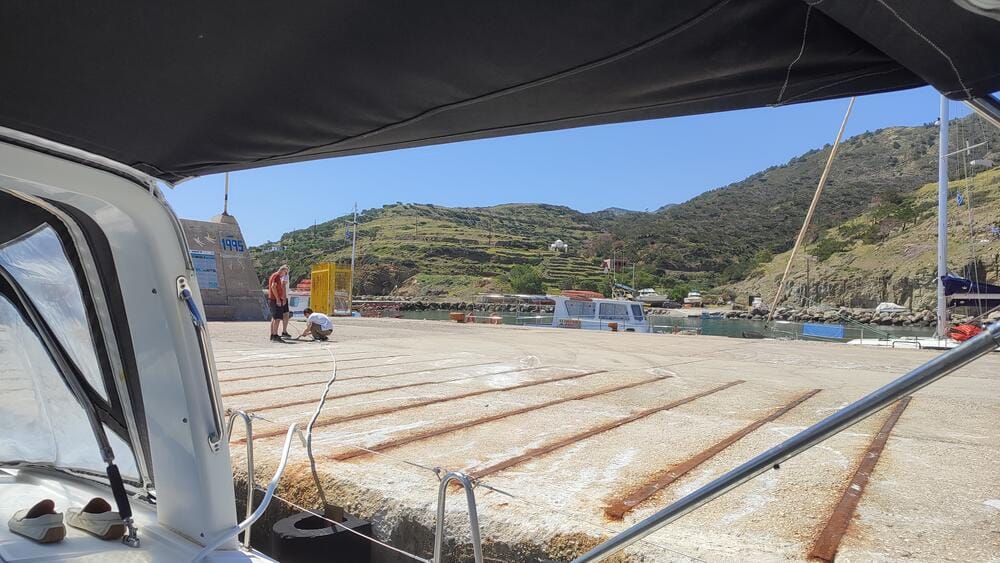
Water stop
Leaving the dock was another small challenge.
There were only two dolphins available, and the wind was slightly pushing us onto the pier.
Without enough space to set a spring line, we used the bow thruster to help us move away safely.
We managed to leave.
However, because of the swell at the pier, the yacht's starboard side was covered with black rubber marks from the dock protection.
Those marks followed us for several days.
We finally cleaned them in Symi.
We also noticed that a thin protective cover around the chainplate area — where the shrouds connect the rigging to the hull — was badly damaged.
We are still not completely sure what caused it.
It could have been contact with the harbour fenders, or perhaps the damage was already there and we simply had not noticed it.
Another reminder that on a yacht, every detail matters.
Day 5 — Diafani to Halki
Distance: approximately 35 nautical miles
Conditions: mostly under engine
Destination: Halki island
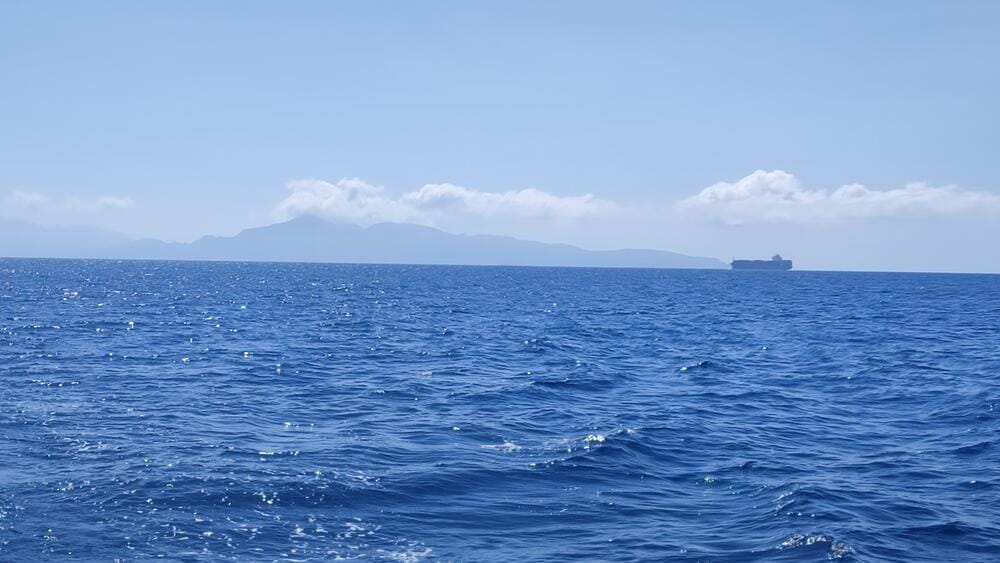
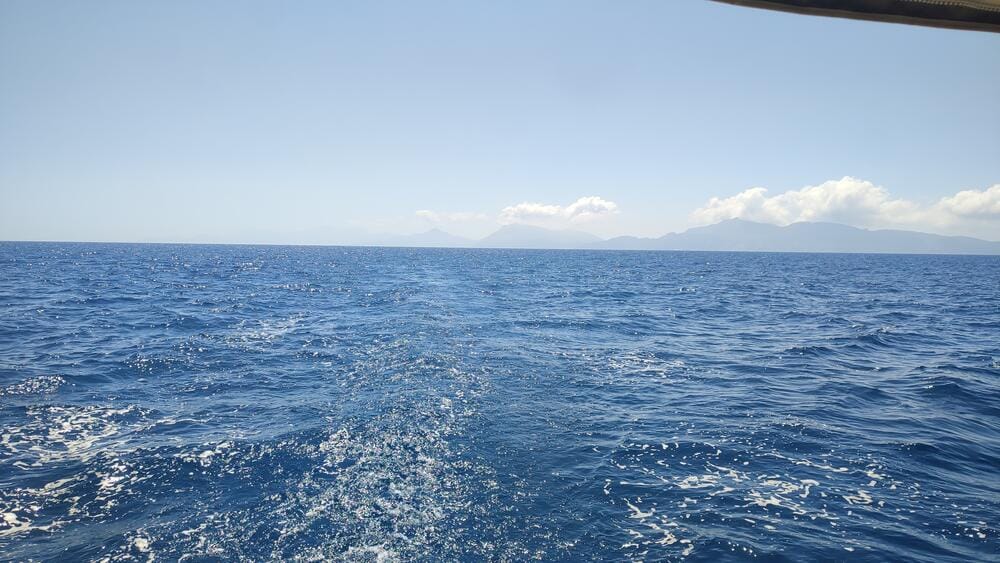
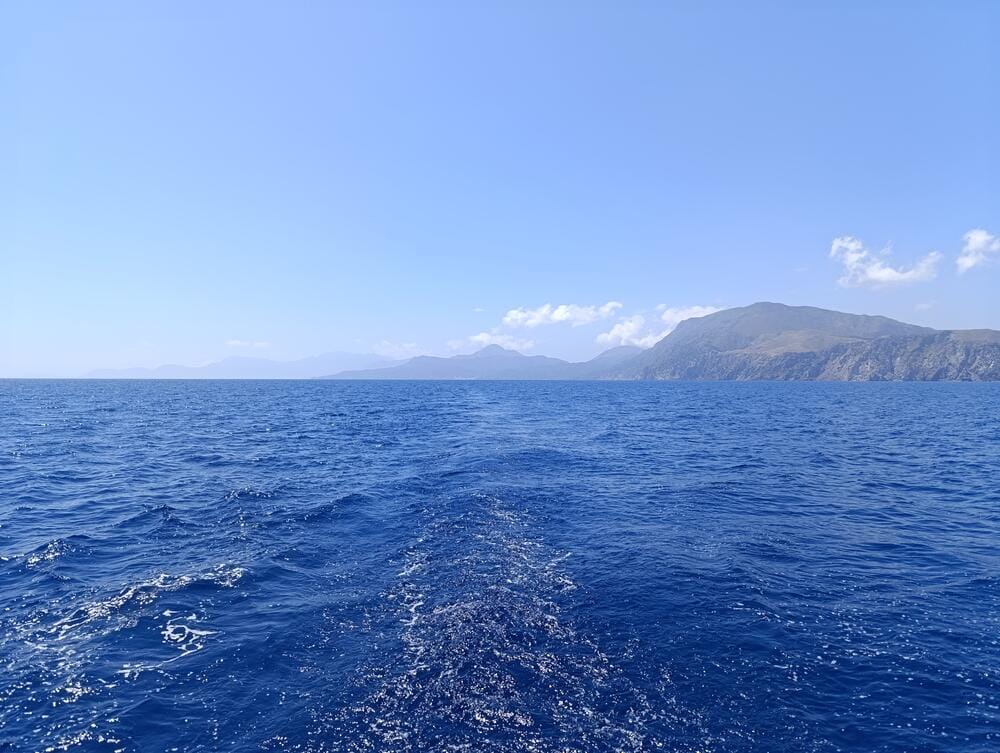
Leaving Karpathos
After the adventures of Karpathos, we continued towards one of the quieter gems of the Dodecanese — Halki.
The morning departure from Diafani was calm. Unlike the previous day, there was not enough wind to make sailing worthwhile, so we accepted the reality of Mediterranean cruising: sometimes the sails are your engine, and sometimes the engine is your sails.
The sea was relatively calm, and the passage gave us time to enjoy the landscape.
Karpathos slowly disappeared behind us, with its mountains becoming smaller and smaller on the horizon.
Our destination was Halki, a small island west of Rhodes known for its peaceful atmosphere, traditional architecture and lack of mass tourism.
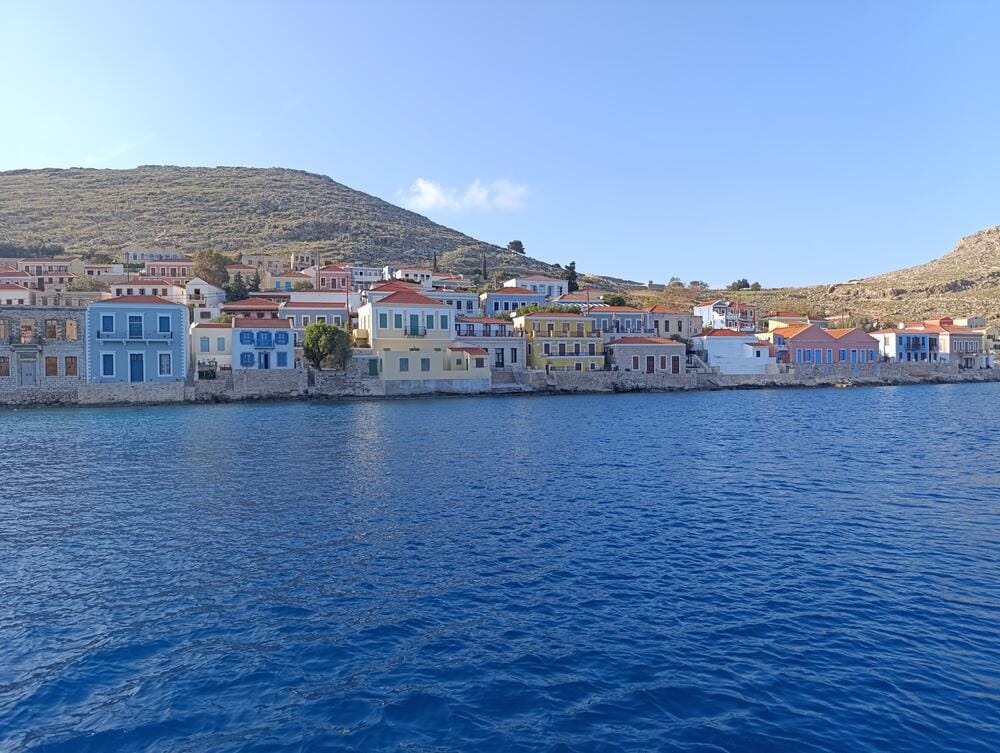
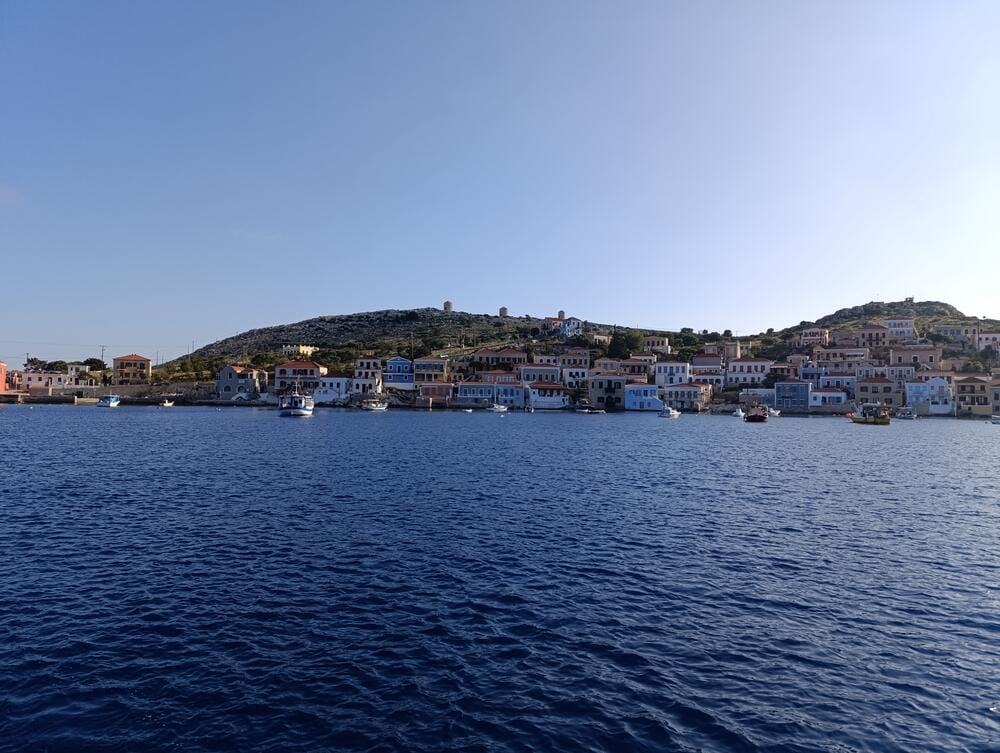
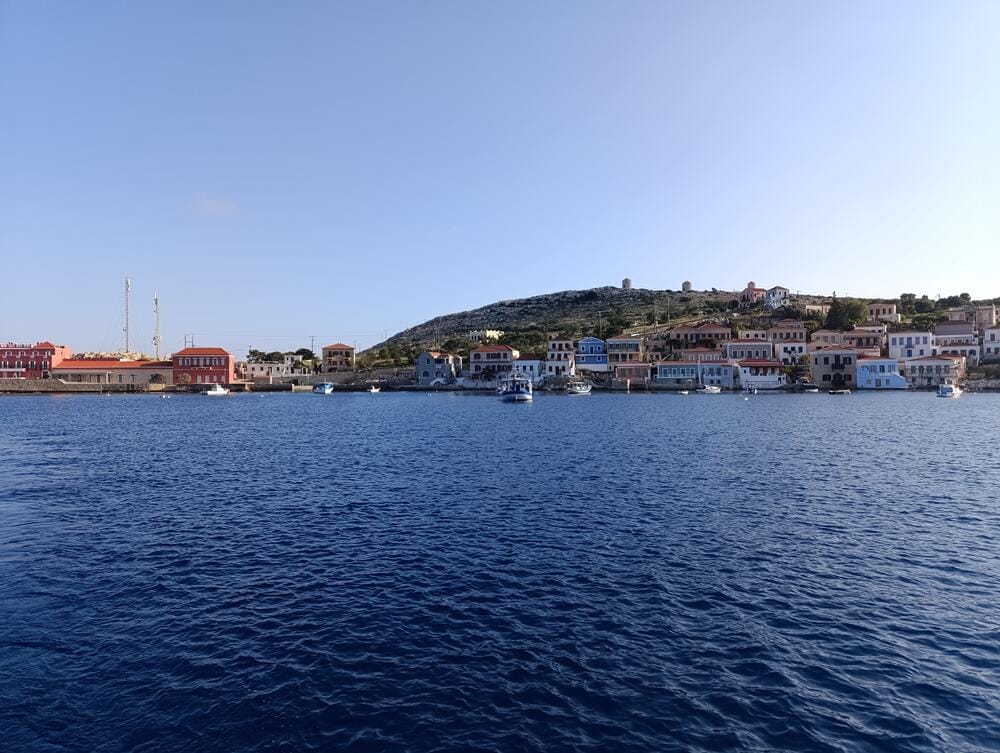
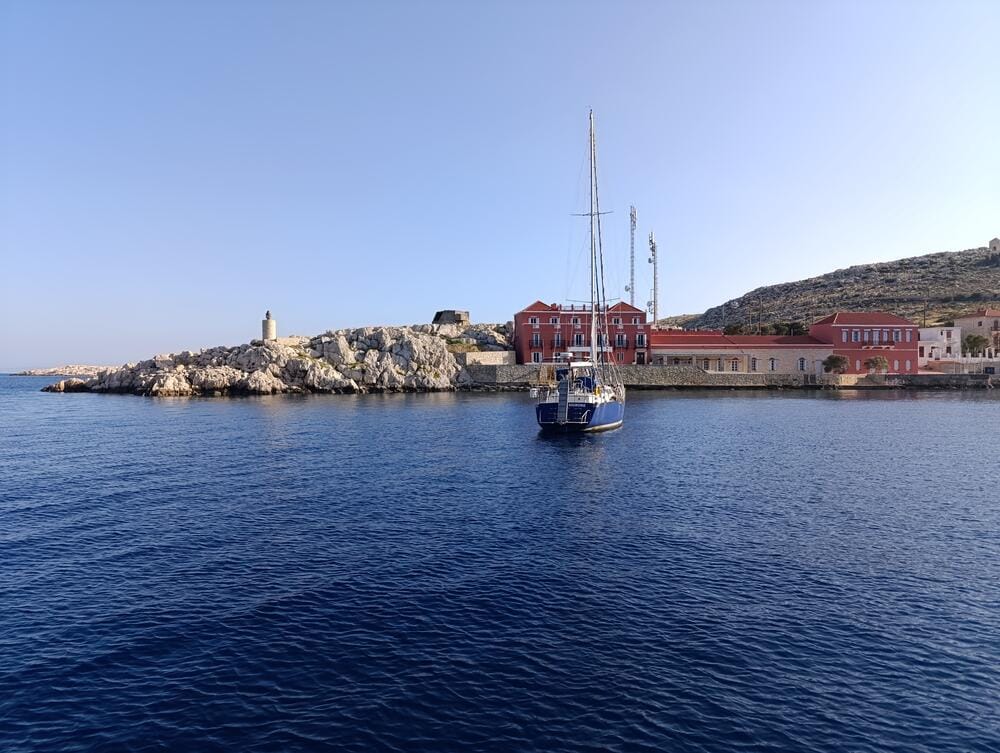
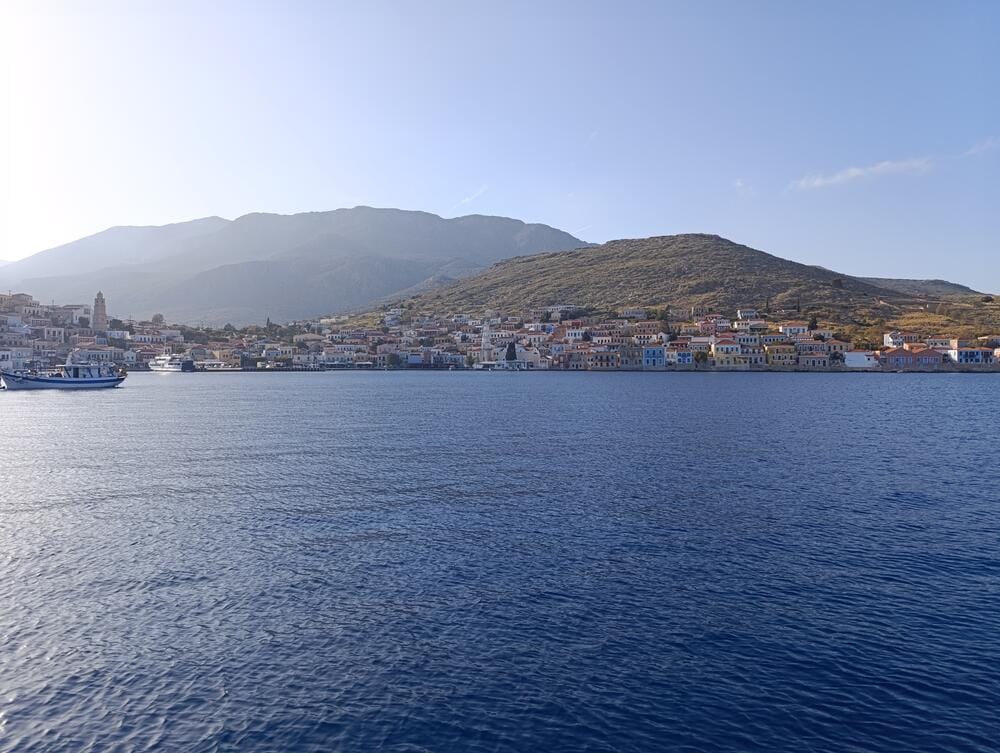
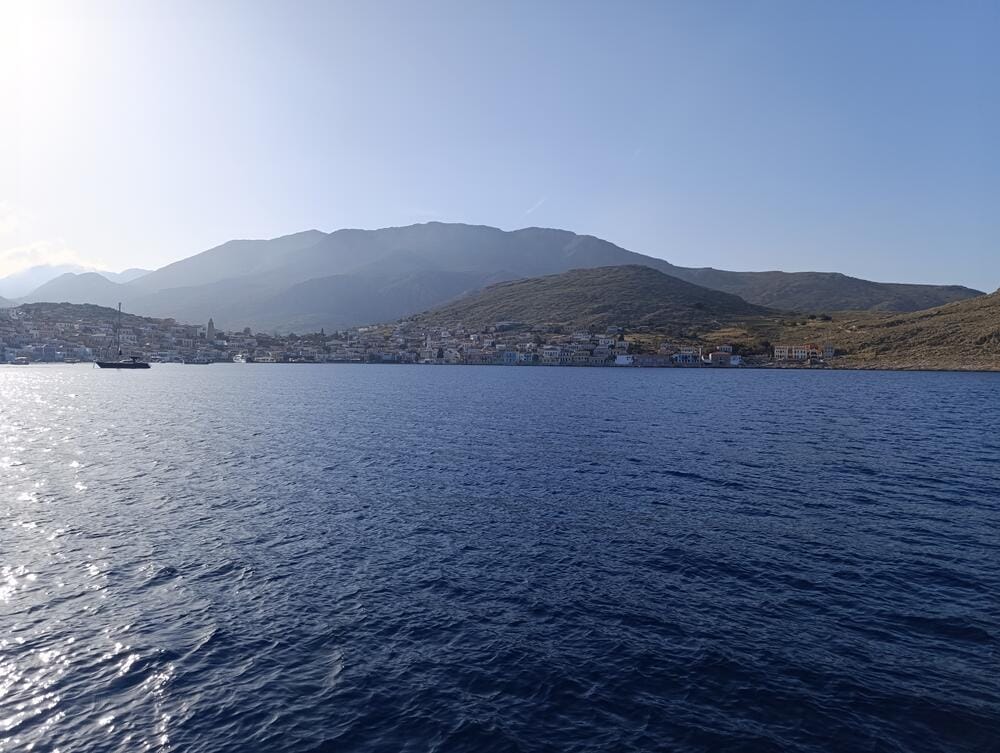
Approaching Halki
Halki — A Quiet Island with a Lost Past
Halki, also known as Chalki, is one of those places where time seems to move slower.
Compared with nearby Rhodes or Kos, the island feels almost untouched. There are no large resorts, no busy roads and no feeling of mass tourism.
The main settlement, Nimborio, surrounds a beautiful natural harbour with colourful neoclassical houses climbing the hillsides.
For sailors, Halki is an attractive stop because the harbour and surrounding anchorages provide a peaceful alternative to the busier islands.
We decided to anchor in the northwestern part of the bay, very close to the houses — only around 30 metres from the shore.
The depth was significant, around 15 metres, so we put out approximately 45 metres of chain.
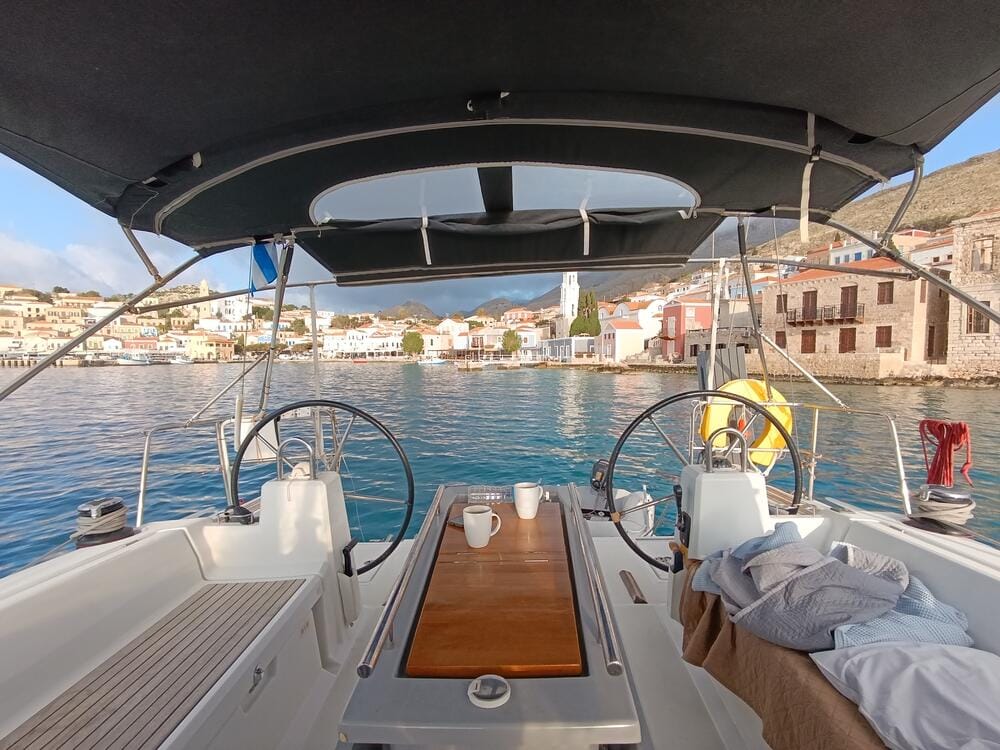
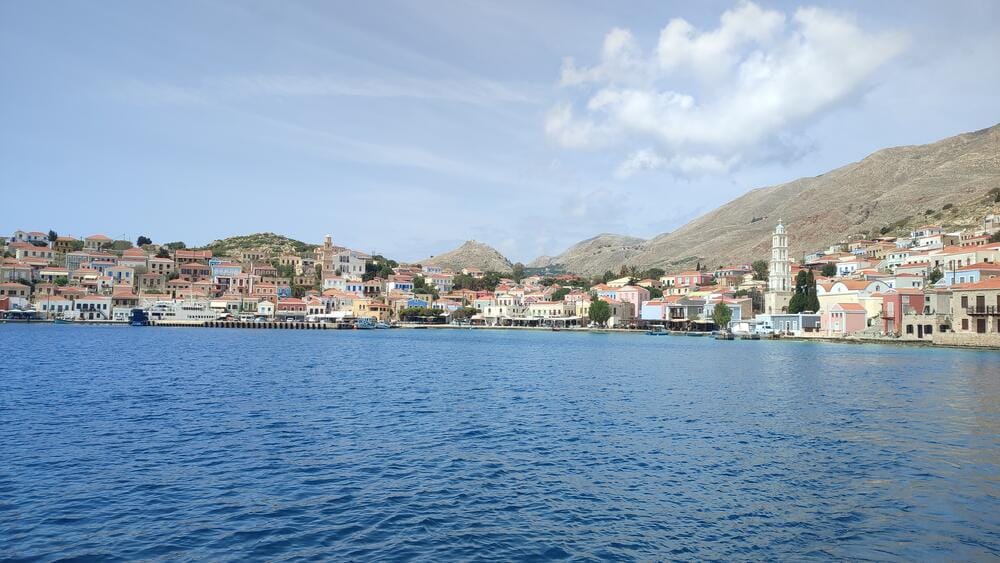
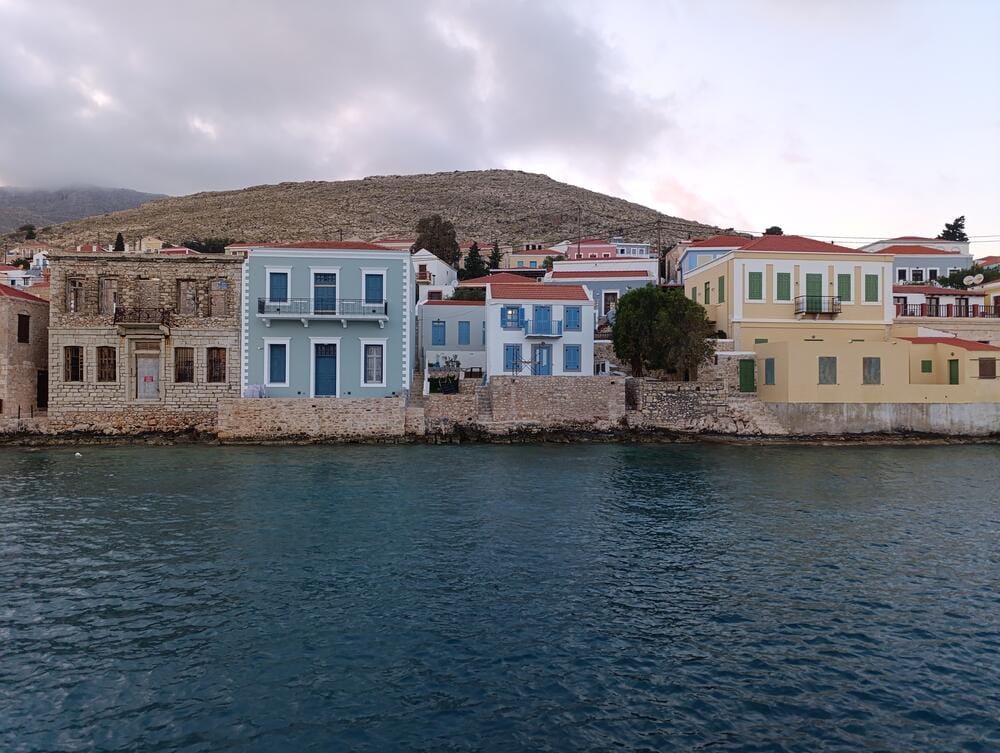
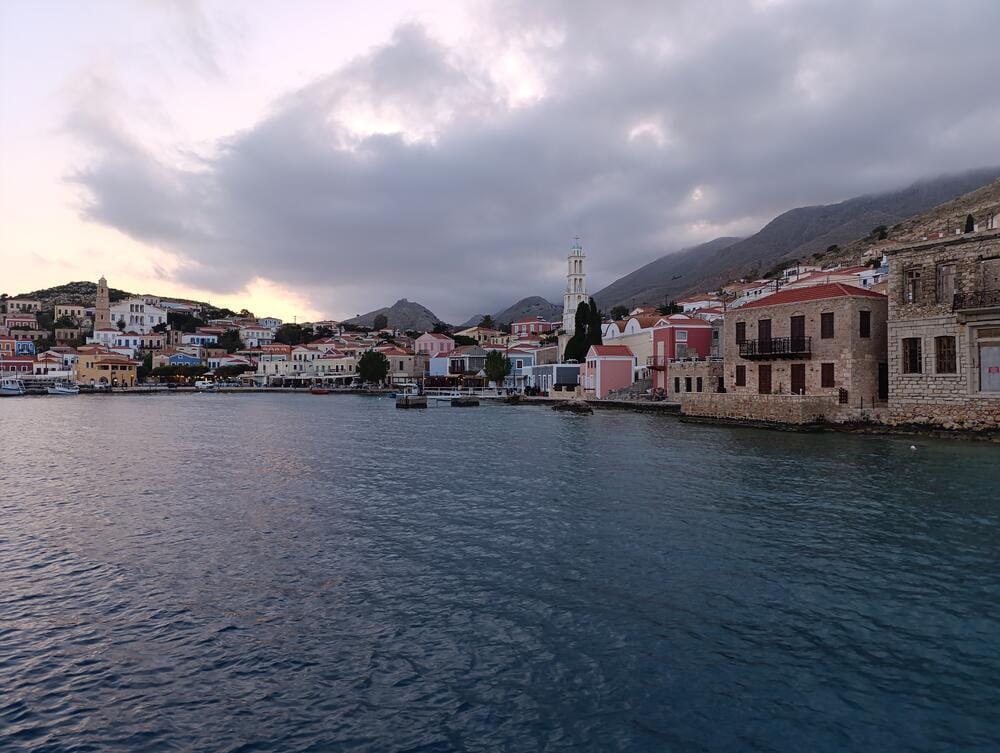
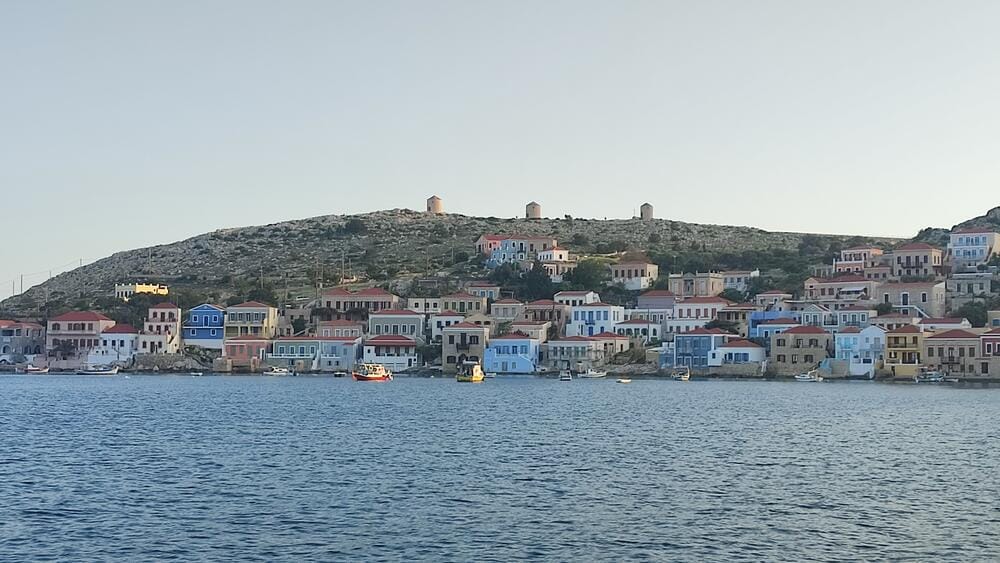
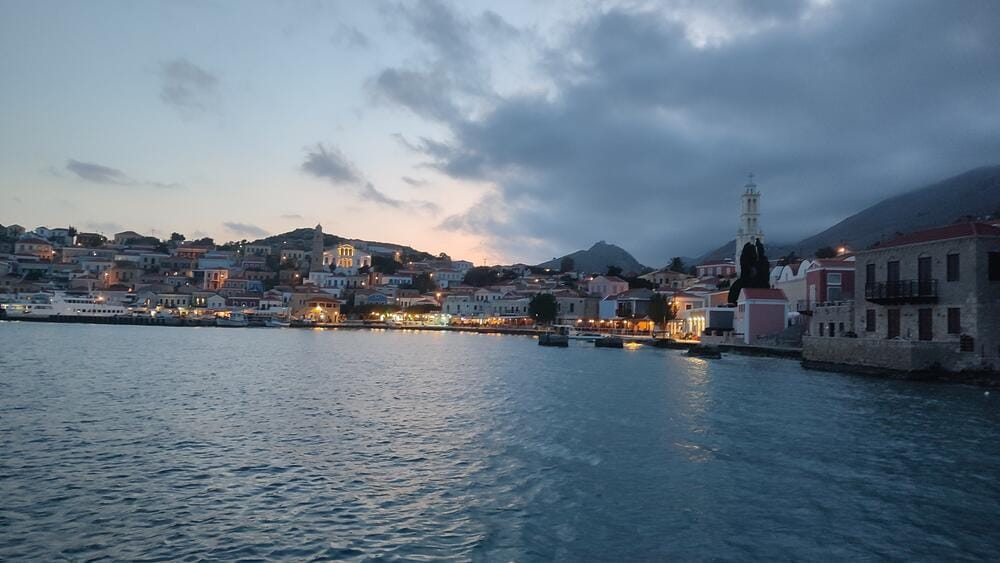
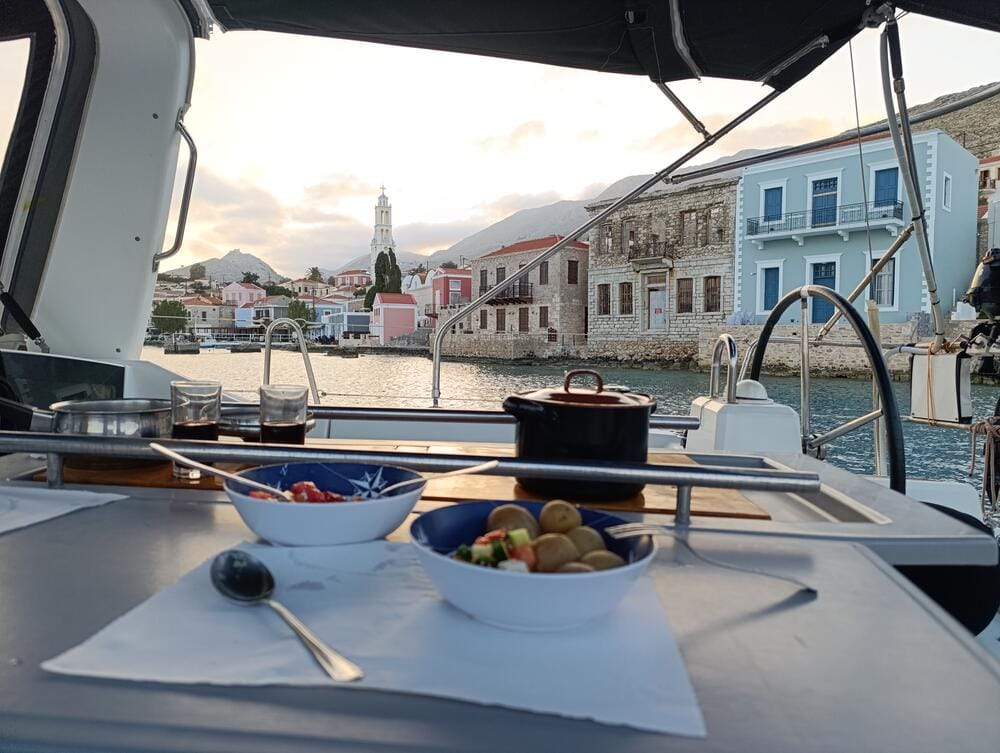
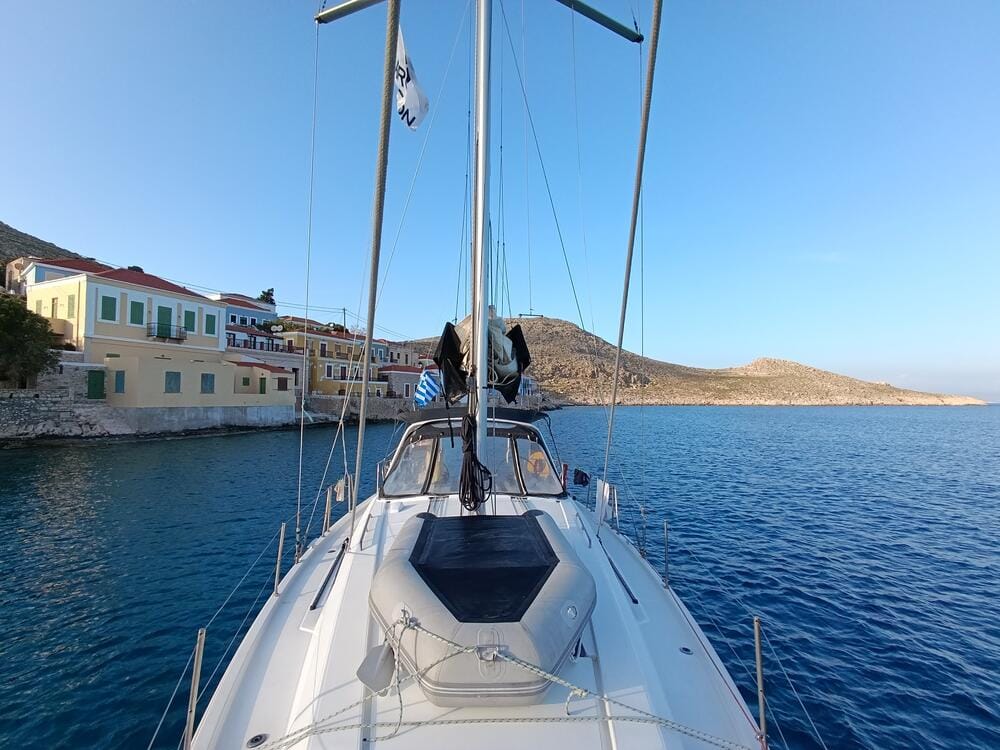
Halki bay
The bay does not provide perfect protection from every direction, especially with southern winds. However, the forecast was favourable, so we decided it was a reasonable choice.
During the night, the wind increased slightly and there was some swell.
Nothing dangerous, but enough to remind us that even a beautiful anchorage requires attention.
One of the biggest mistakes inexperienced sailors make is thinking that a beautiful bay automatically means a safe anchorage.
The reality is more complicated.
You always need to consider:
- wind direction;
- possible changes overnight;
- swell entering the bay;
- depth;
- holding quality;
- escape options.
A perfect anchorage is not only about the view.
Exploring Halki
In the evening, we took the dinghy ashore, walked around the village and visited local shops.
Halki is small, and that is part of its charm.
The harbour promenade is lined with traditional houses, small cafés and family-run restaurants. There is no rush. People sit outside, drink coffee and watch boats arriving and leaving.
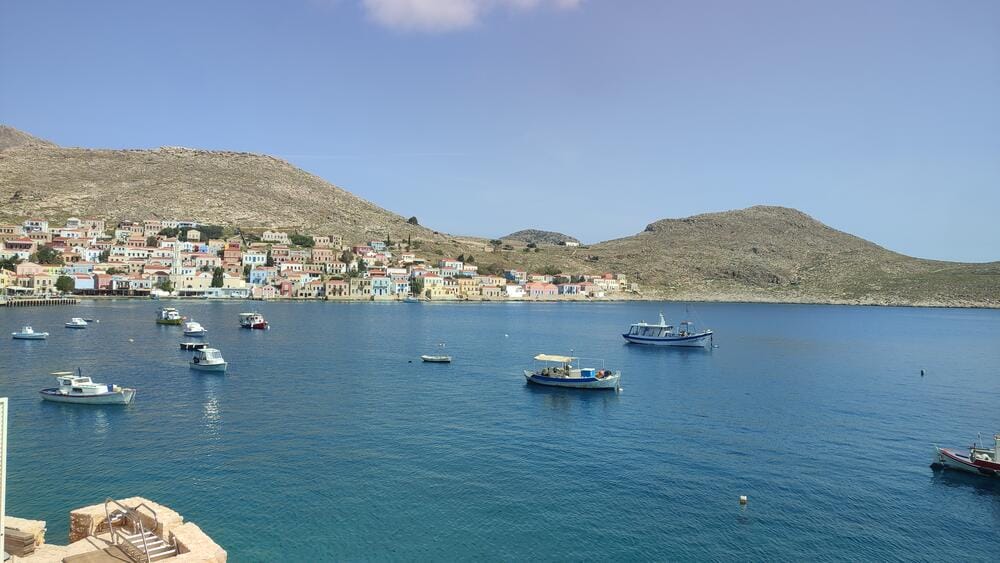
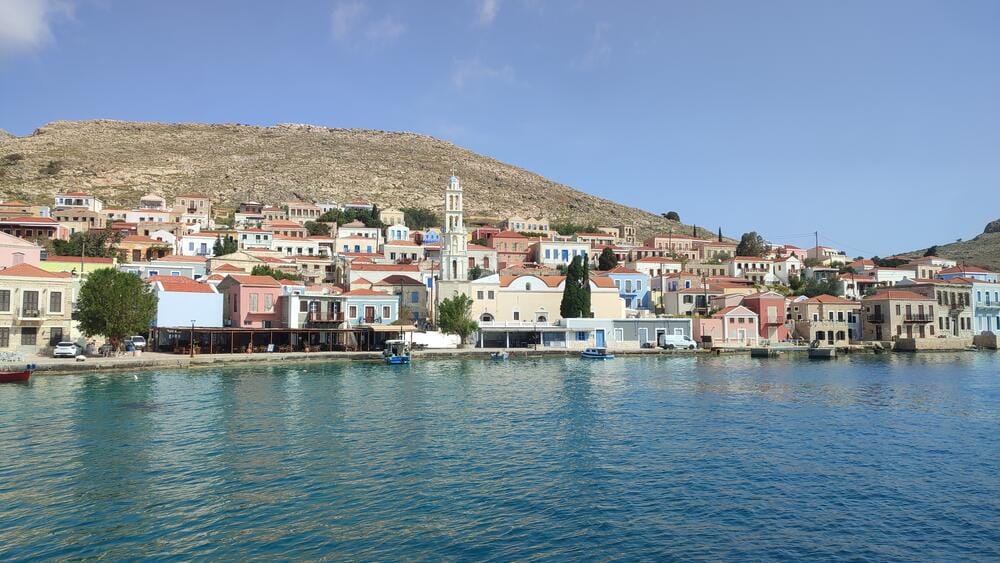
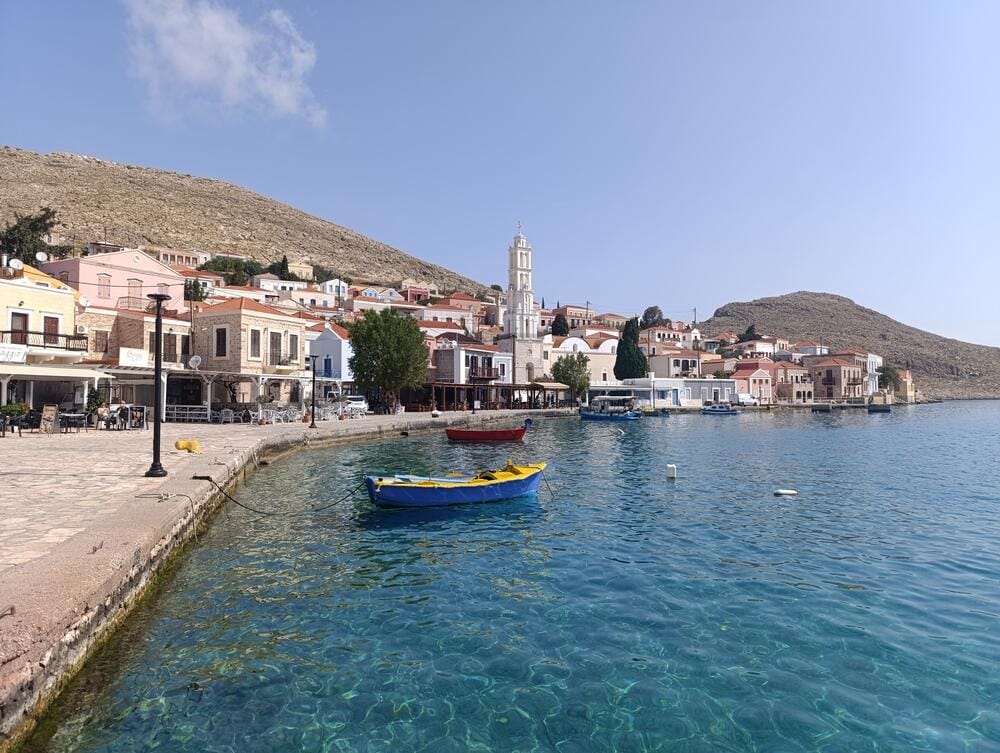
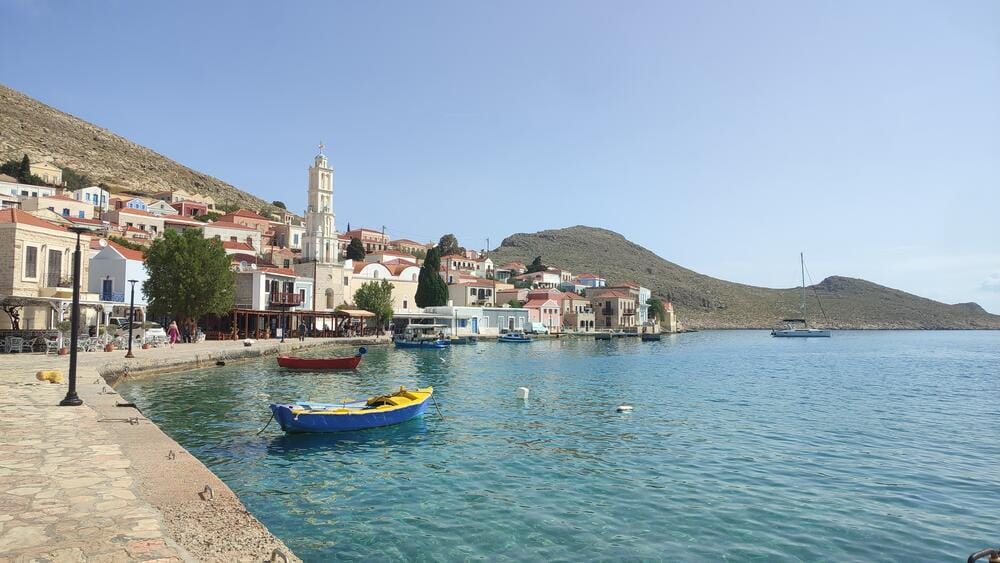
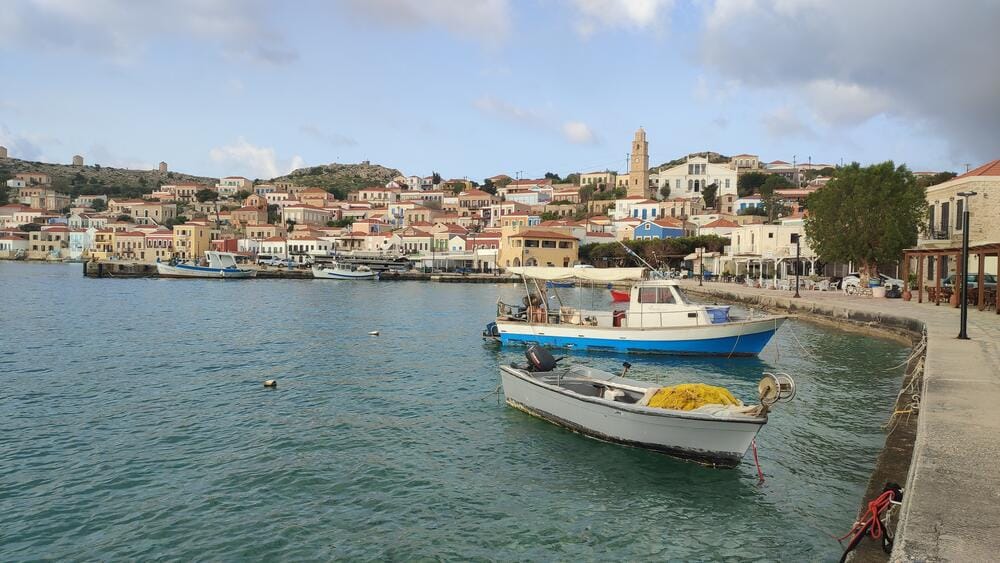
Halki village
The next morning, we explored more of the island.
One of the highlights was Chorio — the old abandoned capital of Halki.
Unlike Nimborio, which developed around the sea, Chorio was built higher inland, protected from pirate attacks that once threatened the islands of the Aegean.
Today, the old settlement is mostly abandoned, but its stone houses, churches and narrow paths remain.
Walking through Chorio feels like discovering a forgotten Greek village frozen in time.
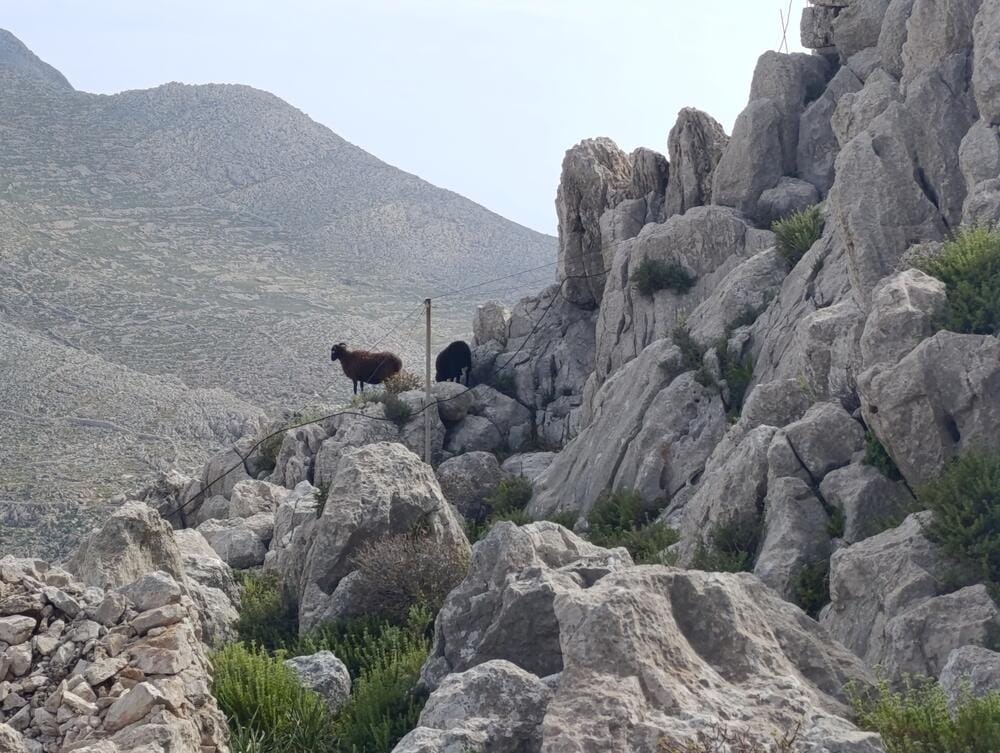
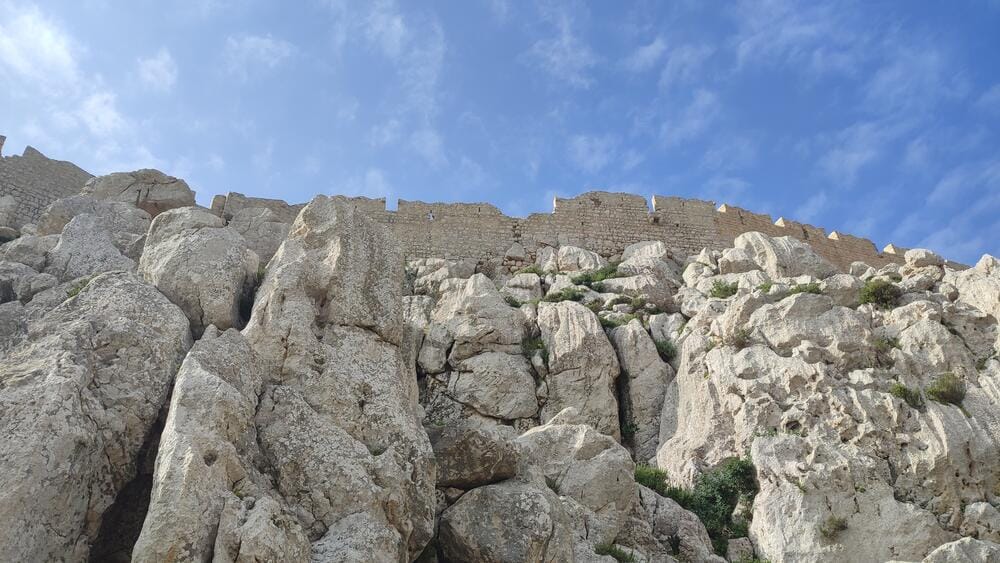
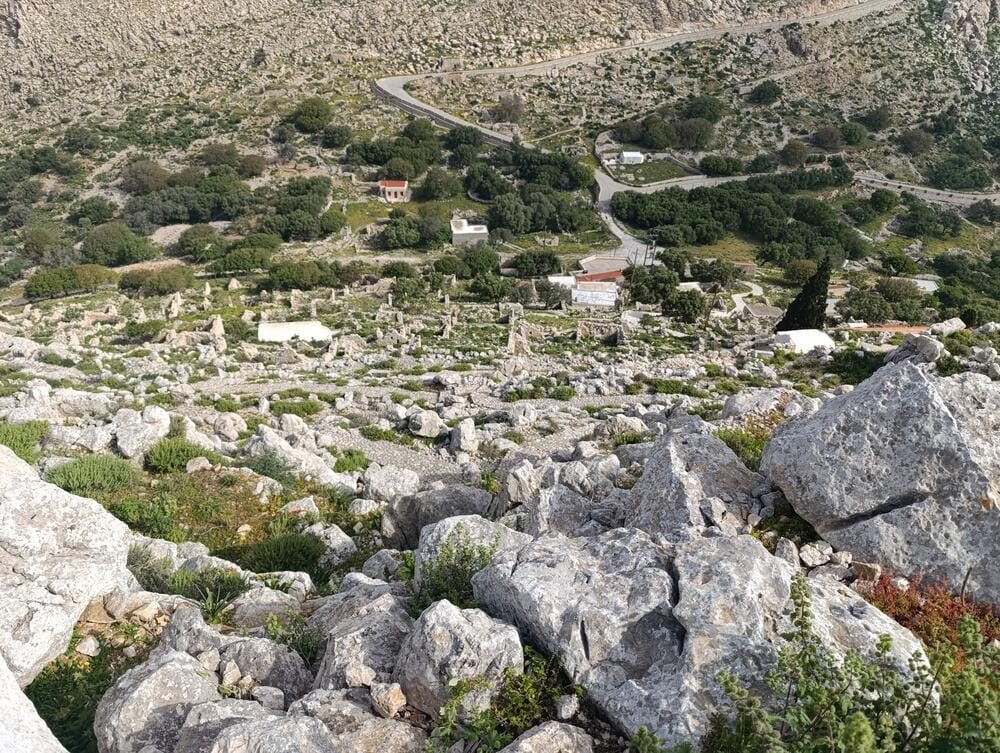
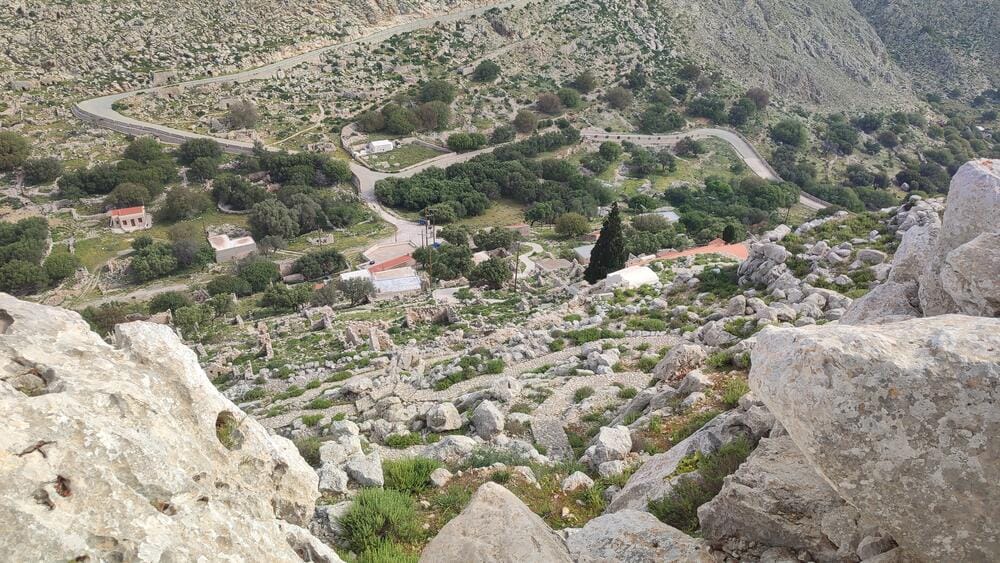
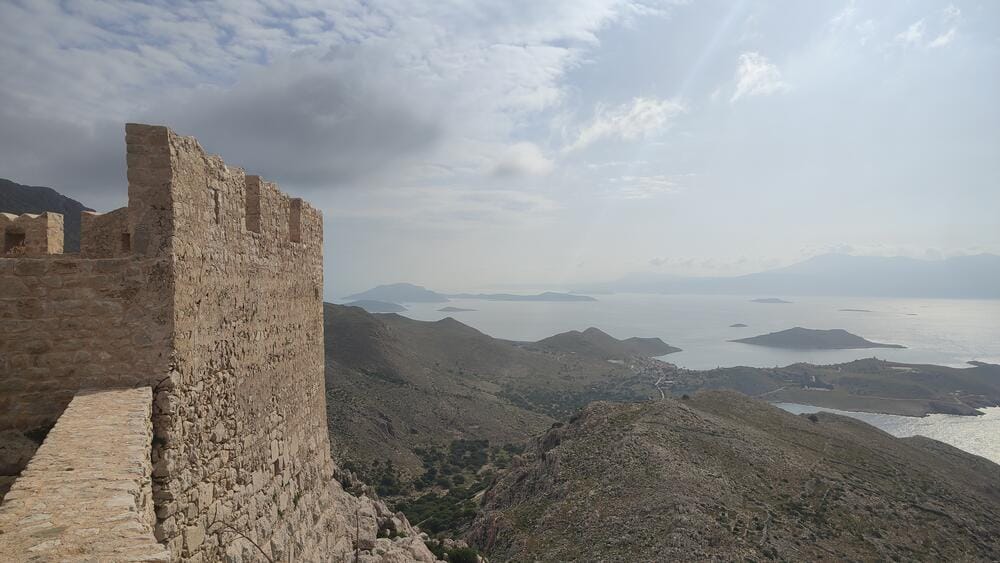
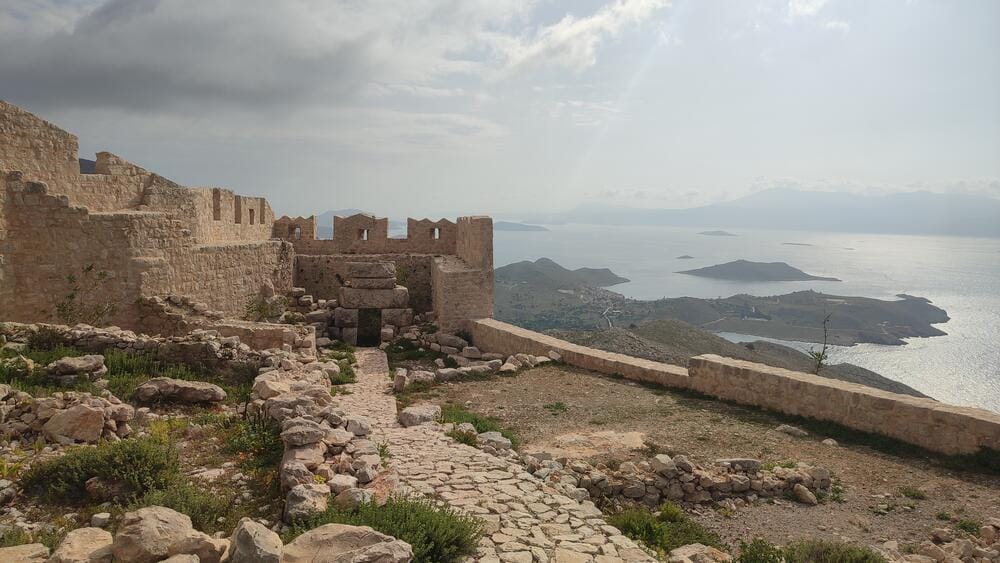
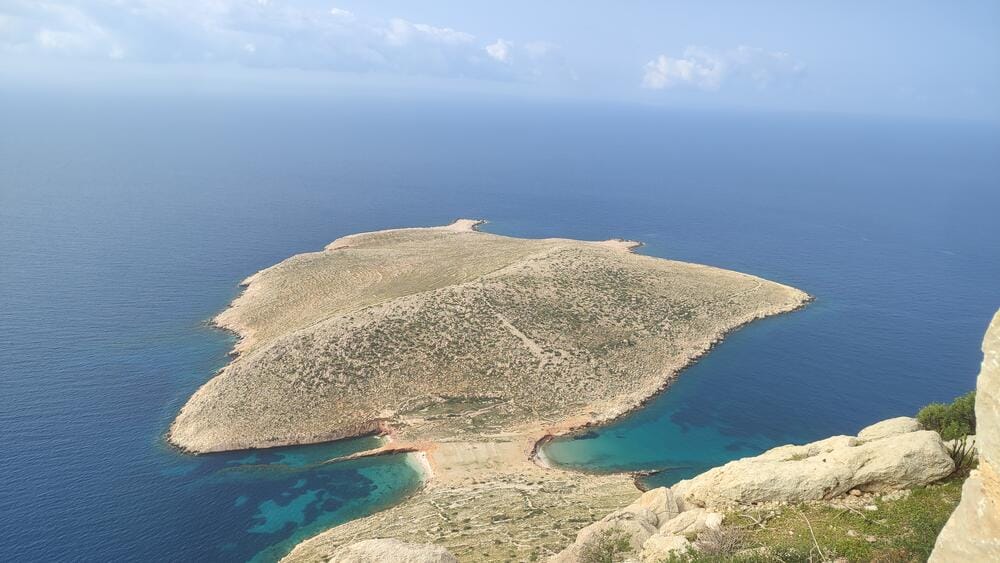
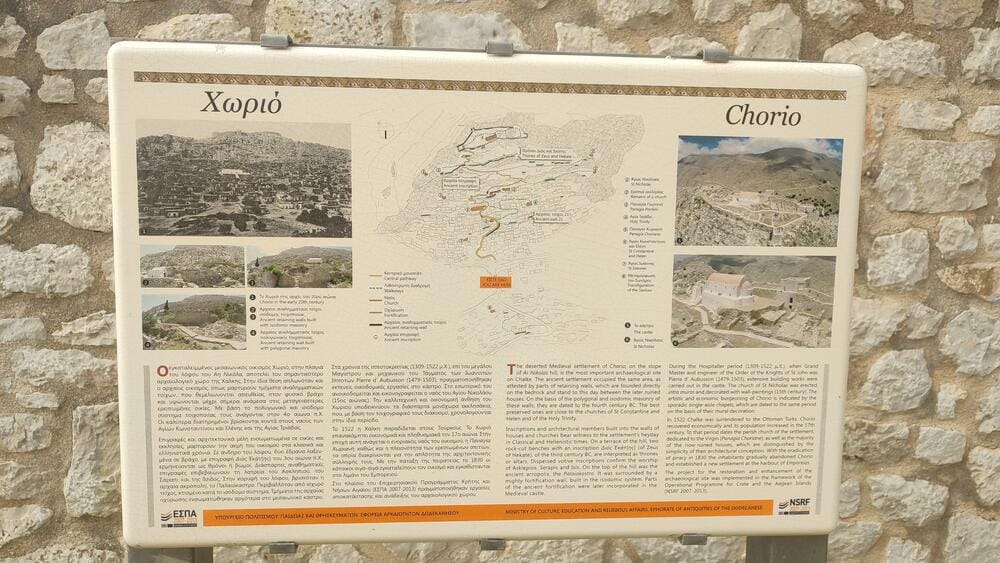
Chorio, Halki
The ruins tell a story of a different era — when island communities had to balance between the sea that provided their livelihood and the pirates who came from it.
The Wind Changed Our Plans
When we first arrived at Halki, the wind was from the southwest.
By the following day, it shifted to the south.
Interestingly, the change in wind direction moved us almost exactly towards the old house area where we had originally considered anchoring.
Sometimes nature makes decisions for you.
The houses on shore looked abandoned at first, but in the morning we noticed signs of life. A local man was painting one of the buildings.
Meanwhile, we enjoyed one of the simplest pleasures of sailing: swimming directly from the yacht.
The water was incredibly clear.
Moments like this are why we keep coming back to Greece.
Not because of luxury.
Not because of famous attractions.
But because you can wake up, step from your boat into the Aegean Sea and feel completely disconnected from the rest of the world.
Day 6 — Halki to Panormitis, Symi
Distance: approximately 30 nautical miles
Conditions: under engine
Destination: Panormitis Bay, Symi
The next morning we left Halki and headed towards Symi.
Symi is one of the most beautiful islands in the Dodecanese.
While Rhodes is famous for its history and tourism, Symi has a completely different character. The island is famous for colourful neoclassical houses, steep hills and spectacular bays.
Our destination was Panormitis Bay in the south of Symi.
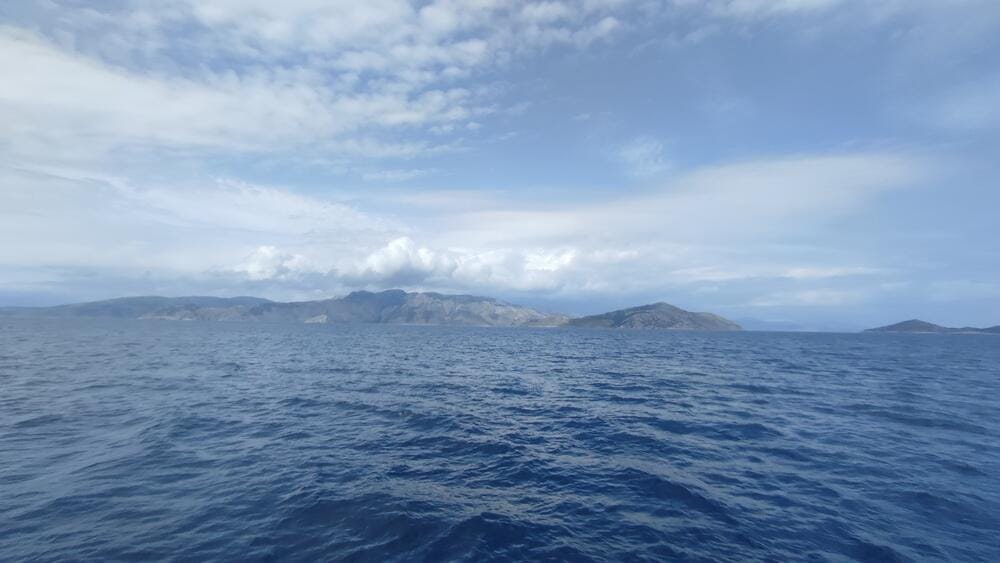
the Aegean Sea
Panormitis — A Sacred Bay of Symi
Panormitis is one of the most recognisable places on Symi.
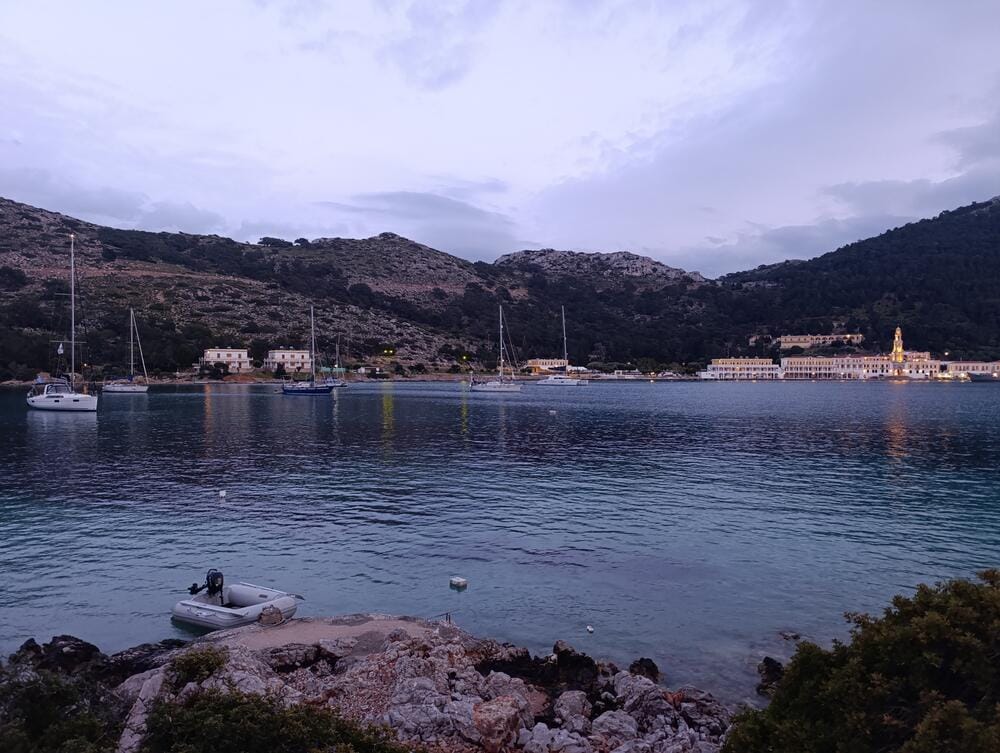
The bay is home to the Monastery of Archangel Michael Panormitis, one of the most important Orthodox monasteries in the Dodecanese.
The monastery, with its impressive bell tower and waterfront location, has been welcoming sailors and pilgrims for centuries.
Approaching Panormitis by boat is a memorable experience.
The bay is surrounded by green hills, and the monastery appears almost like a painting at the end of the water.
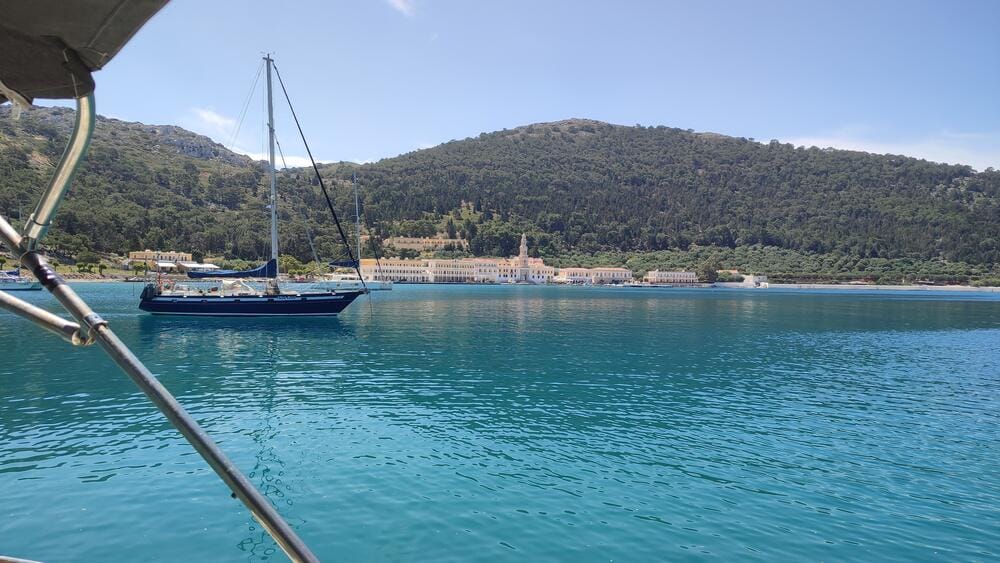
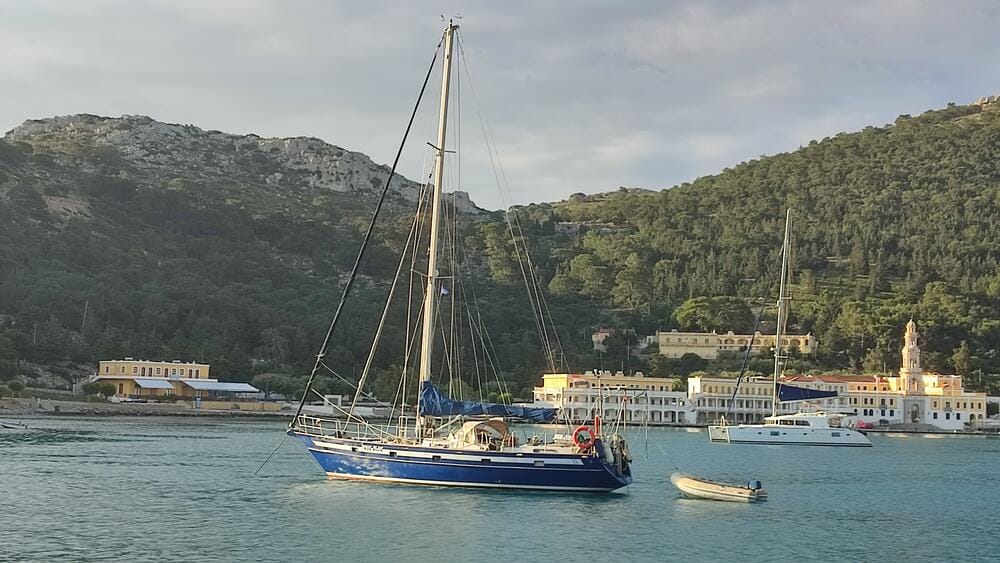
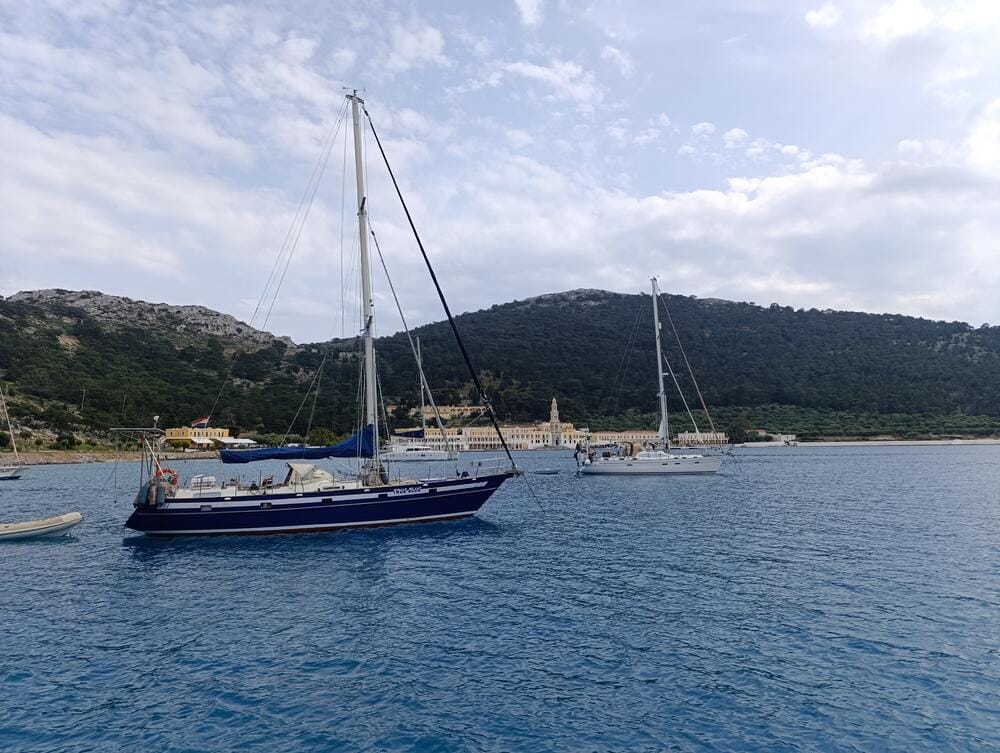
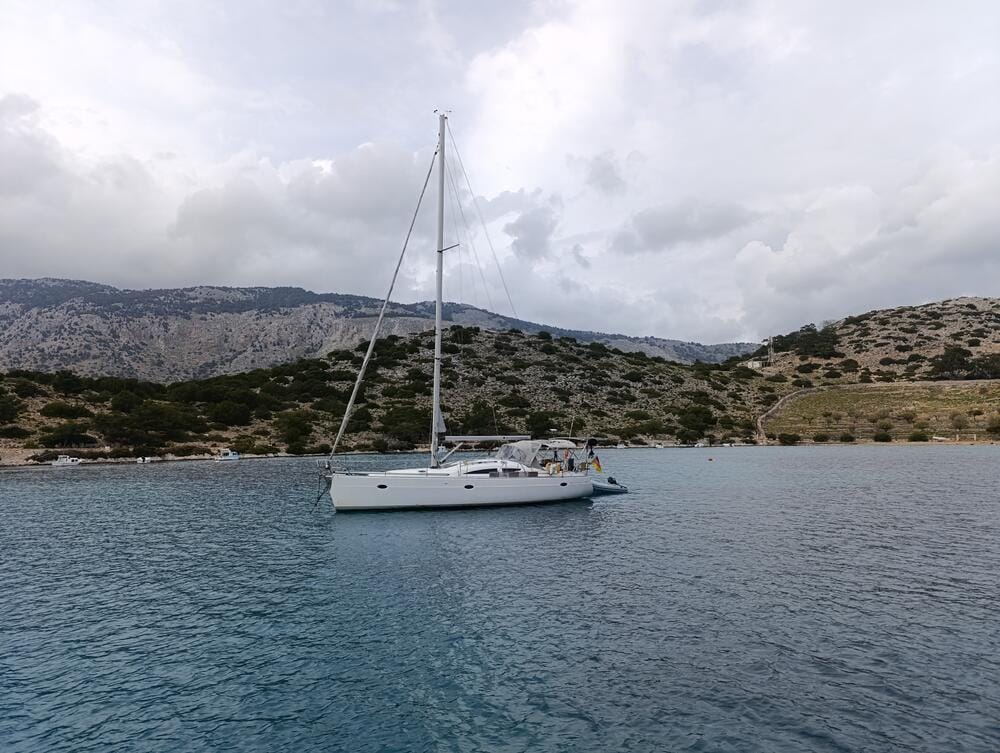
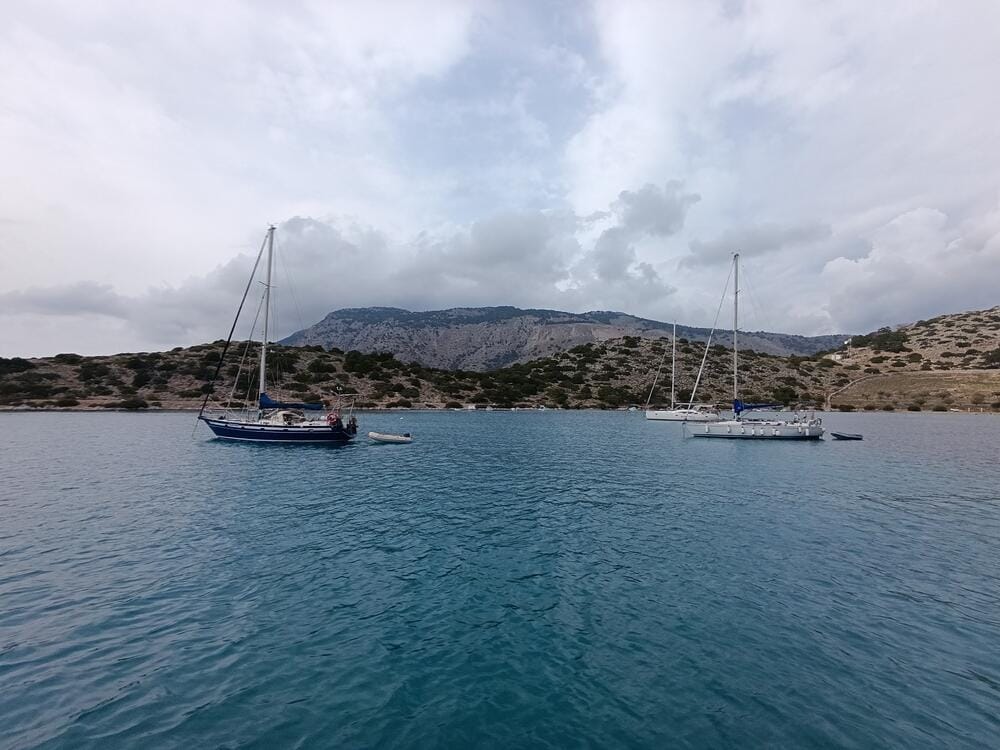
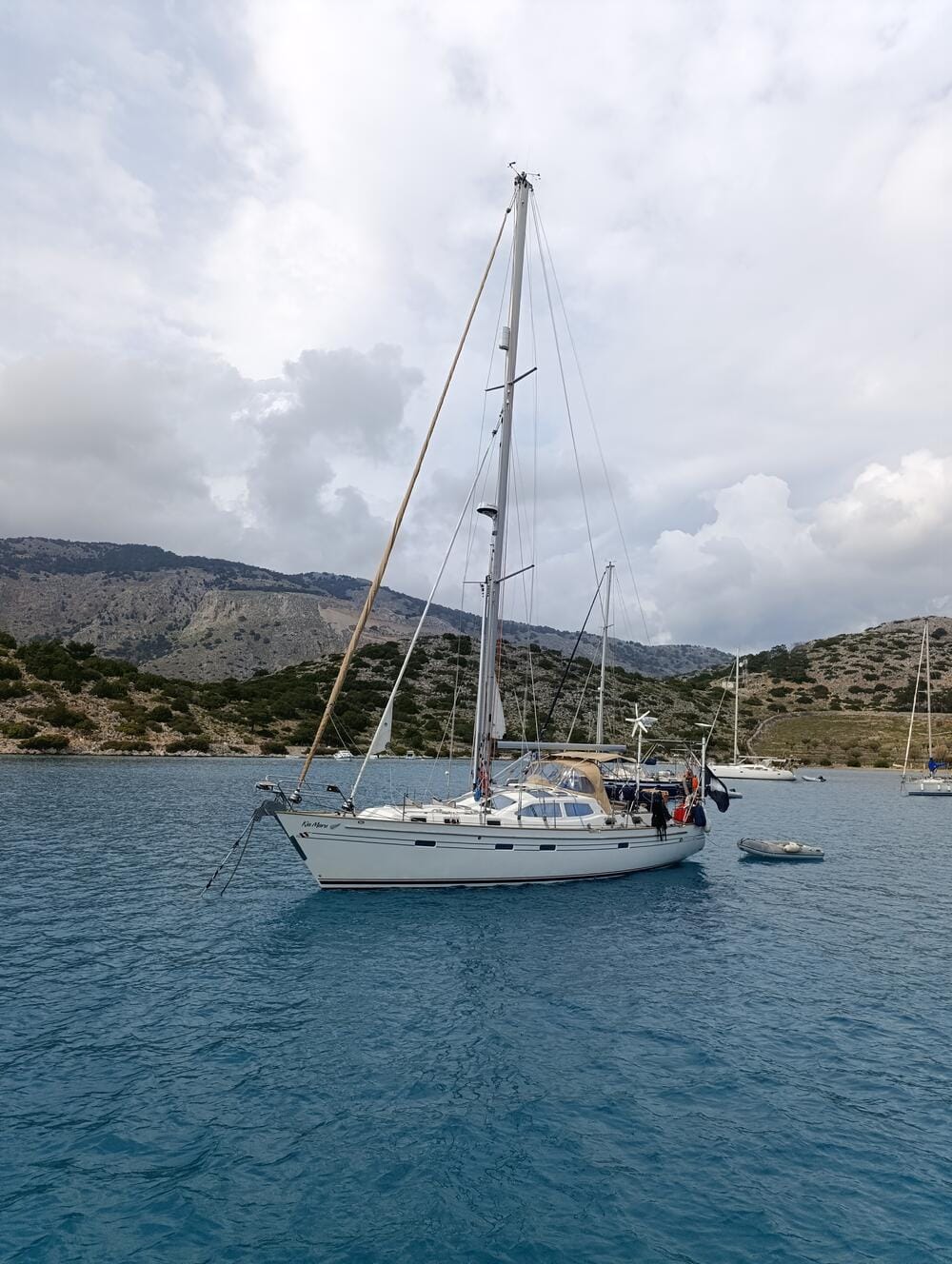
Panormitis Bay
After arriving, we had another small mission.
Remember the black rubber marks from Diafani?
The swell at the pier had left the entire starboard side dirty.
So we spent time cleaning the hull and topsides from the dinghy.
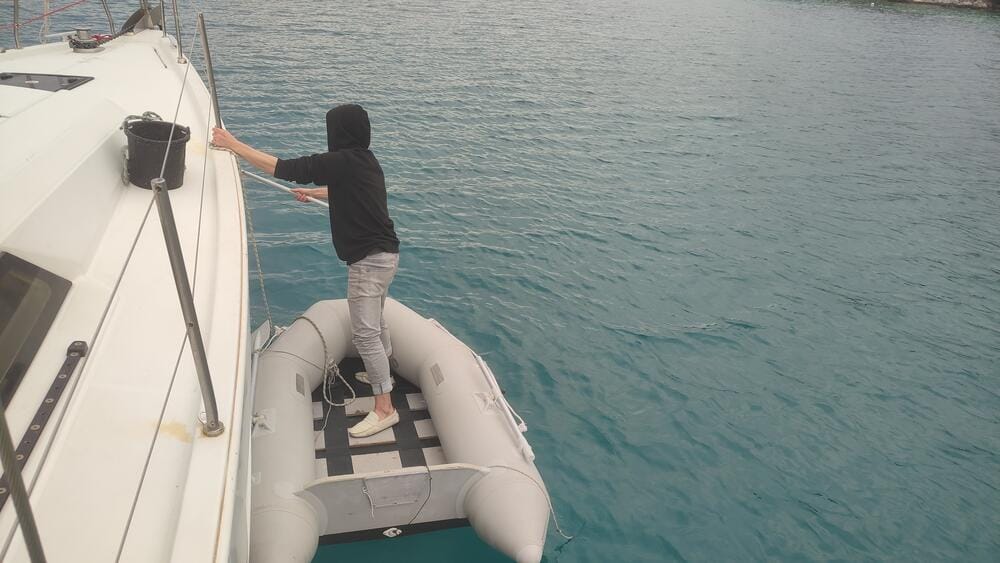
It was not exactly the glamorous side of sailing, but maintenance is part of the lifestyle.
A sailing holiday is not only sunsets and cocktails.
Sometimes it is also cleaning mysterious black marks while floating next to one of the most beautiful bays in Greece.
Walking Above Panormitis
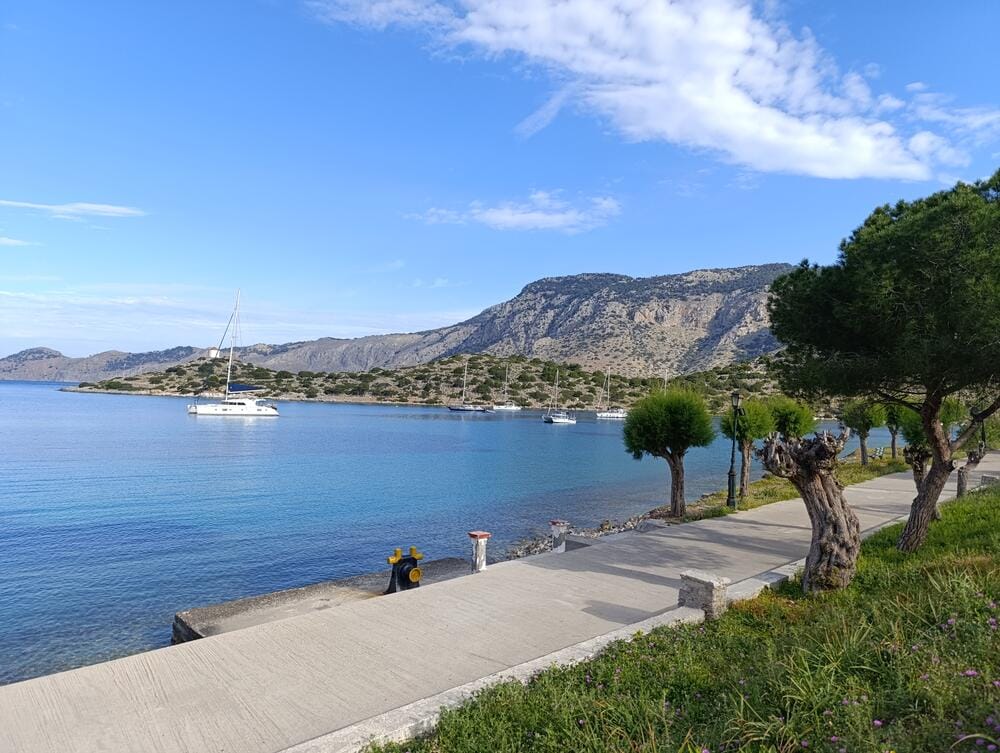
In the evening, we walked towards an old windmill above the bay.
The path was quiet, and as the sun started going down, the views became incredible.
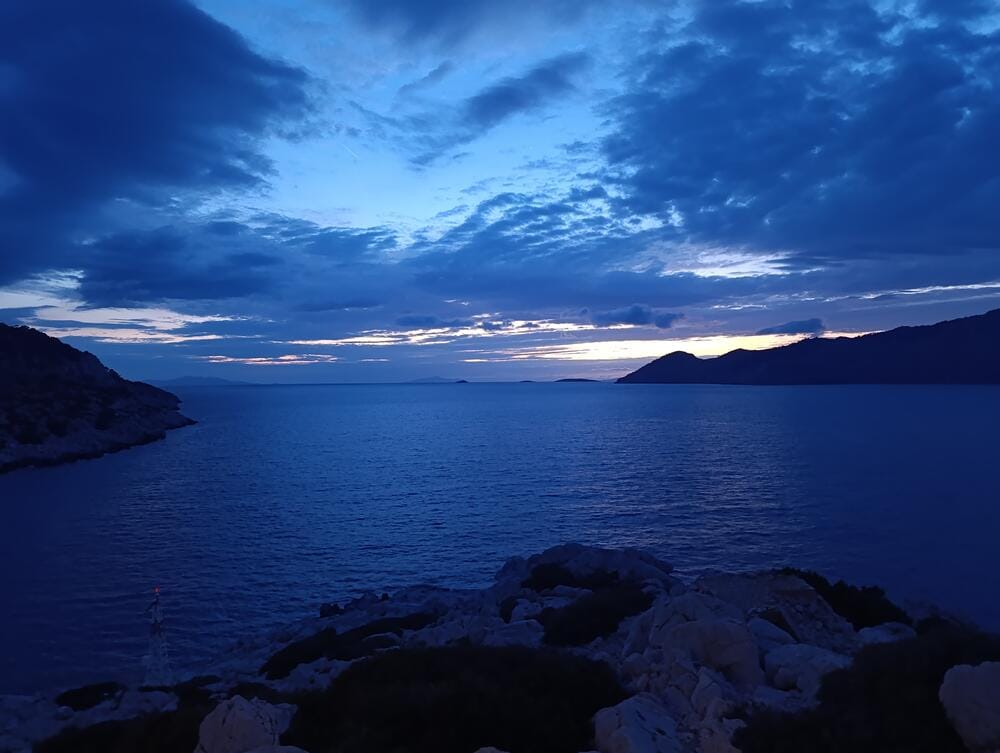
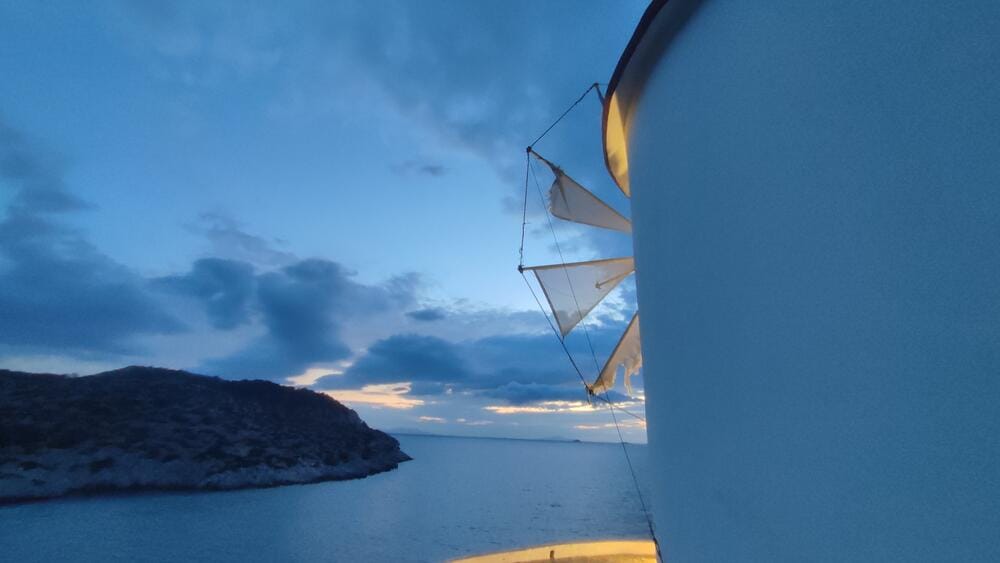
T
From above, the entire shape of Panormitis Bay becomes visible — the monastery, the boats, the mountains and the deep blue sea.
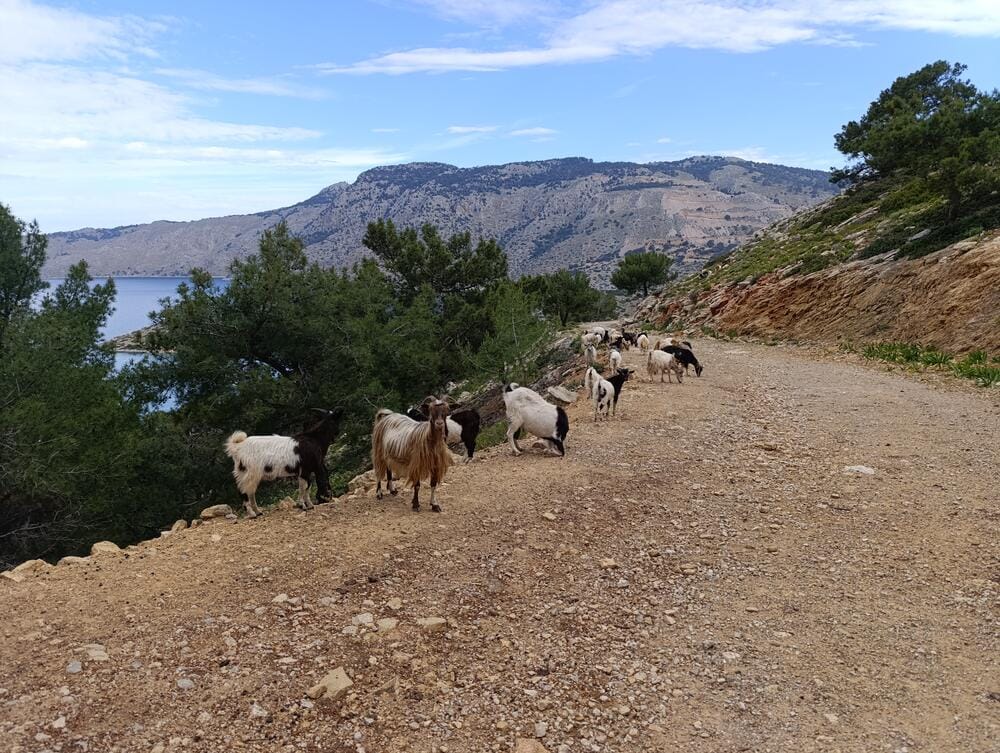
The next morning, we woke up early and climbed higher into the hills. The view from the top was one of the highlights of the whole trip. The bay looked almost unreal. The yachts below appeared tiny, floating in a perfectly protected circle of blue water. These are the moments that stay with you long after the trip ends. Not necessarily the famous landmarks.
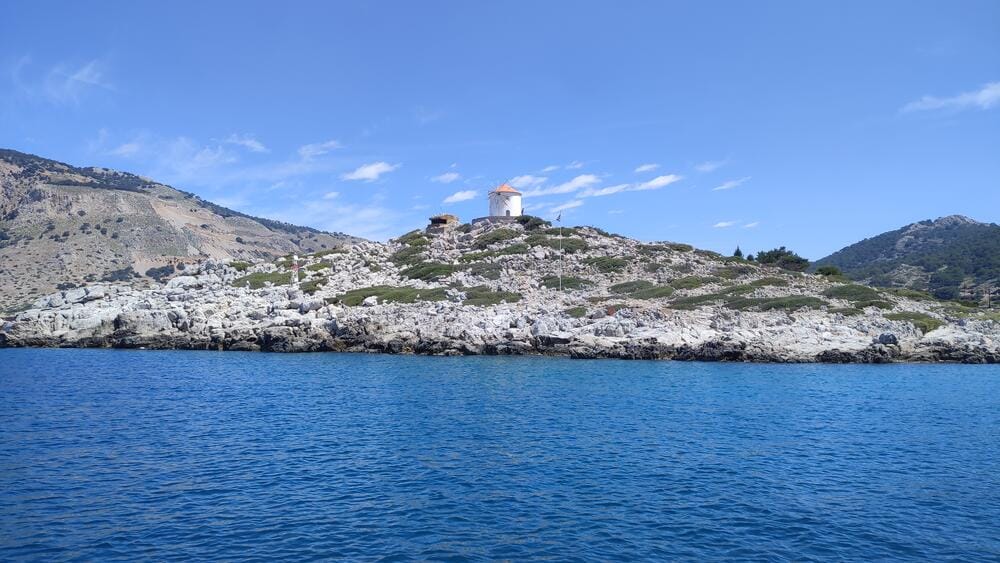
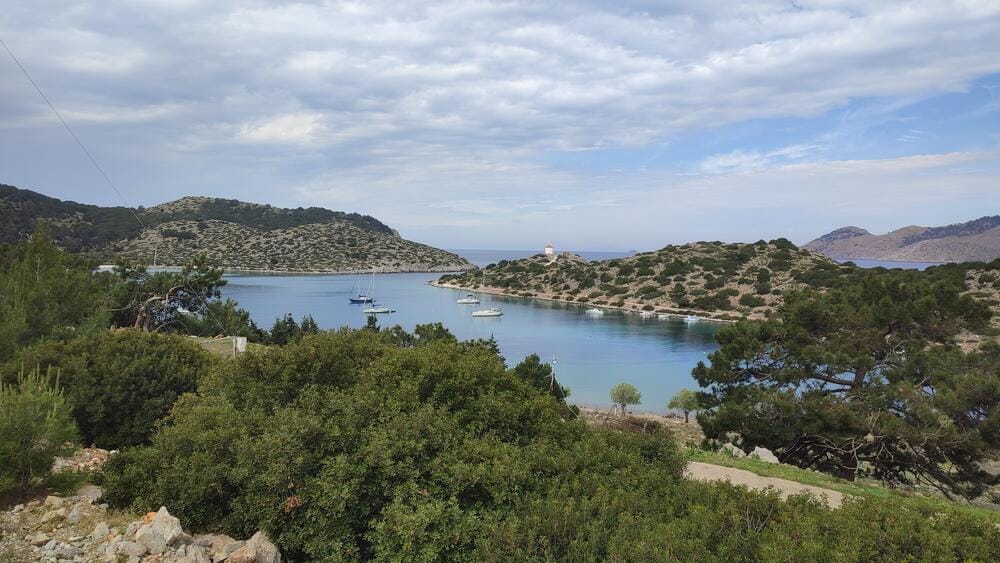
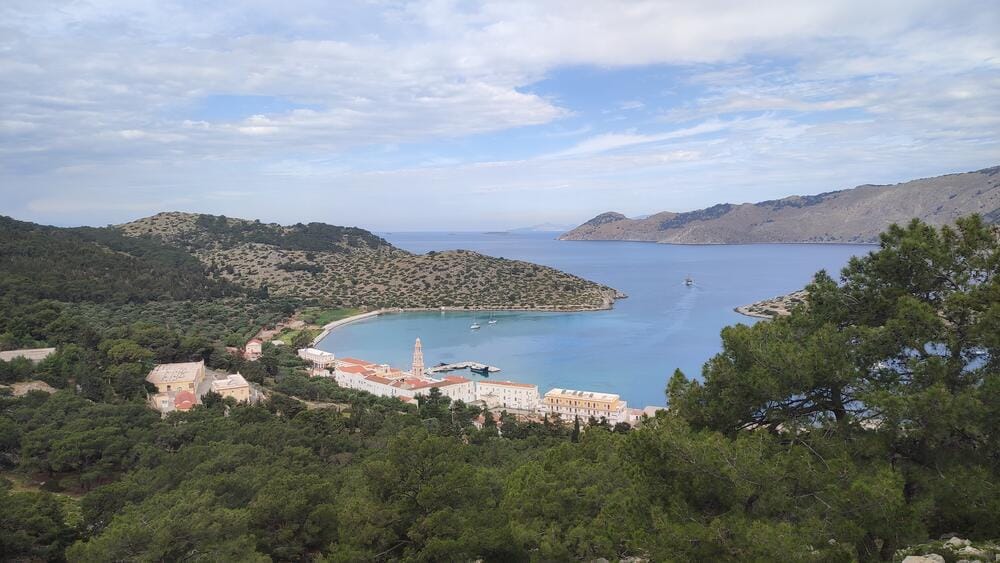
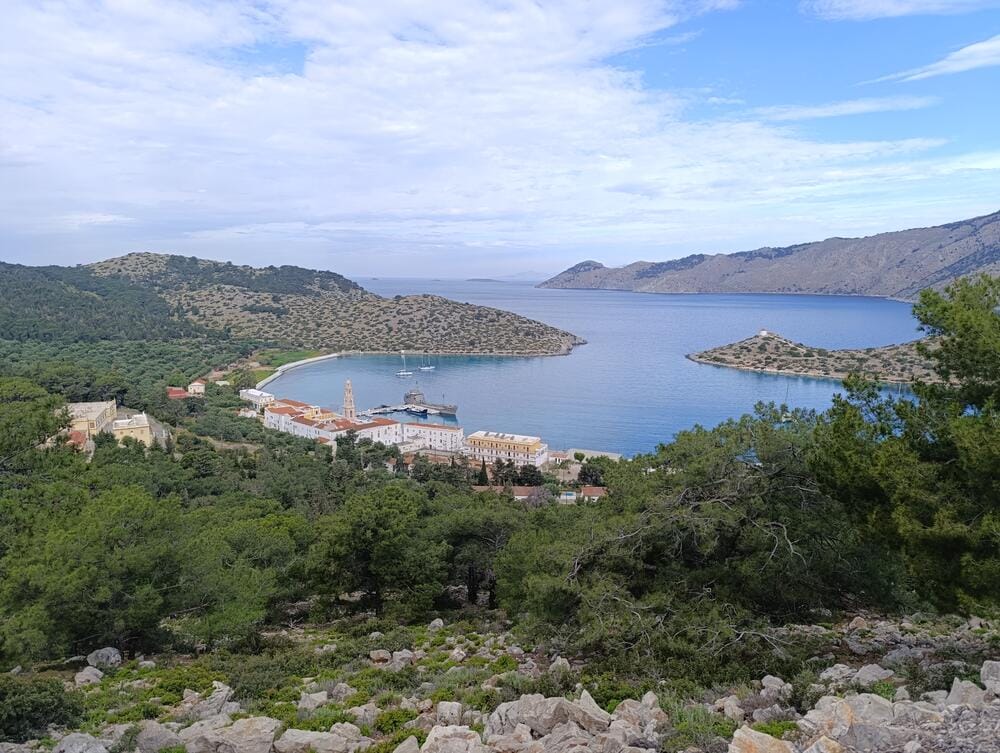
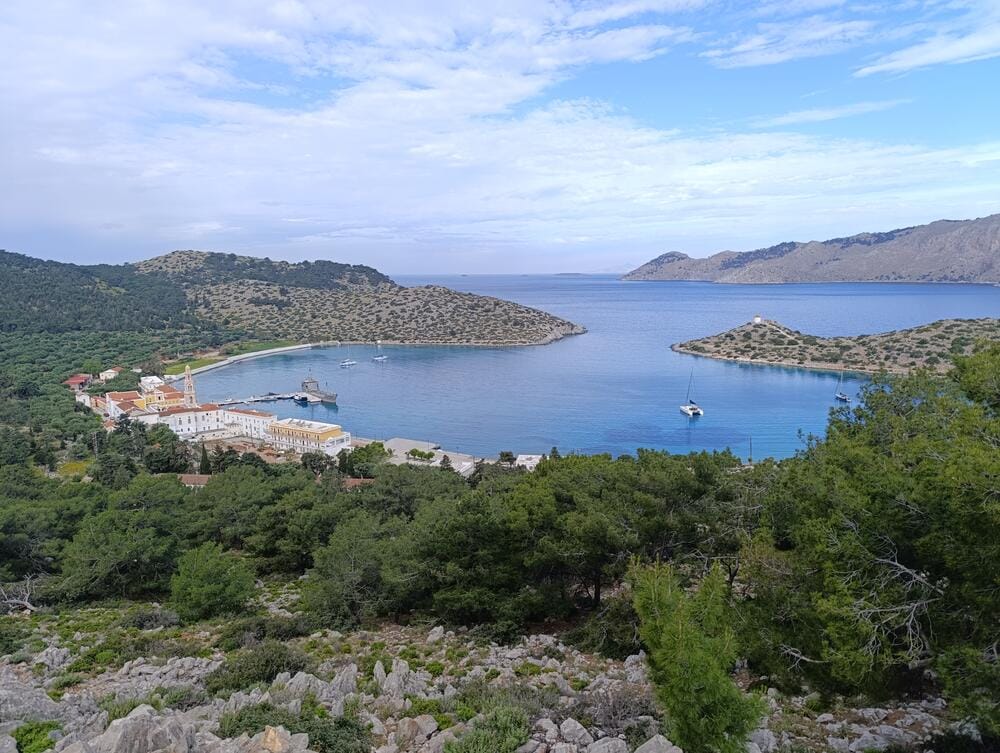
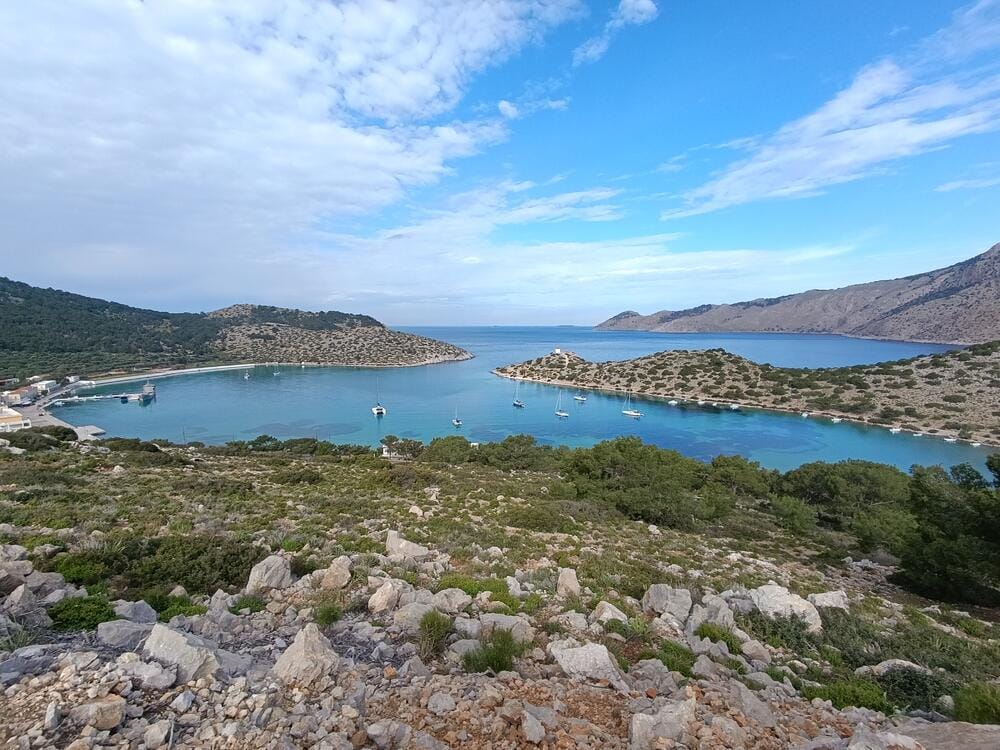
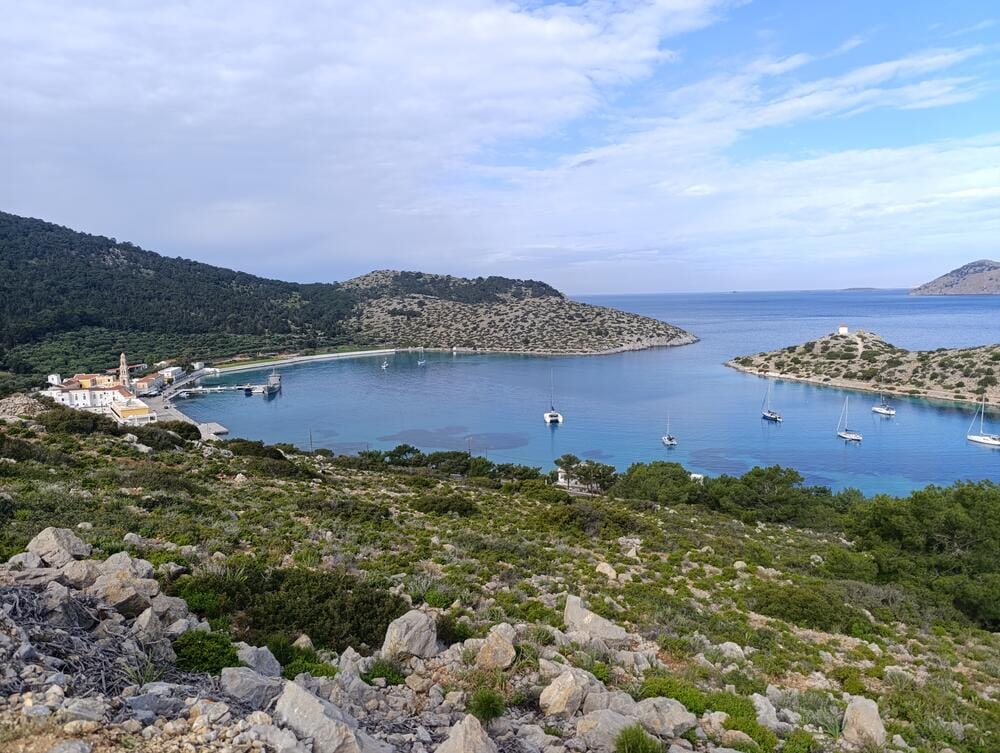
Panormitis Bay
Sometimes it is just standing on a mountain, looking down at your boat and realising that yesterday you were somewhere completely different.
Day 7 — Panormitis to Rhodes
Distance: approximately 40 nautical miles
Destination: Rhodes New Marina
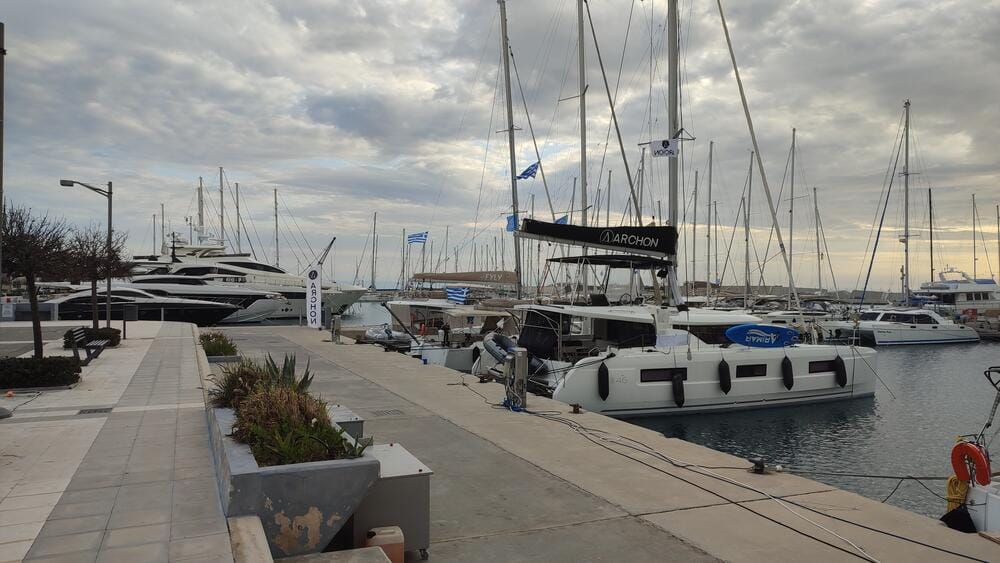
Rhodes New Marina
The final passage of our journey was from Panormitis back to Rhodes.
The week had passed incredibly quickly.
Seven days earlier we had left Rhodes with a new boat, full tanks and a route full of possibilities.
Now we were returning with memories, stories and a few lessons learned.
The wind was not strong enough for proper sailing, so we continued under engine.
Approaching Rhodes, the familiar coastline appeared again.
The final challenge was refuelling.
We needed to come alongside the fuel station at Rhodes New Marina.
The wind was blowing directly onto the dock, around 12 knots.
A side-on docking manoeuvre is usually manageable, but when the wind pushes you towards the dock, timing and communication become very important.
With careful handling, we managed to come alongside safely.
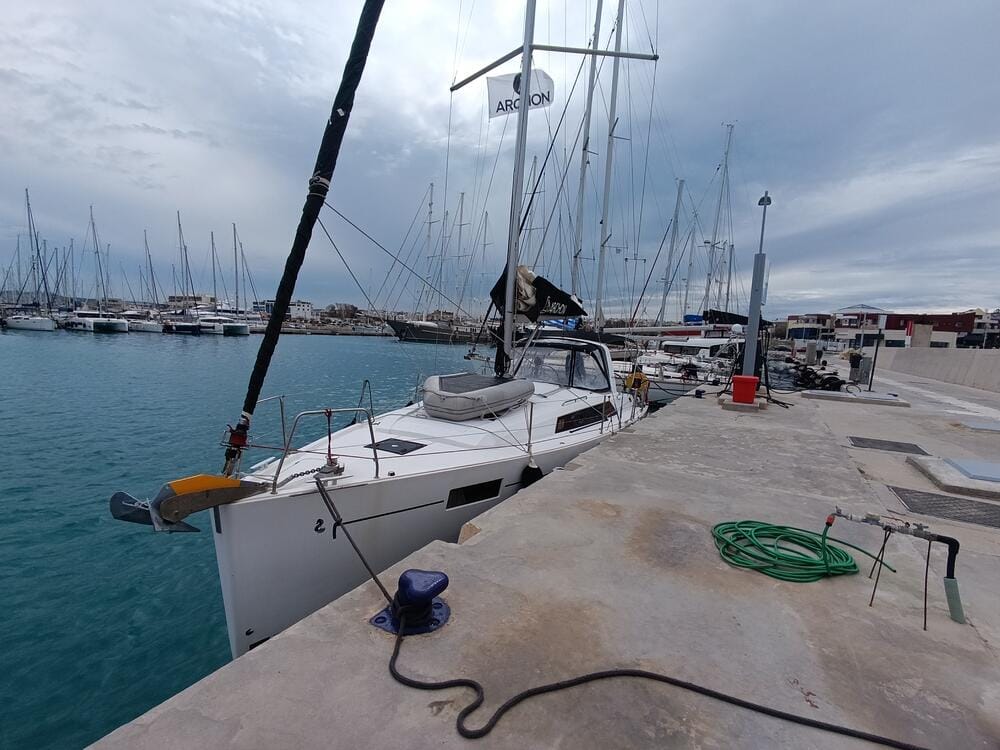
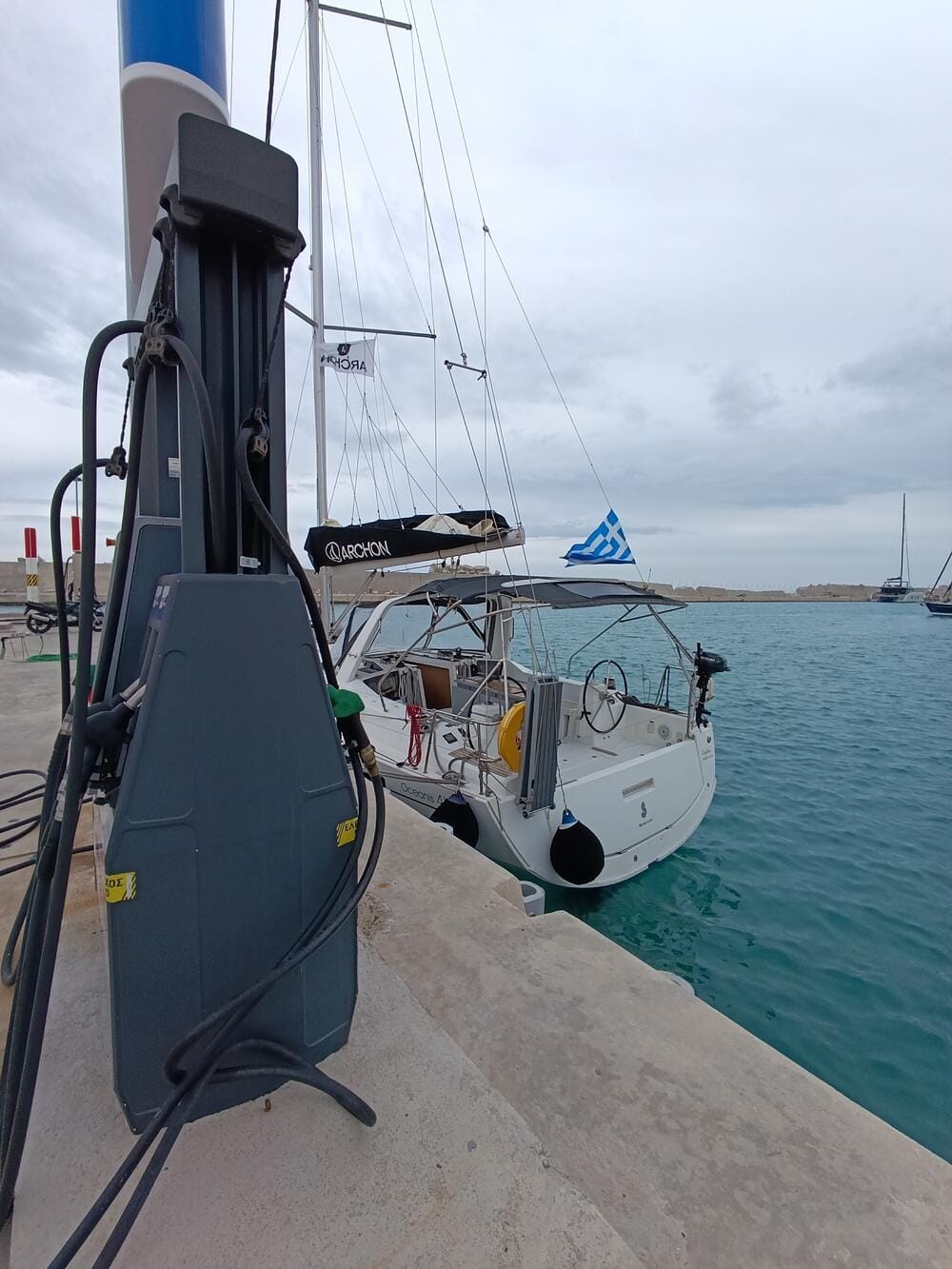
Yacht refuelling at Rhodes New Marina
And just like that, the journey was almost over.
Lessons from a Week in the Dodecanese
Every sailing trip teaches something new. These were our main takeaways from this journey:
- Always investigate an unexpected bilge pump.
A small amount of water can quickly become a serious problem. Never ignore unusual sounds or automatic pump activity. - Know your boat’s systems before leaving the marina.
Water tanks, batteries, pumps and valves can be confusing, especially on a different charter boat. - Carry more drinking water than you think you need.
Around 3 litres per person per day is a good minimum. Smaller bottles are easier to store and manage onboard. - A trip line is worth having.
You may never need it, but when anchoring in unknown waters with rocky seabeds, it can save a lot of time and effort. - Spring sailing in Greece is a hidden gem.
April offers empty anchorages, cooler temperatures for hiking and a much more authentic island experience. - Do not trust only the forecast.
Wind can disappear, change direction or increase unexpectedly. Always keep enough flexibility in your plans. - A good anchorage is more than a beautiful view.
Check wind direction, swell, holding ground, depth and possible escape options. - Solar power adds real freedom.
Even a small flexible panel can extend your time at anchor and reduce the need to return to marinas. - The best moments are often unplanned.
A random hike, a conversation with locals, or a quiet swim from the boat can become the memories you keep longest.
Solar Power on the Bimini — A Small Upgrade That Changed Our Cruising
One of the upgrades we had for this trip was a flexible solar panel installed on the bimini.
This small addition significantly improved our ability to stay longer at anchor without visiting marinas.
When cruising, electricity becomes a constant consideration.
Fridges, phones, navigation equipment, lights and other systems slowly consume energy. Without enough charging capability, sailors often need to return to marinas more frequently than they would like.
The flexible solar panel helped reduce that limitation.
The model we used had a peak power rating of approximately 116 watts.
Flexible panels like the Carbon IQ 116W are lightweight, easy to install and suitable for surfaces where traditional rigid panels would not work.
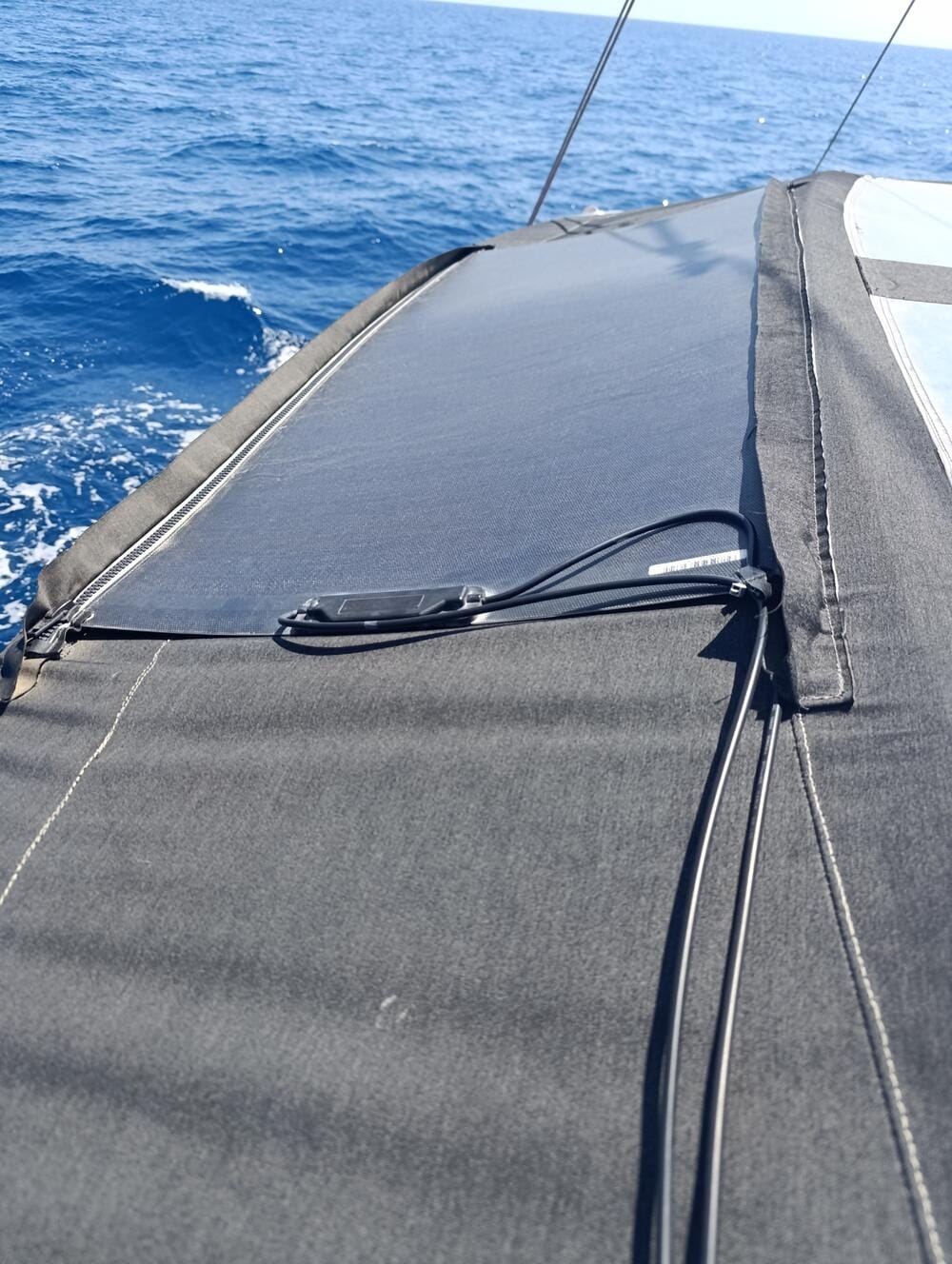
It was not enough to completely replace all charging methods, but it gave us much more freedom.
Instead of thinking:
"How many days can we stay here before we need electricity?"
we could think:
"Do we actually need to leave this beautiful anchorage?"
And that is exactly what sailing in Greece is about.
Freedom.
Final Thoughts
The Dodecanese always leaves us wanting more.
Every island has a different story.
Rhodes combines ancient history and modern life.
Lindos offers one of the most spectacular views in Greece.
Karpathos shows a wilder, more traditional side of the islands.
Halki gives you peace and silence.
Symi reminds you why sailors have been exploring these waters for thousands of years.
This trip was not perfect.
We had unexpected water problems, difficult docking situations, cleaning jobs and moments of uncertainty.
But those moments are also part of sailing.
A perfect holiday where nothing happens is easy to forget.
The adventures, challenges and small victories are what make a journey memorable.
And somewhere in the Aegean, with the sails full and the Greek islands appearing on the horizon, you remember why Greece never gets old.
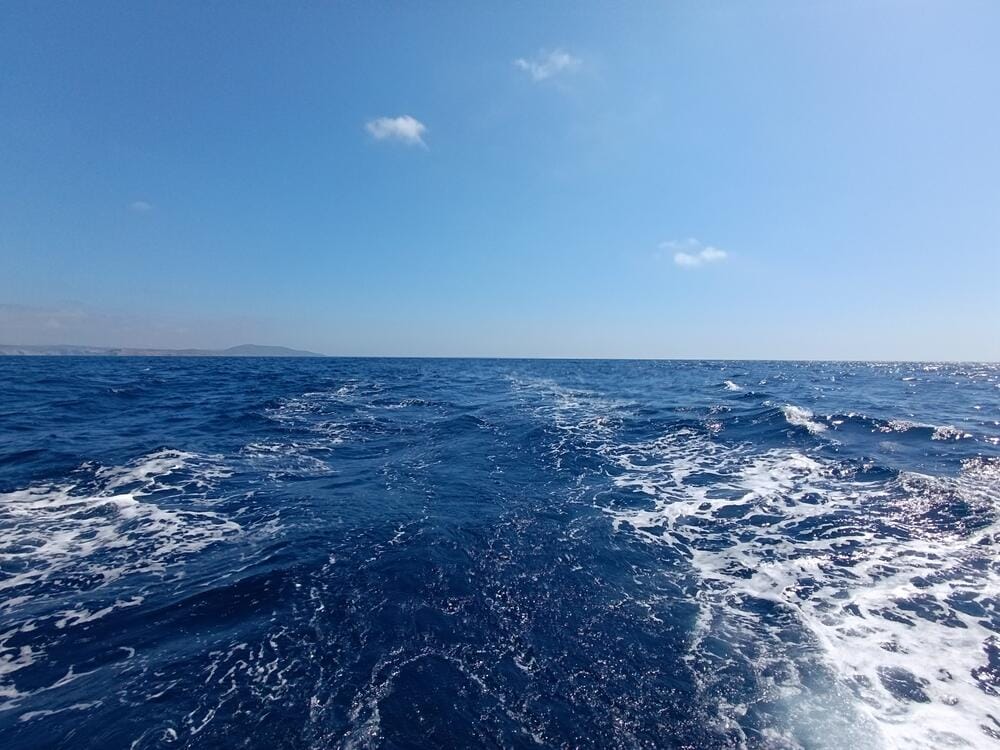
the Aegean Sea
Until the next voyage.